

Mon-Fri 9am-6pm PST
+1 (800) 686-5898
support@longevitybased.com
Mon-Fri: 9am-6pm PST

The FDA has not authorized any microneedling device for over-the-counter home use, a fact that surprises most people browsing derma rollers online. Yet millions of at-home microneedling sessions happen every year, driven by social media tutorials and the appeal of clinical-grade skin rejuvenation without clinical-grade costs. The FDA warns of real risks including infection, scarring, and post-inflammatory hyperpigmentation (PIH). This article cuts through the noise, giving you an evidence-based look at what at-home microneedling can and cannot do safely.
| Point | Details |
|---|---|
| Home is milder, not safer | At-home microneedling is gentle but carries more risks from hygiene and improper technique. |
| Needle depth is crucial | Safe at-home use requires short needle lengths (0.2-0.5mm) and strict protocols. |
| Professional offers superior results | Clinical microneedling delivers deeper rejuvenation and anti-aging benefits. |
| Strict protocols reduce risk | Sterilization, aftercare, and avoiding skin conditions are essential for safety. |
| Lack of strong home evidence | No large-scale studies exist on at-home safety—proceed with caution and expert advice. |
Microneedling works by creating controlled micro-injuries in the skin. These tiny punctures trigger the body’s wound-healing response, stimulating collagen and elastin production. The result, over time, is firmer, smoother skin with improved texture and tone.
The critical difference between home and professional microneedling is needle depth and environment. Professional microneedling uses deeper penetration of 0.5 to 2.5mm with sterile, single-use tips in a controlled clinical setting, yielding significantly better collagen induction for anti-aging. Home devices are limited to 0.2 to 0.5mm, producing more superficial effects.
| Feature | Home microneedling | Professional microneedling |
|---|---|---|
| Needle depth | 0.2 to 0.5mm | 0.5 to 2.5mm |
| Sterility | User-managed | Clinical standard |
| Collagen induction | Mild | Significant |
| Risk level | Moderate to high | Low (trained hands) |
| Cost per session | Low | High |
Here is what that depth difference means in practice:
“The gap between home and professional microneedling is not just about depth. It is about the entire controlled environment, trained technique, and sterile protocol that makes professional treatment both safer and more effective.”
For a deeper look at what at-home devices can realistically achieve, the at-home microneedling effectiveness guide covers the evidence in detail.
Now that you understand the basics, let’s look at the evidence behind at-home safety and the real risks involved. The FDA is direct: at-home microneedling carries higher risks than professional treatments, primarily due to inadequate sterilization, improper technique, and limited needle depths producing suboptimal results.
A systematic review published in Dermatologic Surgery confirms the concern. Key risks include infection, PIH, irritation, scarring, and barrier damage, with elevated risk in people with active acne, eczema, darker skin tones, or metal allergies.
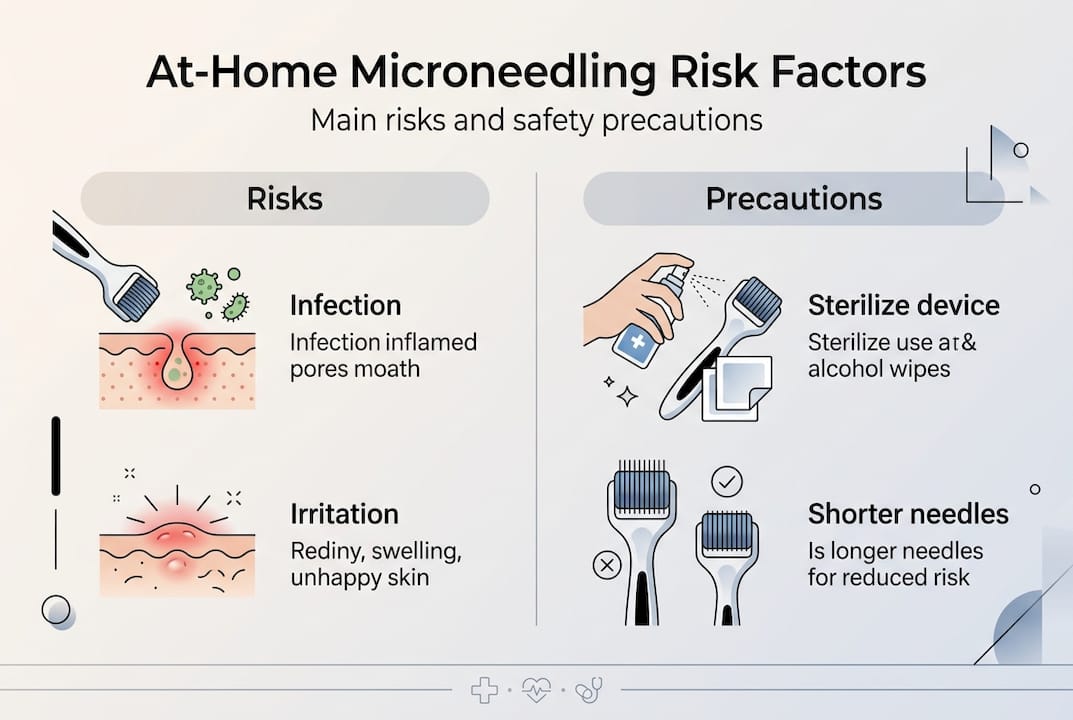
| Risk | Cause | Who is most affected |
|---|---|---|
| Infection | Poor sterilization | Anyone with compromised hygiene |
| PIH | Inflammation response | Darker skin tones (Fitzpatrick IV to VI) |
| Tram-track scarring | Excessive pressure | All users |
| Barrier damage | Overuse or long needles | Sensitive skin types |
| Irritation | Actives applied post-treatment | All users |
People with the following profiles face elevated risk:
Pro Tip: Soak your microneedling device in 70% isopropyl alcohol for at least 10 minutes before and after each session. This is the minimum sterilization standard. Never share devices, and replace needle cartridges after every 3 to 5 uses or sooner if tips appear bent.
Browsing microneedling device options with built-in safety features can reduce some of these risks. For broader context on managing skin health, skin rejuvenation protocols offer evidence-based guidance.
When it comes to at-home microneedling, needle length is a crucial safety consideration. Choosing the wrong length does not just reduce results; it can cause lasting skin damage.
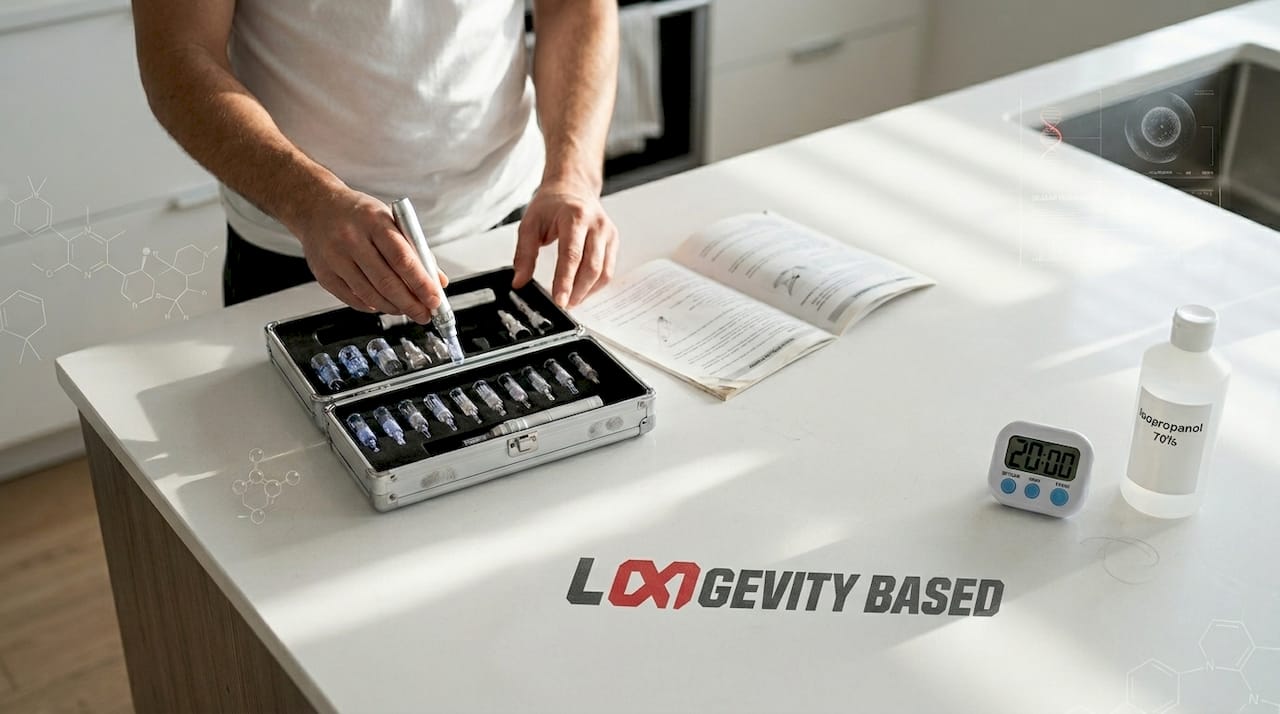
Safe needle lengths for home use are limited to 0.2 to 0.5mm. Anything longer than 0.5mm significantly increases the risk of infection, scarring, and deeper tissue trauma, and should only be used by trained professionals.
Here is how to think about needle length selection:
Frequency matters just as much as depth. At 0.2 to 0.3mm, you can safely treat every 2 to 3 days. At 0.5mm, limit sessions to once every 3 to 4 weeks to allow full skin recovery. Overuse at any depth disrupts the skin barrier, leading to chronic inflammation rather than collagen stimulation.
Pro Tip: Always follow the manufacturer’s recommended needle depth and frequency. If you have any active skin condition or are unsure about your skin type’s tolerance, consult a dermatologist before starting any home microneedling routine.
For those interested in combining microneedling with radiofrequency energy for enhanced results, the RF microneedling device from Longevity Based offers a professional-grade approach. You can also explore the full range of RF device options for skin tightening and rejuvenation.
Once you have chosen safe settings, a structured home protocol reduces risk and improves outcomes. Skipping steps here is where most people run into problems.
Step-by-step safe home protocol:
The FDA recommends prioritizing sterilization, using short needles, avoiding active ingredients post-treatment, and consulting a dermatologist for any pre-existing skin conditions.
Absolute don’ts:
For additional guidance on protecting your skin during and after treatment, skin protection tips provide a practical framework.
Protocols are all about safety, but what about results? The honest answer is that at-home microneedling works, but within a narrow range.
A systematic review in Dermatologic Surgery found that no large-scale studies exist specifically on at-home microneedling safety or efficacy. Professional microneedling reviews show low adverse event rates with mostly transient effects, but home use lacks equivalent data and has documented cases of severe infections.
“At-home microneedling is best understood as a mild maintenance tool, not a replacement for clinical treatment. The depth limitations of consumer devices mean collagen induction is modest at best.”
For anti-aging and rejuvenation goals, professional treatment is preferred for empirical efficacy in fine lines and scars. Home use is safe only for mild maintenance when protocols are followed correctly.
Realistic outcomes from at-home microneedling (0.2 to 0.5mm):
What professional microneedling delivers that home devices cannot:
For a full breakdown of what the evidence says about at-home anti-aging results, that resource covers the clinical data in plain terms.
If you want results that go beyond mild maintenance, professional-grade devices designed for home use offer a meaningful step up. At Longevity Based, the focus is on scientifically supported tools that bridge the gap between consumer devices and clinical outcomes. For skin health specifically, red light therapy for skin is one of the most evidence-backed non-invasive options available, supporting collagen synthesis, reducing inflammation, and accelerating recovery after microneedling. The light therapy device from Longevity Based is designed for targeted skin rejuvenation and pairs well with a structured microneedling protocol for those serious about long-term skin health.
No. At-home microneedling is limited to mild maintenance and improved product absorption, while professional treatments deliver deeper collagen induction and measurable anti-aging results through 0.5 to 2.5mm penetration.
The primary risks are infection, post-inflammatory hyperpigmentation, irritation, barrier damage, and scarring. At-home microneedling carries higher risks than professional treatments, especially when hygiene protocols are not followed.
Safe needle lengths for home use are 0.2 to 0.5mm. Anything longer increases infection and scarring risk and should only be used by trained professionals in a clinical setting.
Yes. People with active acne, eczema, rosacea, or a tendency toward infection should avoid at-home microneedling. Key risks include infection and PIH, both of which are significantly elevated in these groups.
Not yet. No large-scale studies exist specifically on at-home microneedling safety, though professional microneedling reviews consistently show that most adverse effects are mild and transient when performed correctly.


