

Mon-Fri 9am-6pm PST
+1 (800) 686-5898
support@longevitybased.com
Mon-Fri: 9am-6pm PST

You’ve heard blue light is bad for you, right? Screens damage your eyes, disrupt sleep, and age your skin. But here’s the twist: controlled blue light therapy uses specific wavelengths to treat acne, modulate inflammation, and even optimize your circadian rhythm. The difference lies in dosage, wavelength precision, and application context. This guide breaks down what blue light therapy actually is, how it works at the cellular level, and its evidence-based uses for skin health and wellness enhancement.
| Point | Details |
|---|---|
| Wavelengths matter | Therapeutic blue light uses 400 to 500 nanometers with calibrated doses to target acne bacteria while avoiding excessive exposure. |
| Mechanism details | It damages Cutibacterium acnes through porphyrin absorption, producing reactive oxygen species that reduce bacterial populations in sebaceous follicles. |
| Dual actions | In addition to killing bacteria it reduces inflammation and may influence keratinocyte and sebocyte activity through photobiomodulation. |
| Protocol and safety | Clinical protocols favor ten to thirty minute sessions, two to three times weekly for four to eight weeks with irradiance from twenty to one hundred milliwatts per square centimeter. |
| Therapy differs from screens | Unlike diffuse screen blue light therapy uses controlled wavelengths and dosages with no ultraviolet exposure and is aimed at skin health rather than screen related effects. |
Blue light therapy delivers 400-500 nm wavelengths via LEDs to treat skin conditions by activating porphyrins in Cutibacterium acnes, generating reactive oxygen species that kill bacteria. Unlike the diffuse blue light from screens, therapeutic devices emit controlled, calibrated doses at specific intensities designed for biological effect without excessive exposure. The wavelength range matters because different parts of the blue spectrum interact with distinct cellular chromophores and photoreceptors.
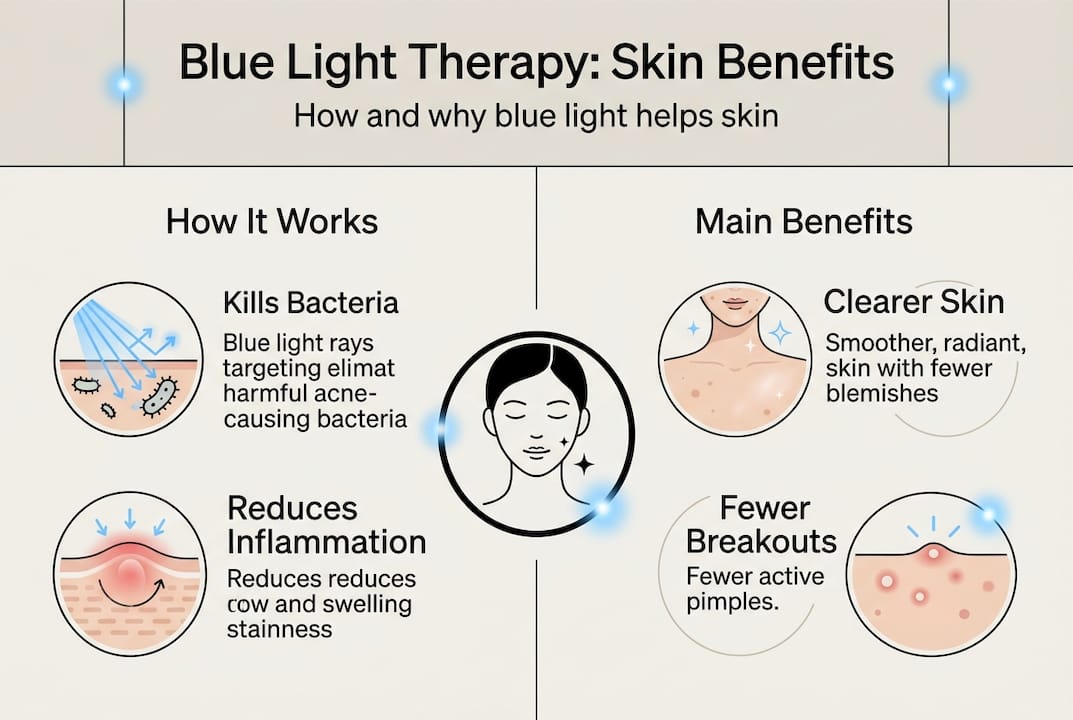
The primary mechanism targets acne bacteria through photodynamic destruction. Cutibacterium acnes naturally produces porphyrins, which absorb blue light energy. When exposed to the right wavelength, these molecules enter an excited state and produce singlet oxygen and free radicals. This oxidative burst damages bacterial membranes and DNA, reducing bacterial populations in sebaceous follicles without antibiotics. The process is selective because human cells don’t accumulate the same porphyrin concentrations as bacteria.
Beyond bacterial killing, blue light exhibits anti-inflammatory properties via cytokine modulation and influences cellular proliferation through photobiomodulation. It downregulates pro-inflammatory cytokines like IL-1β and TNF-α while promoting wound healing pathways. This dual action makes it effective for inflammatory acne, where both bacterial load and immune overreaction drive lesion formation. Some research suggests blue light can also influence keratinocyte differentiation and sebocyte activity, though mechanisms are still being mapped.
Photobiomodulation refers to how specific light wavelengths alter cell behavior at the mitochondrial level. Blue light can modulate ATP production, nitric oxide release, and redox signaling cascades. These effects extend beyond skin into circadian regulation through melanopsin-containing retinal ganglion cells, which we’ll explore later. The key is that therapeutic blue light isn’t just about killing bacteria, it’s about orchestrating beneficial cellular responses through precise photon delivery.
Pro Tip: Look for biohacking devices with adjustable irradiance settings so you can match published clinical protocols and avoid both under-treatment and excessive exposure.
Key delivery considerations include:
Clinical protocols include 10-30 min sessions, 2-3 times per week for 4-8 weeks with irradiance of 20-100 mW/cm². This dosing window balances efficacy with safety, allowing cumulative photodynamic effects while giving skin time to recover between sessions. Lower irradiances require longer exposure times to reach effective fluence, the total energy delivered per unit area. Most studies use fluences between 10-50 J/cm² per session.
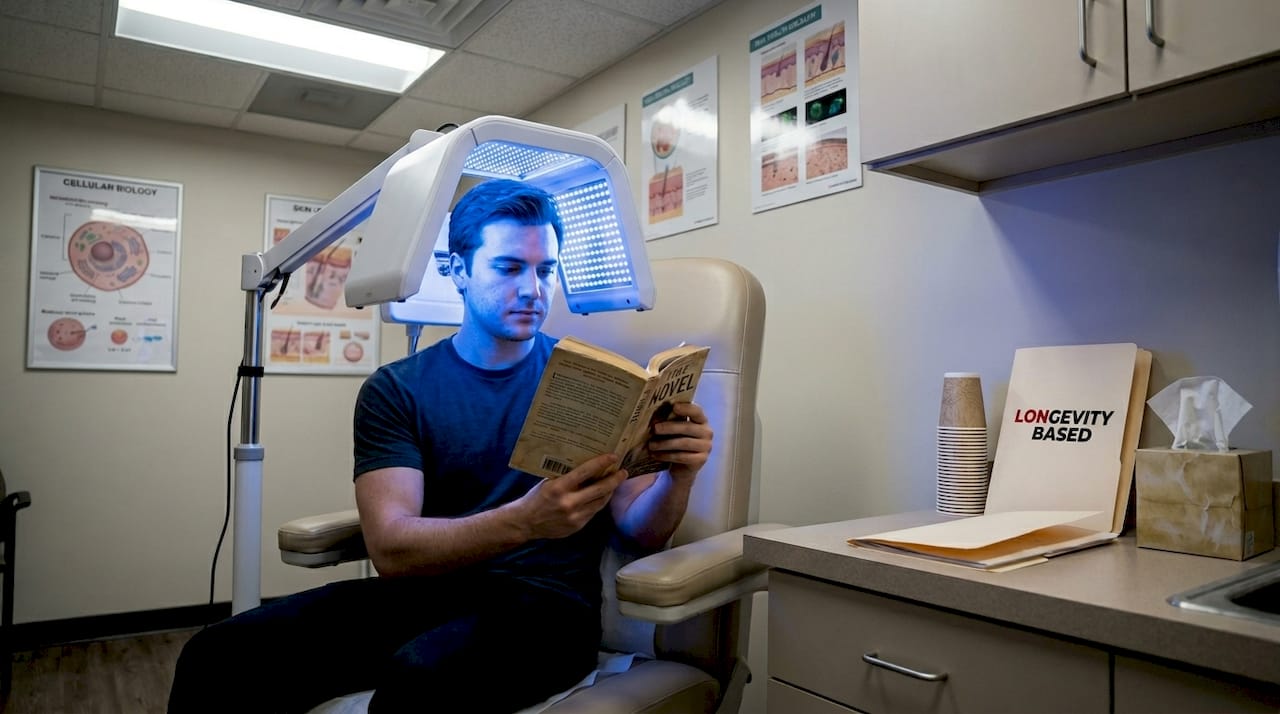
Blue light works best for mild to moderate inflammatory acne, particularly when bacterial colonization drives lesion formation. Studies show 40-70% reduction in inflammatory lesions after 4-8 weeks of consistent treatment. Results vary based on acne severity, skin type, and adherence to protocols. Comedonal acne responds less reliably because blue light doesn’t directly address pore blockage or excess sebum production. For optimal results, combine blue light with proper cleansing and non-comedogenic skincare.
Combination of blue light (460 nm) and red light (640 nm) shows synergy, achieving up to 100% cure rates in some acne types. Red light penetrates deeper, reducing inflammation in the dermis and accelerating healing of post-inflammatory marks. The dual approach addresses both surface bacteria and underlying inflammatory processes. Many red light therapy devices now include blue LEDs specifically for this combined protocol.
Beyond acne, blue light shows promise for other conditions:
Pro Tip: Red light therapy masks that include blue LEDs let you target facial acne while simultaneously promoting collagen synthesis and reducing fine lines with red wavelengths.
| Treatment Type | Wavelength | Session Duration | Frequency | Duration of Course |
|---|---|---|---|---|
| Acne (LED only) | 415-460 nm | 15-20 min | 2-3x/week | 4-8 weeks |
| Acne (PDT with ALA) | 410-420 nm | 10-20 min | 1-2 sessions | Single or repeat monthly |
| Combined Blue/Red | 460 nm + 640 nm | 20-30 min | 2-3x/week | 6-12 weeks |
| Circadian Phase Shift | 460-480 nm | 30-120 min | Daily morning | Ongoing |
Photodynamic therapy using photosensitizers like aminolevulinic acid is more intensive but riskier. ALA is applied topically and absorbed by rapidly dividing cells like sebocytes and bacteria. When activated by blue light, it generates far more reactive oxygen than endogenous porphyrins, leading to dramatic bacterial kill and sebaceous gland destruction. This can clear severe acne but causes significant inflammation, crusting, and photosensitivity for days afterward. LED alone is safer for regular home use and appropriate for most biohackers seeking consistent, low-risk interventions.
Morning blue light exposure at 480 nm can advance circadian phase by 1-2 hours, helping conditions like delayed sleep phase disorder. This works through melanopsin-containing intrinsically photosensitive retinal ganglion cells that project directly to the suprachiasmatic nucleus, your brain’s master clock. When these cells detect blue light, they signal the SCN to suppress melatonin production and shift your circadian rhythm earlier. The effect is dose-dependent: brighter light and longer exposure produce stronger phase advances.
Recommended protocols use 2500-10000 lux for 1-2 hours within 1-2 hours after waking up. Light boxes designed for seasonal affective disorder work well, but blue-enriched LEDs can achieve similar effects at lower overall brightness because melanopsin is most sensitive to wavelengths around 480 nm. Consistency matters more than intensity. Daily morning exposure trains your circadian system more effectively than sporadic high-dose sessions. Most people notice sleep onset shifting earlier within 3-7 days of consistent use.
Evening blue light exposure from screens suppresses melatonin adversely. Therapeutic evening blue light is not standard for sleep aid because it delays circadian phase, making it harder to fall asleep at your desired time. This is why blue-blocking glasses and night mode filters have become popular. However, some shift workers or travelers use strategic evening blue light to delay their rhythm when needed. For most biohackers optimizing natural sleep patterns, evening blue light should be minimized, not amplified.
Combining morning blue light and evening red or near-infrared light may optimize circadian and recovery effects. Red wavelengths don’t suppress melatonin and may even support mitochondrial function in retinal cells, potentially protecting against blue light damage accumulated during the day. Some practitioners recommend red light therapy masks for wrinkles in the evening as part of a circadian-optimized skincare routine that supports both anti-aging and sleep quality.
Key distinctions for wellness applications:
Beyond sleep and skin, emerging research explores blue light for cognitive performance, mood regulation, and even metabolic effects. Some studies show acute blue light exposure improves alertness, reaction time, and working memory, likely through the same melanopsin pathways that regulate circadian rhythms. Others suggest blue light may influence glucose metabolism and insulin sensitivity, though mechanisms remain unclear. These applications are less established than acne treatment or circadian phase shifting, but they hint at blue light’s broader potential in the biohacking toolkit.
Darker skin phototypes may have hyperpigmentation risks mediated by Opsin-3 activation. Opsin-3 is expressed in melanocytes and responds to blue light by triggering melanin synthesis. In Fitzpatrick types IV-VI, this can lead to unwanted darkening or uneven pigmentation, especially with prolonged or intense exposure. This doesn’t mean blue light therapy is off-limits for darker skin, but it requires more conservative protocols, patch testing, and potentially combination with brightening agents or shorter exposure times.
Common side effects include transient redness, dryness. Avoid PDT if photosensitive or on azathioprine. Erythema typically resolves within hours and indicates a normal inflammatory response to photodynamic bacterial killing. Dryness can be managed with gentle moisturizers applied after sessions. More concerning reactions include blistering, prolonged inflammation, or paradoxical acne flares, which suggest excessive dosing or individual hypersensitivity.
Photosensitizing medications amplify blue light’s effects, increasing PDT risk even with standard LED devices. Azathioprine, used for autoimmune conditions, is particularly problematic because it accumulates in skin and generates reactive oxygen when exposed to UVA and visible light. Other photosensitizers include certain antibiotics (tetracyclines, fluoroquinolones), retinoids, and some herbal supplements like St. John’s wort. Always review your medication list with a healthcare provider before starting blue light therapy.
Excessive or uncontrolled blue light exposure can cause photoaging or pigmentation issues. While therapeutic protocols are designed to stay below harmful thresholds, DIY overuse is a real risk. Some biohackers assume more is better and extend sessions beyond recommended times or use devices daily instead of 2-3 times weekly. This can overwhelm skin’s antioxidant defenses, leading to oxidative damage, collagen breakdown, and premature aging. Stick to evidence-based protocols and allow recovery time between sessions.
Key safety practices:
| Risk Factor | Concern | Mitigation Strategy |
|---|---|---|
| Darker skin (Fitzpatrick IV-VI) | Hyperpigmentation via opsin-3 activation | Lower irradiance, shorter sessions, patch test first |
| Photosensitizing drugs | Enhanced PDT effects, severe inflammation | Avoid therapy or consult physician; discontinue drug if possible |
| Excessive exposure | Oxidative stress, photoaging, barrier damage | Follow protocols strictly, limit to 2-3x/week maximum |
| Eye exposure | Potential retinal stress (theoretical) | Use devices designed for skin; eye protection for whole-body panels |
| Pre-existing skin conditions | Unpredictable reactions in compromised skin | Get professional evaluation before starting therapy |
The difference between therapeutic blue light therapy and harmful prolonged screen exposure comes down to dose, duration, and context. Therapeutic use delivers concentrated doses over short periods with specific biological targets, then allows recovery. Screen exposure is chronic, low-level, poorly timed, and often combined with other stressors like close-range eye strain and sedentary posture. Blue light effects on skin from screens accumulate over years, while therapeutic protocols are designed for finite treatment courses with clear endpoints. Understanding this distinction helps you harness blue light’s benefits while avoiding its risks.
For optimal safety and efficacy, consider using an advanced low-level light therapy device designed with built-in safety features, calibrated output, and protocols based on clinical research rather than improvising with consumer-grade light sources.
Now that you understand how blue light therapy works and its applications for skin health and circadian optimization, you can make informed choices about incorporating it into your biohacking practice. The key is selecting devices that match the clinical protocols we’ve covered: calibrated wavelengths, adjustable irradiance, and safety features that prevent overexposure. Our curated selection of biohacking devices and longevity products includes scientifically designed LED panels and masks that deliver therapeutic blue light at evidence-based parameters.
Many of our red light therapy devices incorporate blue LEDs specifically for combination protocols. This lets you target acne bacteria with blue wavelengths while simultaneously promoting collagen synthesis and reducing inflammation with red and near-infrared. For comprehensive skin rejuvenation, this dual approach often outperforms single-wavelength treatments. Look for devices with separate controls so you can customize your protocol based on your specific goals and skin response.
If you’re serious about optimizing recovery and longevity, explore our full range of light therapy, cold exposure, and performance enhancement tools. The advanced low-level light therapy device offers professional-grade output in a home-use format, perfect for biohackers who want clinical results without ongoing clinic visits.
Blue light therapy is generally safe but requires caution for darker skin tones due to hyperpigmentation risk mediated by Opsin-3 activation. Fitzpatrick types IV-VI should start with lower irradiance, shorter sessions, and patch testing before full-face treatment. Professional consultation is recommended if you have a history of post-inflammatory hyperpigmentation or melasma.
Sessions typically last between 10 to 30 minutes depending on device irradiance and treatment goals. Most acne protocols use 15-20 minute sessions 2-3 times per week for 4-8 weeks. Circadian applications may require 30-120 minutes of morning exposure at lower intensities. Consistency matters more than individual session length.
Morning blue light may advance circadian phase by 1-2 hours, improving sleep onset timing for people with delayed sleep phase disorder. Use 2500-10000 lux within 1-2 hours of waking for best results. Evening use is generally not recommended for sleep enhancement because it delays circadian rhythm and suppresses melatonin, making it harder to fall asleep at your desired time.
Avoid prolonged or excessive exposure to prevent skin irritation and oxidative stress. Use recommended device settings from clinical protocols and avoid therapy if you’re photosensitive or taking medications like azathioprine, tetracyclines, or retinoids. Perform a patch test before full treatment, especially if you have darker skin or a history of pigmentation issues. Consult a healthcare provider if unsure about skin type suitability or potential drug interactions.


