

Mon-Fri 9am-6pm PST
+1 (800) 686-5898
support@longevitybased.com
Mon-Fri: 9am-6pm PST

Many people assume infrared and red light therapies are the same, but they differ fundamentally in wavelength, mechanism, and benefits. Red and near-infrared light trigger cellular repair through photobiomodulation, while far-infrared provides heat-based circulation and detox benefits. Understanding these distinctions helps you choose the therapy that aligns with your wellness goals, whether you’re targeting skin rejuvenation, muscle recovery, or metabolic health optimization.
| Point | Details |
|---|---|
| PBM tissue repair | Red and near infrared wavelengths trigger photobiomodulation, increasing cellular energy production and promoting tissue repair without generating heat. |
| FIR heat therapy | Far infrared provides heating that improves circulation and supports detoxification through sweating. |
| Surface and deep targeting | A multi wavelength approach can target surface skin healing and deeper tissue recovery in muscles and joints. |
| Red and NIR collagen boost | Red and near infrared therapies accelerate wound healing and boost collagen synthesis for skin health. |
The confusion between infrared and red light therapies stems from overlapping terminology, but their biological effects differ significantly based on wavelength. Photobiomodulation (PBM) describes how specific light wavelengths influence cellular processes without generating heat, triggering ATP production in mitochondria and enhancing cellular repair mechanisms.
Red light operates in the 620-700 nm range, making it ideal for skin-level applications. This wavelength penetrates the epidermis and upper dermis, stimulating fibroblast activity and collagen synthesis. You’ll see red light used primarily for anti-aging treatments, acne reduction, and superficial wound healing.
Near-infrared (NIR) light spans 700-1400 nm and penetrates 2-5 cm into tissues, reaching muscles, joints, and deeper structures. This deeper penetration makes near-infrared therapy particularly effective for muscle recovery, joint inflammation, and myofascial pain relief. NIR wavelengths around 810 nm and 980 nm show the strongest evidence for deep tissue benefits.
Far-infrared (FIR, 3-1000 μm) in saunas is thermal, promoting detox via sweating, circulation, relaxation; not PBM. FIR generates heat that warms the body from within, increasing core temperature and inducing perspiration. This thermal effect improves blood flow and supports metabolic processes but does not trigger the cellular repair mechanisms associated with PBM.
Key wavelength distinctions include:
Understanding these wavelength differences helps you match therapy type to your specific health goals. If you’re targeting cellular repair and tissue regeneration, red and NIR therapies deliver PBM benefits. For circulation enhancement and heat-based relaxation, FIR sauna therapy serves a different but complementary purpose.
Scientific research demonstrates distinct benefit profiles for red, near-infrared, and far-infrared therapies. Red/NIR PBM meta-analysis shows significant wound healing improvement and collagen increase; FIR improves blood flow 20%. These evidence-based findings help you understand what each therapy can realistically deliver.
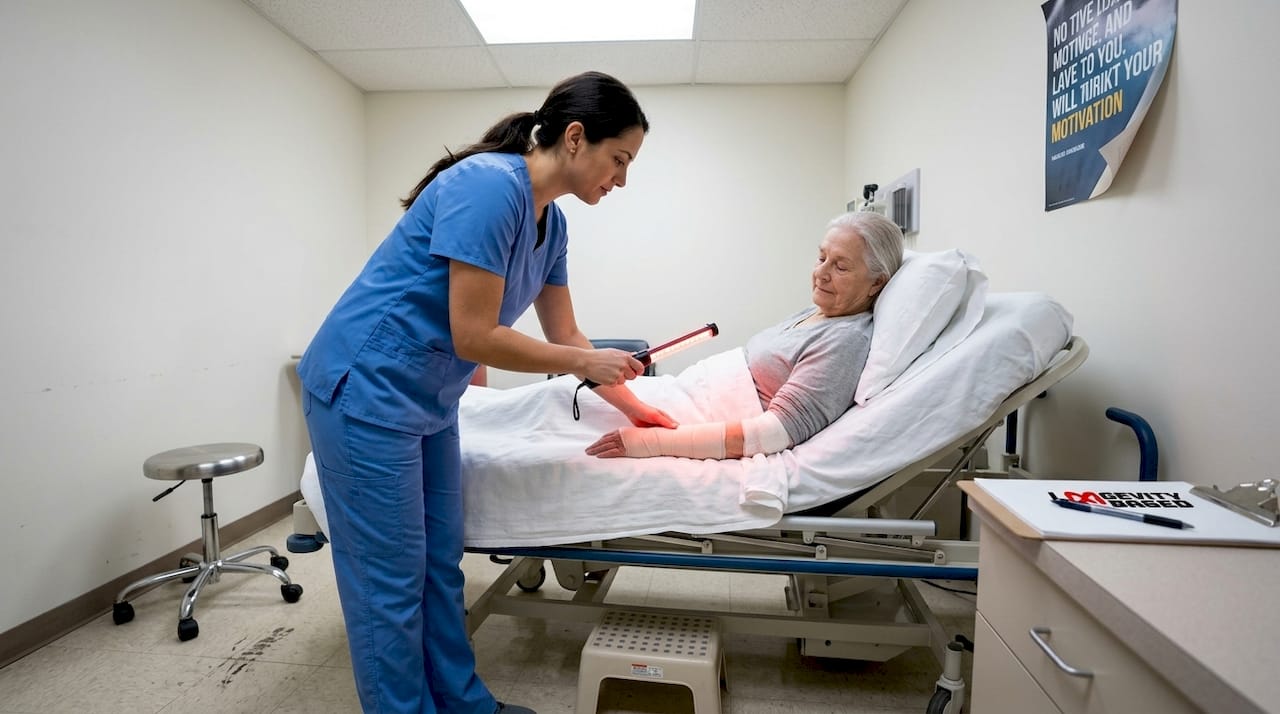
Red and near-infrared light therapies accelerate wound healing by up to 30% compared to control groups in clinical trials. The mechanism involves increased ATP production, enhanced cellular proliferation, and reduced inflammatory markers. Collagen production increases significantly with consistent red light exposure, making these wavelengths valuable for skin rejuvenation and scar reduction.
NIR superior for deep myofascial pain; FIR useful in vascular/metabolic conditions like diabetes. Studies comparing 980 nm NIR to 635 nm red light show that deeper wavelengths provide more substantial pain relief for muscle and joint conditions. The 980 nm wavelength penetrates sufficiently to reach trigger points and inflamed tissues that superficial red light cannot access.
Far-infrared therapy demonstrates approximately 20% improvement in blood flow and microcirculation, particularly beneficial for individuals with diabetes or peripheral vascular conditions. The thermal effect dilates blood vessels, reduces arterial stiffness, and supports metabolic health through improved glucose utilization. However, these benefits stem from heat exposure rather than photobiomodulation.
| Therapy Type | Primary Benefits | Evidence Strength | Typical Applications |
|---|---|---|---|
| Red Light (620-700 nm) | Collagen +30%, wound healing, skin rejuvenation | Strong meta-analysis support | Anti-aging, acne, scars |
| Near-Infrared (700-1400 nm) | Pain reduction, muscle recovery, inflammation | Moderate to strong RCT evidence | Athletic recovery, arthritis |
| Far-Infrared (3-1000 μm) | Blood flow +20%, detox, relaxation | Emerging evidence, smaller trials | Sauna therapy, metabolic support |
Combining wavelengths provides complementary effects that address multiple health dimensions simultaneously. Using red light for skin benefits while incorporating NIR for muscle recovery creates a comprehensive approach to tissue health. Adding FIR sauna sessions supports cardiovascular function and metabolic optimization through different mechanisms.
Pro Tip: Use red/NIR therapy with proper eye protection to prevent eye strain, and start with 10-minute sessions to assess your skin’s response before extending treatment duration.
The synergistic potential of combined therapies makes sense when you consider that surface healing, deep tissue repair, and circulatory health all contribute to overall wellness. Red light therapy benefits for facial skin pair well with NIR for neck and shoulder tension, while FIR sauna sessions support systemic detoxification.
Clinical applications continue expanding as research identifies optimal dosing parameters. Current evidence suggests that wavelength selection, power density, and treatment duration all significantly impact outcomes. Devices delivering 20-50 mW/cm² at the skin surface show consistent benefits across studies, while lower intensities may require longer exposure times.
Selecting between infrared and red light therapies depends on your specific wellness goals and the biological effects you want to achieve. Red and NIR therapies excel at tissue repair, anti-inflammatory effects, and muscle recovery through photobiomodulation. These wavelengths work best when you’re targeting cellular-level healing, whether for skin conditions, wound healing, or deep tissue inflammation.
Far-infrared therapy serves different purposes centered on heat-related benefits. Use FIR when your goals include detoxification through sweating, circulation enhancement, or metabolic support. The thermal effects of FIR complement but don’t replace the cellular repair mechanisms of red and NIR light.
Safety considerations and contraindications require attention before starting any light therapy protocol. Risks include eye strain from NIR, irritation with overuse, and contraindications like photosensitivity, cancer, pregnancy; FIR can cause dehydration. Understanding these risks helps you implement therapies safely and effectively.
Key contraindications and precautions:
Implementing light therapy safely involves following structured protocols:
Equipment selection significantly impacts therapy effectiveness and safety. Look for devices with verified wavelength specifications, adequate power output (20-50 mW/cm²), and third-party testing certifications. Quality panels deliver consistent light output across the treatment area, while inferior devices may have uneven coverage or inaccurate wavelength claims.
Pro Tip: Begin with shorter 10-minute sessions and increase duration gradually over 2-3 weeks while monitoring your skin’s response and eye comfort, especially when using NIR wavelengths.
Combining therapies requires strategic timing and session spacing. You can use red and NIR light therapy on the same day, but separate sessions by at least 4-6 hours to allow cellular responses to complete. Sauna therapy with FIR works well on alternate days or after light therapy sessions to support circulation and recovery.
Session timing considerations include:
Individual response varies based on skin type, age, baseline health status, and specific conditions being addressed. Some people notice benefits within days, while others require 4-6 weeks of consistent use to observe significant changes. Patience and consistency matter more than aggressive treatment schedules that risk overexposure.
A comprehensive comparison clarifies how red, near-infrared, and far-infrared therapies differ in mechanisms, applications, and practical implementation. This side-by-side analysis helps you make informed decisions about which therapy or combination best serves your biohacking goals.
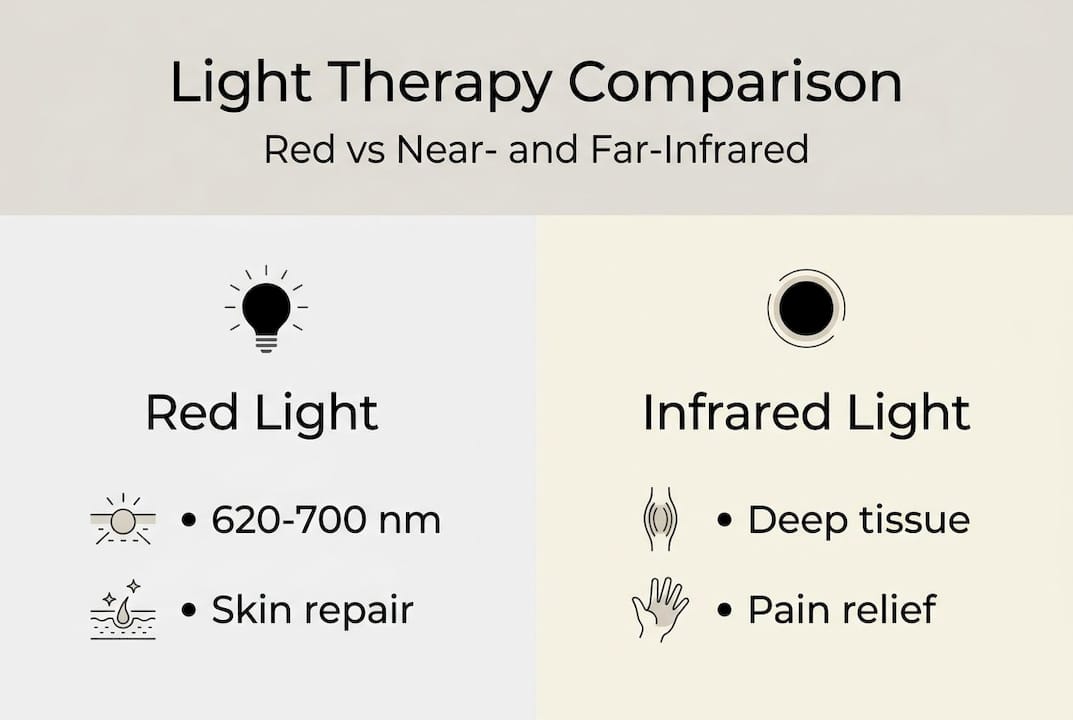
| Feature | Red Light (620-700 nm) | Near-Infrared (700-1400 nm) | Far-Infrared (3-1000 μm) |
|---|---|---|---|
| Mechanism | Photobiomodulation | Photobiomodulation | Thermal (heat-based) |
| Penetration | Surface to 1 cm | 2-5 cm deep | Superficial heat |
| Primary Use | Skin health, anti-aging | Muscle/joint recovery | Circulation, detox |
| Clinical Evidence | Strong for wounds, collagen | Moderate for pain relief | Emerging for metabolic health |
| Session Duration | 10-20 minutes | 15-20 minutes | 20-45 minutes |
| Eye Protection | Recommended | Essential | Not required |
| Heat Generation | Minimal | Minimal | Significant |
| Ideal Frequency | 3-7 times weekly | 3-5 times weekly | 2-4 times weekly |
| Main Risks | Skin irritation, overuse | Eye strain, overexposure | Dehydration, overheating |
| Best Combined With | NIR for deeper benefits | Red light for surface healing | Red/NIR for comprehensive therapy |
Moderate PBM evidence for red/NIR, promising but smaller trials for FIR; dose and wavelength are critical for effectiveness. Research quality varies across therapy types, with red and NIR light having more robust clinical trial data compared to FIR applications.
The complementary nature of these therapies becomes apparent when you consider their different biological targets. Red light optimizes surface tissue health, NIR addresses deep structural issues, and FIR supports systemic metabolic and circulatory functions. Combining all three creates a full-spectrum wellness approach that targets multiple physiological systems.
Practical integration strategies for biohacking routines:
Device quality matters significantly for achieving consistent results. Red light therapy panels with verified wavelength output and adequate power density deliver reliable benefits, while low-quality devices may provide insufficient light intensity or inaccurate wavelengths. Third-party testing and transparent specifications indicate manufacturer credibility.
Wavelength specifications require attention when selecting devices. Effective red light therapy uses wavelengths between 630-680 nm, while therapeutic NIR ranges from 810-850 nm or 980 nm. Devices claiming broad spectrum coverage may dilute intensity across wavelengths, reducing effectiveness for specific applications.
Professional guidance enhances therapy outcomes, particularly for complex health conditions. Dermatologists, physical therapists, and functional medicine practitioners can help customize protocols based on your health history and goals. They may also identify contraindications or medication interactions that require protocol modifications.
Dosing parameters critically influence effectiveness:
Scientific caution remains appropriate given that therapy effectiveness depends on proper dosing, individual factors, and condition-specific variables. What works excellently for one person may require adjustment for another based on skin type, age, baseline health, and treatment goals. Systematic tracking helps you identify your optimal protocol.
Combination protocols for specific goals:
Long-term consistency produces more significant results than aggressive short-term protocols. Building light therapy into your daily routine as a non-negotiable wellness practice, similar to exercise or nutrition, maximizes cumulative benefits over months and years.
Longevity Based offers a curated selection of scientifically-backed red light therapy devices designed for home use and professional applications. Our collection includes full-body panels, targeted handheld devices, and combination wavelength systems that deliver both red and near-infrared light for comprehensive wellness support. Each device undergoes rigorous testing to ensure accurate wavelength output, optimal power density, and reliable performance.
Beyond light therapy, we provide complementary biohacking devices and products including cold plunge systems, sauna equipment, and recovery tools that integrate seamlessly into your longevity optimization routine. Explore our complete range of biohacking devices and longevity products to build a comprehensive wellness toolkit backed by science and designed for results.
Far-infrared operates in the 3-1000 μm range and generates heat that penetrates superficially to promote circulation, sweating, and detoxification through thermal mechanisms. Near-infrared spans 700-1400 nm and penetrates 2-5 cm into tissues, triggering photobiomodulation for cellular repair, muscle recovery, and wound healing without significant heat generation. NIR addresses deep tissue healing while FIR provides heat-based cardiovascular and metabolic benefits.
Yes, combining red light (620-700 nm), near-infrared (700-1400 nm), and far-infrared therapies provides complementary benefits targeting different tissue depths and biological mechanisms. Follow recommended session durations of 10-20 minutes for red/NIR and 20-45 minutes for FIR, use protective eyewear during NIR exposure, and separate sessions by 4-6 hours to allow cellular responses to complete. Monitor your skin and overall response to prevent overexposure and irritation.
Typical sessions range from 10-20 minutes for red and near-infrared light therapy depending on device power output and distance from skin. Start with 10-minute sessions three times weekly and gradually increase to 15-20 minutes as your body adapts and you assess tolerance. Calculate total energy dose based on your device’s power density, aiming for 4-10 J/cm² for red light and 10-20 J/cm² for NIR applications.
Eye protection is essential for near-infrared therapy to prevent strain and potential retinal damage from prolonged exposure. Skin irritation can occur with excessive session duration or frequency, particularly in individuals with sensitive skin. Avoid use if you have photosensitivity conditions, are pregnant, or have active cancer without medical consultation, and stay well-hydrated during FIR sauna therapy to prevent dehydration and overheating.


