

Mon-Fri 9am-6pm PST
+1 (800) 686-5898
support@longevitybased.com
Mon-Fri: 9am-6pm PST

TL;DR:
- Cold plunging during pregnancy carries significant cardiovascular and fetal risks, and is generally not recommended.
- Safer alternatives include warm pool swimming, brief lukewarm showers, and prenatal yoga, with medical guidance.
- Pregnancy-specific research on cold exposure is limited, emphasizing cautious, evidence-based wellness choices.
Cold plunging has moved well beyond athletic recovery circles, showing up in prenatal wellness conversations with growing frequency. Yet despite its mainstream appeal, cold plunging during pregnancy lacks specific clinical trials and is generally not recommended without medical clearance. The research gap is real, and the mixed guidance from wellness influencers versus medical professionals creates genuine confusion. This guide cuts through that noise by presenting what the evidence actually says, where expert consensus lands, and which alternatives offer meaningful wellness benefits without the documented risks.
| Point | Details |
|---|---|
| Clinical research gap | There are no solid clinical studies on cold plunging during pregnancy, and recommendations are cautious. |
| Significant risks | Cold plunging can cause cardiovascular strain and may impact fetal health, making it generally inadvisable. |
| Safer alternatives | Gentle options like warm pool swimming or cool showers are strongly recommended for pregnant wellness. |
| Consult professionals | Always speak with your OB or healthcare provider before any new recovery or wellness activity during pregnancy. |
Cold plunge therapy involves deliberate immersion of the body in cold water, typically below 59°F (15°C), for a defined period ranging from one to fifteen minutes. It is distinct from a cool shower or a chilly pool swim. The practice requires sustained exposure that triggers measurable physiological responses throughout the body.
The trend has exploded across athlete recovery programs, biohacking communities, and social media wellness content. High-profile figures from professional sports to Silicon Valley executives openly credit cold plunging with sharper focus, faster muscle recovery, and improved mood. That visibility has made it one of the most discussed recovery modalities of the past five years.
The science behind the appeal is not trivial. Research shows that moderate cold exposure can drive norepinephrine levels up by as much as 530% and dopamine by approximately 250%. These are significant neurochemical shifts that explain why regular cold plungers report elevated mood and sustained energy. For a more detailed breakdown of the protocols involved, our cold plunge guide covers the step-by-step mechanics.
The intended benefits most commonly cited include:
These are real, documented effects in healthy non-pregnant adults. The critical question is whether those benefits translate safely to pregnancy, and that is where the evidence becomes thin and the caution becomes necessary.
Now that we know what cold plunging is and why it’s fashionable, let’s look at the documented risks for pregnant women. The concerns are not speculative. They are grounded in physiological mechanisms that interact directly with pregnancy biology.
Cold water immersion may cause cardiovascular stress, vasoconstriction that reduces uterine blood flow, hypothermia, and potential fetal heart rate changes. Each of these carries specific implications during pregnancy.
The cold shock response is the first concern. Sudden immersion in cold water triggers an involuntary gasp reflex, followed by rapid spikes in heart rate and blood pressure. In a healthy non-pregnant adult, this is manageable. During pregnancy, the cardiovascular system is already under increased demand, with blood volume expanded by up to 50%. Adding a cold shock response on top of that baseline stress is not trivial.
Vasoconstriction is the second major issue. Cold exposure causes blood vessels to constrict. When that happens systemically, blood flow to the uterus and placenta can be reduced. Even brief reductions in uterine perfusion carry potential fetal implications, particularly in the first and third trimesters.
ACOG advises against drastic core temperature changes during pregnancy. This applies to both heat and cold extremes. The core temperature stability that cold plunging disrupts is precisely what fetal development depends on.
Key risks to be aware of include:
Expert consensus is clear: cold plunging should be avoided during pregnancy unless a woman was regularly practicing cold water immersion before conception and is doing so under strict medical supervision. Even then, understanding cold plunge duration limits becomes critical.
Pro Tip: Before any extreme temperature activity during pregnancy, consult your OB-GYN. This applies to saunas, steam rooms, and cold plunges equally. Your provider can assess your individual cardiovascular baseline and fetal development stage.
While the risks are clear, some advocates highlight potential benefits. Let’s review what the science actually supports, and where the claims outpace the evidence.
Limited evidence suggests that cold water exposure may offer benefits including reduced inflammation, mood improvement, stress reduction, improved insulin sensitivity, and relief from restless leg syndrome. These are plausible mechanisms based on what cold exposure does in non-pregnant populations.
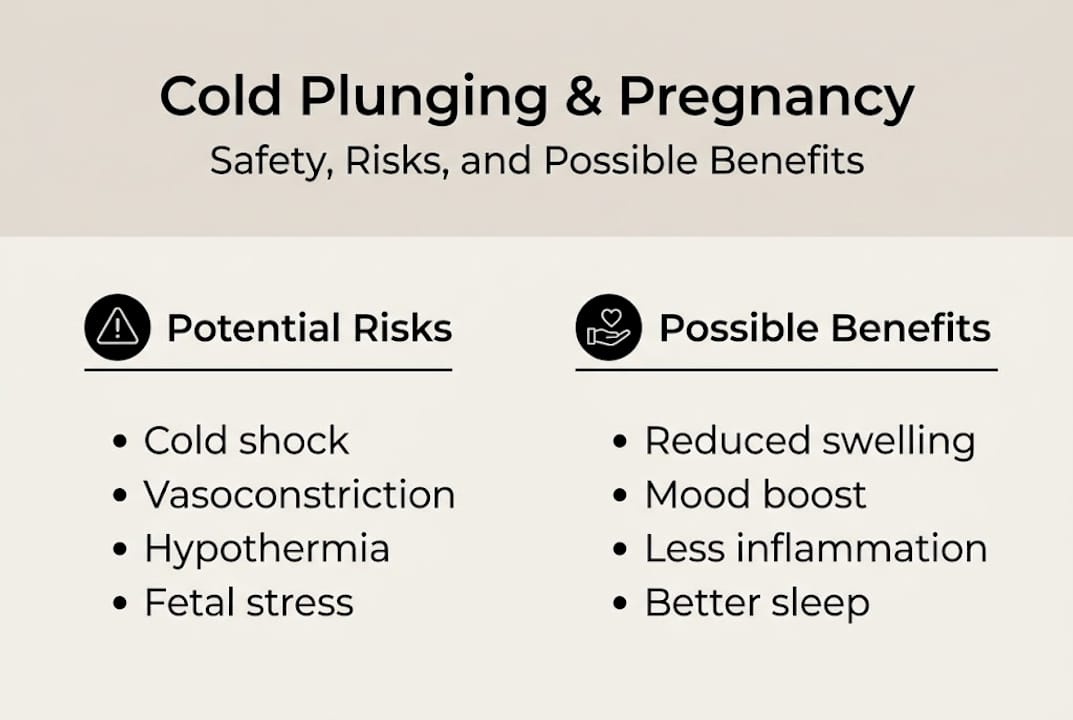
The neurochemical argument is the strongest. Cold exposure reliably increases dopamine and norepinephrine, both of which support mood regulation. Pregnancy-related mood changes are common, so the appeal of a natural mood-boosting intervention is understandable. Additionally, no cortisol rise was observed in mild cold exposure tests in animal and human studies, which suggests the stress hormone response may be less severe than assumed.
Swelling and inflammation are also real pregnancy complaints. Cold’s anti-inflammatory properties could theoretically offer relief. But the problem is that no pregnancy-specific empirical benchmarks exist to define what “safe” cold exposure looks like for a pregnant woman.
| Potential benefit | Evidence level | Pregnancy-specific data |
|---|---|---|
| Reduced inflammation | Moderate in general population | None confirmed |
| Mood improvement | Strong via dopamine/norepinephrine | Not studied in pregnancy |
| Stress reduction | Moderate | Limited animal data only |
| Insulin sensitivity | Moderate | No pregnancy trials |
| Restless leg relief | Anecdotal | No controlled studies |
The pattern is consistent: benefits are plausible but unconfirmed for pregnant women. Advocates who promote cold plunging during pregnancy are extrapolating from general population data, which is not the same as evidence-based guidance. For context on related claims, our article on cold plunge and weight loss similarly separates verified effects from popular assumptions.
Whether you’re considering a cold plunge or alternatives, here’s what experts recommend and safe substitutes to consider.
Cold water swimming is considered safe only for women who were regularly practicing cold water immersion before pregnancy, and even then, never alone, and with avoidance if blood pressure is abnormal in either direction. Water quality must also be verified, as open water sources carry infection risks that are particularly relevant during pregnancy.
For the vast majority of pregnant women who were not regular cold plungers before conception, the recommendation is clear: avoid it entirely and choose proven alternatives.
| Practice | Safety level during pregnancy | Notes |
|---|---|---|
| Cold plunge below 59°F | High risk | Avoid unless pre-existing habit with MD clearance |
| Cold shower (brief, mild) | Lower risk | Generally tolerable; monitor for dizziness |
| Warm pool swimming | Recommended | Excellent low-impact cardiovascular activity |
| Prenatal yoga | Recommended | Stress reduction, flexibility, community support |
| Sauna or hot tub | High risk | Avoid; core temperature elevation is dangerous |
If you want a structured approach to safer wellness during pregnancy, here is a practical framework:
For those interested in recovery technology, exploring cold plunge systems post-pregnancy or reviewing natural high wellness options may offer relevant context for planning ahead.
Pro Tip: Opt for gentle, proven wellness methods until more pregnancy-specific research emerges. The absence of evidence is not evidence of safety, especially when fetal health is involved.
After considering both risks and possible benefits, here is a perspective grounded in both science and the realities of pregnancy wellness.
Wellness culture moves faster than clinical research. That gap is not inherently problematic for healthy adults who can make informed risk decisions. But pregnancy changes the calculus entirely. You are not the only one affected by the physiological stress of cold immersion.
Medical reviews emphasize research gaps and recommend avoidance, with safer alternatives backed by evidence. That is not excessive caution. That is the appropriate response when the population being advised includes a developing fetus with no voice in the decision.
The uncomfortable truth is that many wellness recommendations circulating online are based on extrapolation, not evidence. Cold plunging is effective and well-studied in healthy adults. It is not well-studied in pregnant women. Those are two very different statements, and conflating them is where real harm can occur.
Personalized medical guidance is not optional here. One woman’s low-risk cold plunge history is another’s cardiovascular event waiting to happen. Pregnancy is not the time to experiment with protocols that lack safety data. The science on cold plunge is genuinely exciting for the right populations. Pregnancy simply is not one of them yet.
If you’re seeking wellness solutions that are safer than cold plunging during pregnancy, evidence-backed options and gentle technology alternatives are worth exploring. At Longevity Based, we offer a curated range of recovery and wellness devices designed around scientific evidence, not trends. Red light therapy, for example, carries no temperature risk and has a growing body of research supporting its use for inflammation, skin health, and mood. Browse our all wellness products collection for options suited to different life stages, and explore BioLight therapy options as a gentle, non-invasive alternative. Always consult your healthcare provider before introducing any new device or recovery practice during pregnancy.
Cold plunging is not generally recommended during pregnancy due to cardiovascular risks and fetal heart rate changes, unless you were regularly cold swimming before pregnancy and have explicit medical clearance from your OB-GYN.
Yes. Experts recommend warm pool swimming and cool showers as lower-risk alternatives that may still support mood and circulation without the cardiovascular stress of full cold immersion.
Cold plunges may boost mood-related hormones and reduce inflammation, but evidence for mood benefits in pregnant populations is limited, and the risks currently outweigh the potential upsides.
Absolutely. Medical clearance from your obstetrician is essential, as expert consensus advises avoiding cold plunging unless it was a regular pre-pregnancy practice conducted under strict medical supervision.


