

Mon-Fri 9am-6pm PST
+1 (800) 686-5898
support@longevitybased.com
Mon-Fri: 9am-6pm PST

TL;DR:
- Cold plunging accelerates recovery, enhances mood, and boosts neurochemical benefits with consistent practice.
- Proper equipment, gradual temperature progressions, and safety precautions are essential for effective sessions.
- Regular cold immersion leads to long-term improvements in recovery, stress resilience, and athletic performance.
Persistent muscle soreness and low energy after training are frustrating, especially when you’re already doing everything else right. Cold plunging offers a science-backed path to faster recovery, sharper focus, and better mood, and it doesn’t require complex equipment or hours of your time. Reducing fatigue and boosting dopamine are among the most well-documented effects of consistent cold water immersion. This guide walks you through everything you need: what to prepare, how to execute a safe and effective session, how to avoid common mistakes, and what results to realistically expect from a structured protocol.
| Point | Details |
|---|---|
| Start slow and safe | Begin with higher temperatures and shorter sessions to adapt and avoid risks. |
| Consistency beats intensity | Target around 11 minutes of cold exposure weekly for optimal recovery and mood benefits. |
| Breathing is crucial | Use slow, controlled breathing techniques to ease cold shock and avoid hyperventilation. |
| Prioritize safety | Never cold plunge alone, avoid alcohol, and consult a physician if you have health concerns. |
| Adapt for results | Personalize your routine for your goals and monitor your response for best outcomes. |
Before stepping into cold water, having the right setup in place makes the difference between a productive session and an unsafe one. You don’t need a commercial facility or expensive hardware to get started, but a few essentials are non-negotiable.
Basic equipment checklist:
For those ready to invest in a purpose-built setup, cold plunge systems offer temperature control and filtration that a standard bathtub simply can’t match. If you want a premium option, an integrated plunge pool with a built-in chiller and heater gives you precise, repeatable conditions every session.
Temperature guidelines by experience level:
| Experience level | Water temperature | Session duration | Frequency |
|---|---|---|---|
| Beginner | 55-65°F | 1-2 minutes | 2-3x per week |
| Intermediate | 50-55°F | 2-4 minutes | 3-4x per week |
| Advanced | 39-50°F | 3-5 minutes | 4-5x per week |
Cold immersion typically targets 39-60°F, with sessions lasting 1-5 minutes and a weekly target of roughly 11 minutes of total cold exposure across 2-4 sessions.
Safety first: Contraindications include cardiovascular disease, hypertension, Raynaud’s syndrome, pregnancy, and diabetes. Always consult a physician before starting cold immersion if you have any of these conditions. Never plunge alone, and never plunge under the influence of alcohol or sedatives.
Having a spotter or training partner present, especially for your first several sessions, adds an important layer of safety. Cold shock can cause involuntary gasping and disorientation, which makes solo plunging a genuine risk.
Once your equipment is ready and you’ve cleared any health concerns, follow this protocol for a safe and effective session. Consistency in your approach matters more than intensity, particularly in the early weeks.
Step-by-step session guide:
Progression benchmarks over 4-6 weeks:
| Week | Target temperature | Target duration | Sessions per week |
|---|---|---|---|
| 1-2 | 60-65°F | 1-2 min | 2-3 |
| 3-4 | 55-60°F | 2-3 min | 3 |
| 5-6 | 50-55°F | 3-5 min | 3-4 |
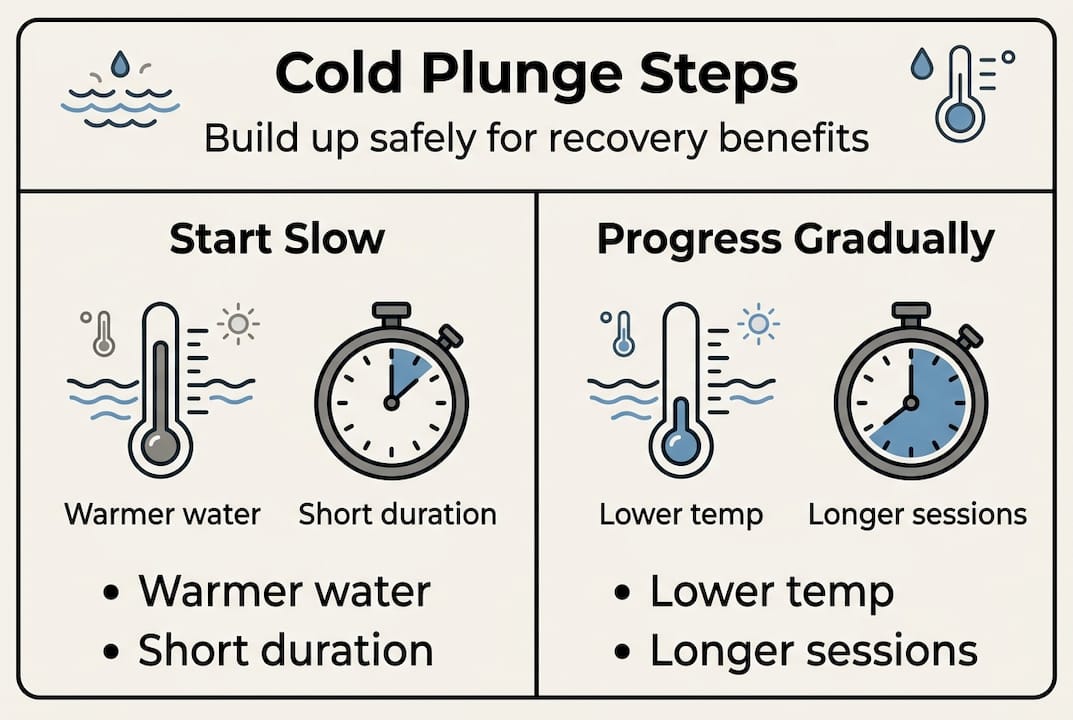
Progressive adaptation over 4-6 weeks is the evidence-backed approach, starting at 55-65°F for 1-2 minutes and building toward 45-55°F for 3-5 minutes as your cold tolerance improves.
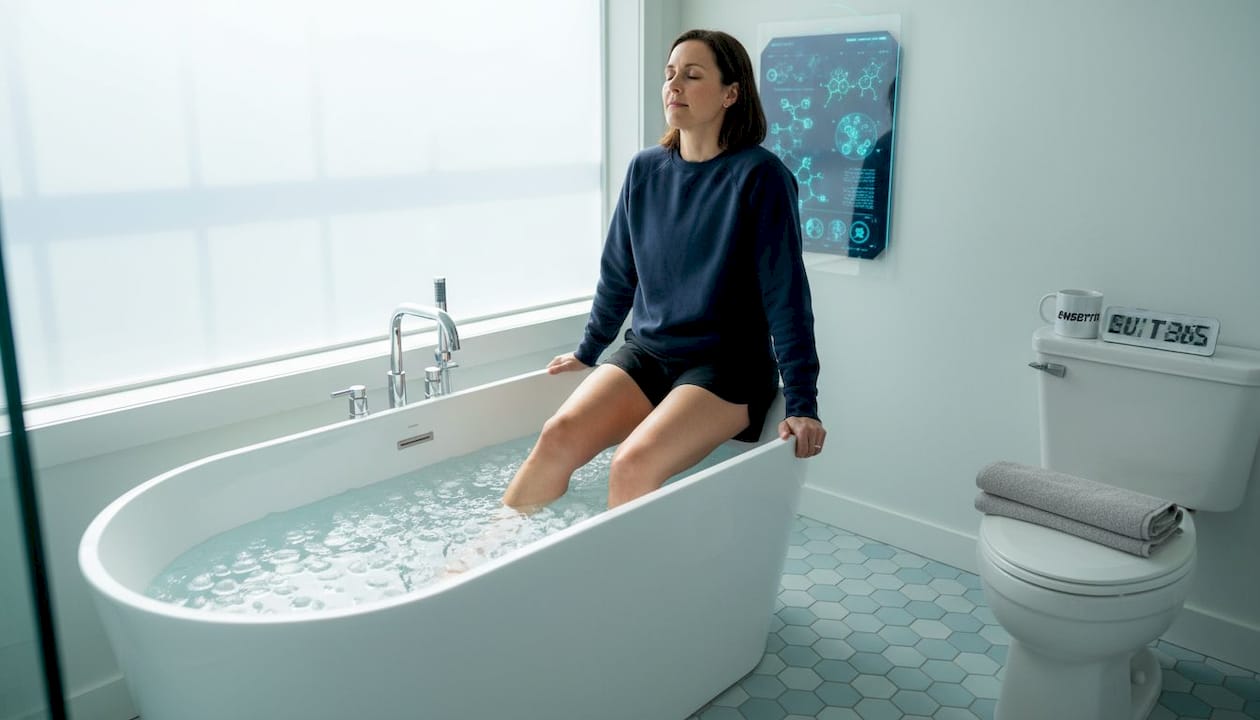
Pro Tip: If you’re familiar with Wim Hof breathing, practice it before your session, not during immersion. Breath retention in cold water is dangerous. Use controlled, rhythmic breathing while submerged.
For a deeper look at how session length affects outcomes, science-backed cold plunge timing breaks down the research on duration and frequency in detail.
Even experienced athletes make avoidable errors with cold plunging. Knowing what to watch for protects your safety and keeps your progress on track.
Most common beginner mistakes:
Enter slowly, feet-first, and avoid any head submersion in early sessions. If you feel dizzy, experience uncontrollable shivering, or feel chest tightness, exit immediately. These are clear signals to stop.
Rewarming should always be natural. Put on dry layers, move gently, and let your core temperature rise on its own. A hot shower right after a plunge short-circuits the hormonal and neurochemical cascade that makes cold immersion valuable in the first place.
Important: Cardiovascular conditions, hypertension, and Raynaud’s are absolute contraindications. If you have any of these, do not attempt cold immersion without direct medical supervision.
Pro Tip: Review cold plunge timing mistakes before your first session. Many people underestimate how quickly two minutes passes and how easy it is to misjudge exposure without a timer.
For those who want a setup that removes guesswork entirely, all-in-one plunge systems maintain precise temperatures automatically, which eliminates one of the most common sources of error.
Cold plunging is also not a daily maximum-effort activity. Treating it like a competition to see how cold or how long you can go is counterproductive. Controlled, repeatable sessions build adaptation. Reckless exposure builds risk.
Understanding what cold plunging actually delivers, and when, helps you stay consistent and avoid unrealistic expectations.
Acute effects (within 24 hours of a session):
Long-term adaptations (4-8 weeks of consistent practice):
The Huberman/Søberg protocol targets 11 minutes per week of total cold exposure, distributed across 2-4 sessions. This benchmark is associated with meaningful reductions in fatigue and clinically relevant boosts in dopamine and norepinephrine. A 2023 Biology of Sport study also showed improved power output in athletes following this approach.
Acute inflammation rises briefly, then drops significantly by the 12-hour mark, which is part of why cold plunging supports recovery rather than hindering it when timed correctly.
One important nuance: post-strength training cold plunging may blunt hypertrophy if done immediately after lifting. Waiting at least 4 hours preserves muscle-building signals while still capturing recovery benefits. If fat loss is a goal, short shivering cycles of 60-120 seconds in and out of cold water activate brown adipose tissue more effectively than a single long session.
For those pairing cold with heat, infrared sauna for recovery offers complementary benefits that stack well with cold immersion in a contrast protocol. You can also track your cold plunge results against the published benchmarks to gauge your individual response.
Key takeaways by goal:
| Goal | Recommended approach | Expected timeline |
|---|---|---|
| Recovery | 2-3x/week, 2-4 min, post-workout (4+ hrs) | 1-2 weeks |
| Mood and energy | 3-4x/week, morning sessions | 2-4 weeks |
| Fat loss support | Short shivering cycles, 60-120s in/out | 4-6 weeks |
| Performance | 11 min/week total, structured protocol | 4-8 weeks |
Most cold plunge content focuses on temperature and duration as the primary variables. In practice, consistency is the factor that drives real results. You can do a single extreme plunge at 39°F and feel nothing lasting. Or you can do three moderate sessions per week at 55°F for six weeks and notice genuine shifts in recovery, mood, and stress tolerance.
The neurochemical benefits, particularly dopamine and norepinephrine elevation, are dose-dependent and cumulative. Prioritizing consistency over intensity and targeting the 11-minute weekly benchmark yields measurable neurochemical and mood benefits without overstressing the system.
We also find that sleep quality and hormonal balance improvements are underreported in mainstream cold plunge content. Many practitioners notice better deep sleep within two to three weeks of regular sessions, which compounds recovery benefits beyond what the soreness metrics alone show.
For a nuanced look at how cold plunge timing interacts with training schedules, and how contrast sauna-cold recovery can amplify results, the evidence is more compelling than most guides acknowledge. Track your own data. The best protocol is the one you’ll actually repeat.
Ready to integrate cold plunging into your routine? Start by exploring purpose-built cold plunge systems that give you precise temperature control and a consistent experience every session. Paired with a broader recovery stack, cold immersion becomes one piece of a more complete approach to performance and longevity. Browse our full range of recovery tools, including red light therapy panels, EMS devices, and contrast therapy equipment, to build a protocol that fits your training style and health goals. If you’re unsure where to start, our product pages include detailed guidance to help you match the right tools to your specific needs.
Beginners should start at 55-65°F and progress toward 39-60°F as cold tolerance builds over several weeks. Never start at the coldest end of the range without prior adaptation.
Aim for 1-5 minutes per session, building toward 11 minutes of total weekly exposure across 2-4 sessions, as supported by the Huberman/Søberg protocol.
No. Cardiovascular disease, Raynaud’s, and pregnancy are among the conditions that require medical clearance before attempting cold immersion. Always consult a physician if you have any relevant health conditions.
Rewarm naturally using dry towels and warm clothing. Avoid hot showers immediately after exiting, as this disrupts the hormonal and neurochemical response that makes cold plunging effective.
Regular cold immersion reduces fatigue and boosts dopamine, norepinephrine, and power output, with additional benefits including improved mood, faster recovery, and better stress resilience over time.


