

Mon-Fri 9am-6pm PST
+1 (800) 686-5898
support@longevitybased.com
Mon-Fri: 9am-6pm PST

Most people assume that a hotter sauna means better results. Push the temperature higher, sweat more, recover faster. It sounds logical, but the science tells a different story. Infrared saunas operate at significantly lower air temperatures than traditional saunas, yet research shows they can improve explosive power by up to 15% and meaningfully reduce post-exercise muscle soreness. For biohackers and performance-focused athletes, that gap between assumption and evidence is exactly where the real gains live. This article breaks down the mechanisms, the data, and the practical steps to make infrared sauna sessions a core part of your recovery stack.
| Point | Details |
|---|---|
| Infrared saunas aid recovery | They speed muscle repair, reduce soreness, and improve post-exercise performance in regular users. |
| Lower temperature, greater comfort | Infrared saunas operate at a more comfortable heat, making frequent use easier and safer for most people. |
| Science-backed but not a cure-all | Evidence supports recovery and power benefits, but they don’t replace smart training or accelerate muscle size gains. |
| Optimal use is brief and consistent | Short, regular post-workout sessions (10–20 min, 2–4x/week) provide the best balance of effectiveness and safety. |
Understanding why infrared saunas work differently starts with how they generate heat. Traditional saunas heat the surrounding air to temperatures between 80°C and 100°C, forcing your body to respond to an intensely hot environment. Infrared saunas, by contrast, use radiant heat at lower air temperatures (40–60°C) while still warming body tissue directly. That distinction matters enormously for how often you can use them and how your body responds.
The lower ambient temperature makes sessions more tolerable, especially after a demanding workout when your cardiovascular system is already taxed. You can explore the broader context of sauna versus exercise science to understand how heat exposure interacts with training adaptations. Radiant infrared energy is absorbed by the skin and underlying tissue, triggering physiological responses without the suffocating heat of a traditional steam room. For a deeper look at infrared therapy health benefits, the evidence base is growing steadily.
Who benefits most from infrared sauna use:
For context on how to use heat therapy as part of a broader longevity protocol, saunas for health and longevity offers a solid framework.
| Feature | Infrared sauna | Traditional sauna |
|---|---|---|
| Air temperature | 40–60°C | 80–100°C |
| Heat mechanism | Radiant infrared | Convection/steam |
| Session duration | 15–30 min | 10–20 min |
| Cardiovascular load | Moderate | Higher |
| Comfort level | High | Lower for beginners |
Pro Tip: If you are new to heat therapy, start with 10-minute sessions at the lower end of the temperature range. Give your body two to three weeks to adapt before extending duration or frequency.
The performance data on infrared sauna use is more compelling than most people expect. A study published in Frontiers in Sports and Active Living found that post-exercise infrared sauna sessions of 10 minutes at 50°C, performed three times per week, improved neuromuscular performance, reduced muscle soreness, and enhanced perceived recovery in female team-sport athletes. The results generalize well to anyone engaged in structured training.

One of the standout findings was a 15% improvement in explosive power measured through jump height assessments. That is a meaningful performance gain from a passive recovery tool. Importantly, the benefit appears to come from improved neuromuscular readiness rather than any direct increase in muscle size.
Practical performance wins from regular infrared sauna use:
For athletes interested in stacking recovery tools, biohacking for athletic recovery covers complementary strategies in detail. It is also worth understanding how infrared vs. red light therapy differ in their mechanisms, since both are frequently used together.
Pro Tip: Research points to the best results when sessions are completed 10 to 20 minutes after exercise, two to four times per week. Consistency matters more than session length.
The physiological chain reaction triggered by infrared heat exposure explains why the results are real and repeatable. It is not simply about sweating. The mechanisms include heat-shock protein activation, mTOR signaling for muscle adaptation, vasodilation via nitric oxide, improved oxygen and nutrient delivery, and accelerated metabolic waste clearance.
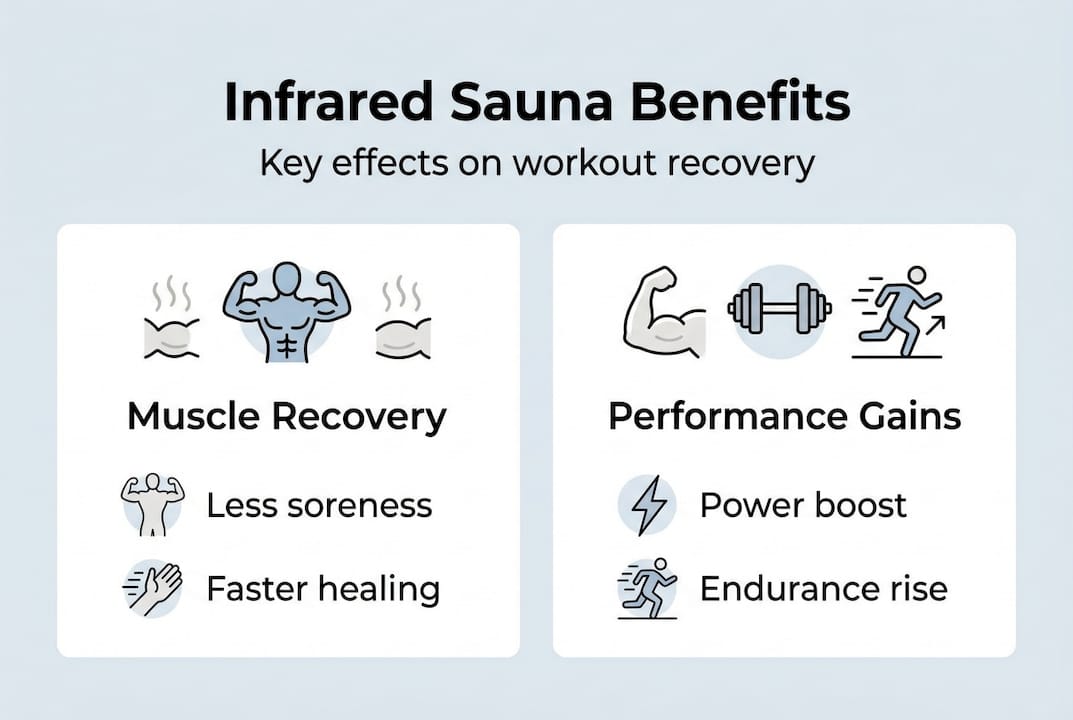
Heat-shock proteins (HSPs) are cellular stress proteins that activate when tissue temperature rises. They help repair damaged proteins inside muscle cells, which is exactly what you need after a hard training session. Nitric oxide-driven vasodilation widens blood vessels, increasing blood flow to fatigued muscles and speeding up the delivery of oxygen and nutrients while flushing out lactate and other byproducts.
Step-by-step physiological chain reaction:
For a closer look at how near-infrared wavelengths interact with tissue at the cellular level, the near-infrared therapy guide is worth reading. You can also review how thermal therapy works for a broader physiological overview.
“With regular use, the initial stress response, including elevated cortisol and heart rate, normalizes as the body adapts to heat exposure. This adaptation is part of what makes consistent infrared sauna use more effective over time than occasional sessions.”
Pro Tip: Infrared sauna supports your recovery mechanisms, but it does not replace smart programming, adequate protein intake, or quality sleep. Think of it as a force multiplier, not a standalone fix.
Infrared saunas are genuinely useful, but they are not without limits. The deeper penetration claims made by some manufacturers are overstated, and infrared saunas provide less cardiovascular benefit than traditional saunas. They are valuable for heat-sensitive individuals, but they are not outright superior across every metric. Knowing what they cannot do is just as important as knowing what they can.
Research also confirms no significant impact on muscle hypertrophy. If your primary goal is building muscle mass, infrared sauna will not accelerate that process directly. What it does do is improve the quality and speed of recovery, which allows you to train harder and more frequently over time.
Cautions to follow before starting a protocol:
“Infrared sauna is a valuable entry-level heat therapy tool, but it is not a panacea. Treating it as one component of a well-designed recovery system yields the best outcomes.”
For a grounded look at what the science behind sauna results actually supports, the evidence is clear that moderation and consistency outperform intensity and excess. You can also review the infrared light benefits literature to separate fact from marketing.
Integrating infrared sauna into your training week does not require a major overhaul. The protocol is straightforward, and the evidence points to a clear optimal window. Research confirms that best gains come from 10–20 minute sessions, two to four times per week, completed in the post-exercise period.
Step-by-step integration guide:
For busy professionals, a 15-minute post-workout infrared session three times per week fits easily into a standard gym routine. Biohackers looking to layer modalities can reference athlete recovery routines for a more advanced stacking framework. The infrared at-home spa trend is also making consistent access more practical than ever.
Pro Tip: Listen to your body after each session. If you feel unusually fatigued or your resting heart rate is elevated the next morning, scale back the frequency or duration before your next session.
Understanding the science is the first step. Acting on it is where the real progress happens. At Longevity Based, you will find a curated selection of evidence-based recovery and biohacking devices designed to complement exactly the kind of protocol outlined in this article. Whether you are looking to add photobiomodulation alongside your heat therapy or explore a full recovery stack, the options are built around the same scientific principles discussed here. The portable red light therapy device pairs particularly well with infrared sauna use, targeting cellular repair through a different but complementary mechanism. Browse the full recovery tools collection to find devices matched to your specific performance and longevity goals.
Infrared saunas offer greater comfort and accessibility for post-workout recovery, though tissue penetration claims are sometimes overstated and cardiovascular benefits are more modest than those from traditional saunas. Both have a place in a well-rounded recovery protocol.
For most people, 10–20 minute sessions two to four times per week in the post-exercise window delivers the strongest recovery and performance benefits without increasing risk.
Research shows no significant hypertrophy boost from infrared sauna use, but improved recovery quality allows for more consistent, higher-quality training sessions over time.
Most healthy individuals, including female and team-sport athletes, can use infrared saunas safely when following established guidelines and avoiding excessive heat exposure after very intense training.
Infrared saunas use heat to promote muscle relaxation, vasodilation, and waste clearance, while red light therapy works at the cellular level to support mitochondrial function and reduce inflammation without generating significant heat.


