

Mon-Fri 9am-6pm PST
+1 (800) 686-5898
support@longevitybased.com
Mon-Fri: 9am-6pm PST

Getting into a cold plunge feels straightforward until you’re actually in the water, watching the seconds tick by and wondering whether 90 seconds is enough or whether you need to push through to five minutes. The uncertainty is real, and it matters. Optimal cold plunge duration for most people falls between 2 and 5 minutes per session, adjusted by water temperature and experience level, with beginners starting as low as 30 seconds and advanced users extending to 10 to 15 minutes at milder temperatures. This guide breaks down exactly how long you should stay in, what factors change that number, and how to build a weekly routine that delivers measurable recovery and longevity benefits.
| Point | Details |
|---|---|
| Session time varies | The ideal cold plunge duration depends on water temperature, your experience, and health status. |
| Minimum for health | Aim for a total of at least 11 minutes per week under 60°F for measurable benefits. |
| Safety first | Longer sessions carry risks; always exit if you feel numb, dizzy, or in pain. |
| Progress gradually | Start with short exposures and extend only as your body adapts over time. |
Cold water immersion is not a single, uniform stimulus. What happens in your body during the first two minutes is physiologically different from what happens at the five or ten minute mark. Understanding this distinction helps you target the right duration for your specific goals.
Cold exposure triggers a rapid surge of catecholamines, including norepinephrine and dopamine, which are linked to mood elevation and alertness. Longer sessions shift the focus toward reducing systemic inflammation and activating brown adipose tissue (brown fat), which plays a role in metabolic health and thermogenesis. Both windows offer value, but they serve different purposes.
Here is a quick overview of what cold exposure delivers across the duration spectrum:
That said, longer is not always better. Prolonged sessions raise the risk of hypothermia (Cleveland Clinic advises keeping sessions to five minutes or less), and individuals with cardiac conditions or high blood pressure should avoid cold plunges entirely without medical clearance. The cold exposure benefits are real, but they require a calibrated approach.
Key insight: Cold plunges are a dose-dependent intervention. More time is not inherently more beneficial, and the risk curve rises sharply past the 10 to 15 minute mark for most people.
If you are exploring cold plunge systems for home use, temperature control is essential for managing this dose accurately.
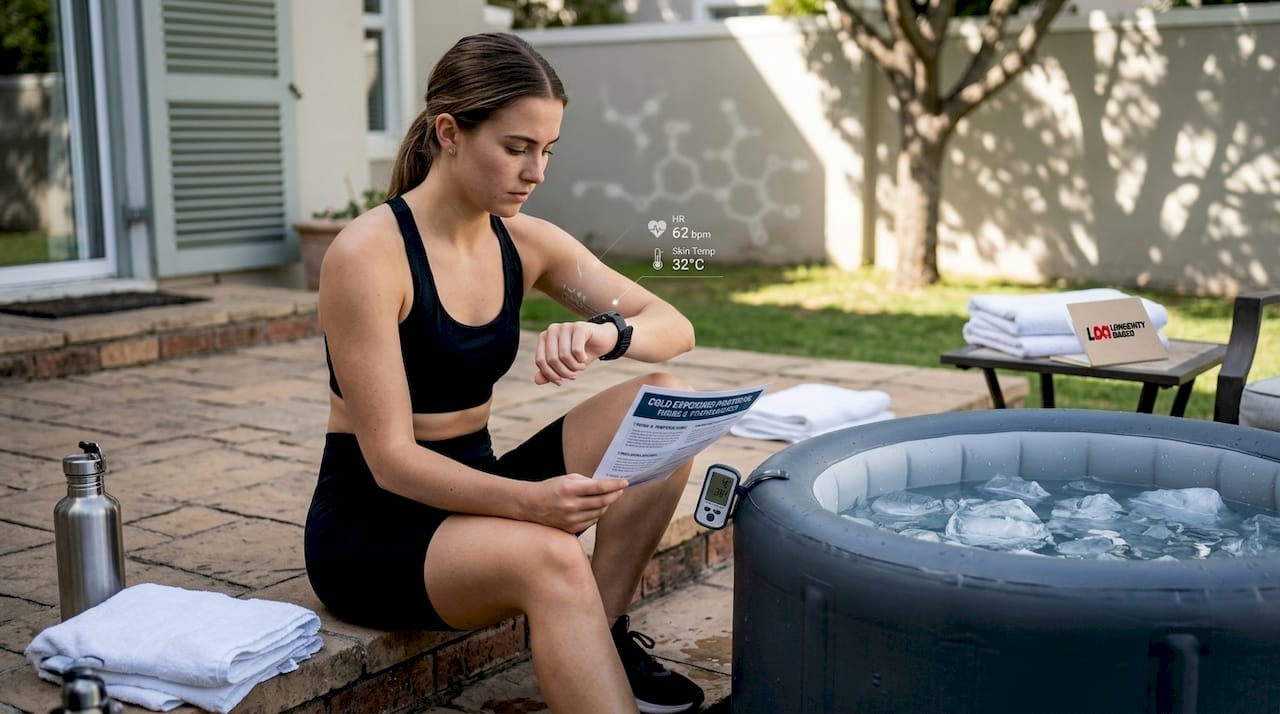
No single duration works for everyone. Four primary variables determine how long you should stay in the water: water temperature, your experience level, your current health status, and your training goal.
Water temperature is the most critical variable. Colder water requires less time to produce equivalent physiological effects. This is why a temperature-controlled plunge pool gives you a meaningful advantage: you can dial in the exact stimulus rather than guessing.
| Experience level | Water temperature | Recommended duration |
|---|---|---|
| Beginner | 55 to 59°F (13 to 15°C) | 1 to 3 minutes |
| Intermediate | 45 to 55°F (7 to 13°C) | 2 to 5 minutes |
| Advanced | 39 to 45°F (4 to 7°C) | 1 to 3 minutes |
Health status also matters. If you have cardiovascular concerns, Raynaud’s syndrome, or are pregnant, cold plunges require physician approval before you start. For healthy individuals, the limiting signal should be discomfort, not pain. Shivering is a natural response, but uncontrollable shaking or numbness in the extremities is a clear signal to exit.
Your goal shapes your timing too. Post-workout muscle recovery favors slightly longer sessions at moderate temperatures. Mood and cognitive performance benefits are accessible in shorter, colder sessions. A portable option like a cold plunge tub makes it easier to experiment with both approaches at home.
Pro Tip: Use a waterproof timer rather than estimating. Perception of time in cold water is notoriously inaccurate, and most beginners overestimate how long they have been submerged.
Knowing the theory is one thing. Executing a session correctly is another. Follow these steps to structure each plunge for maximum benefit and safety.
| Goal | Temperature | Duration | Frequency |
|---|---|---|---|
| Mood and focus | 50 to 59°F | 2 to 3 min | 3 to 4x per week |
| Muscle recovery | 50 to 59°F | 5 to 10 min | 2 to 3x per week |
| Metabolic health | 45 to 55°F | 2 to 5 min | 3 to 4x per week |
| Longevity protocol | 50 to 59°F | 2 to 4 min | 3 to 4x per week |
For those interested in cold plunge fat-burning and metabolic benefits specifically, consistency across the week matters more than any single extended session.
Pro Tip: If you are new to cold plunges, start with cold showers for one to two weeks before transitioning to full immersion. The psychological adaptation alone reduces the shock response significantly.
Individual sessions matter, but the real gains come from weekly accumulation. A small 2021 study led by Dr. Susanna Søberg found that experienced winter swimmers who logged about 11 minutes of cold water immersion per week, spread across two to three sessions, showed better cold-induced heat production than controls. That 11-minute figure is now a widely used weekly target, though it has not been tested as a minimum effective dose.
That number is more accessible than it sounds. Three sessions of roughly four minutes each gets you there. Four sessions of three minutes each also works. Aim for water below about 60°F (15°C) for the exposure to count toward this target.
Statistic to know: 11 minutes of weekly cold exposure across 2 to 4 sessions is a popular, research-inspired target for metabolic benefits.
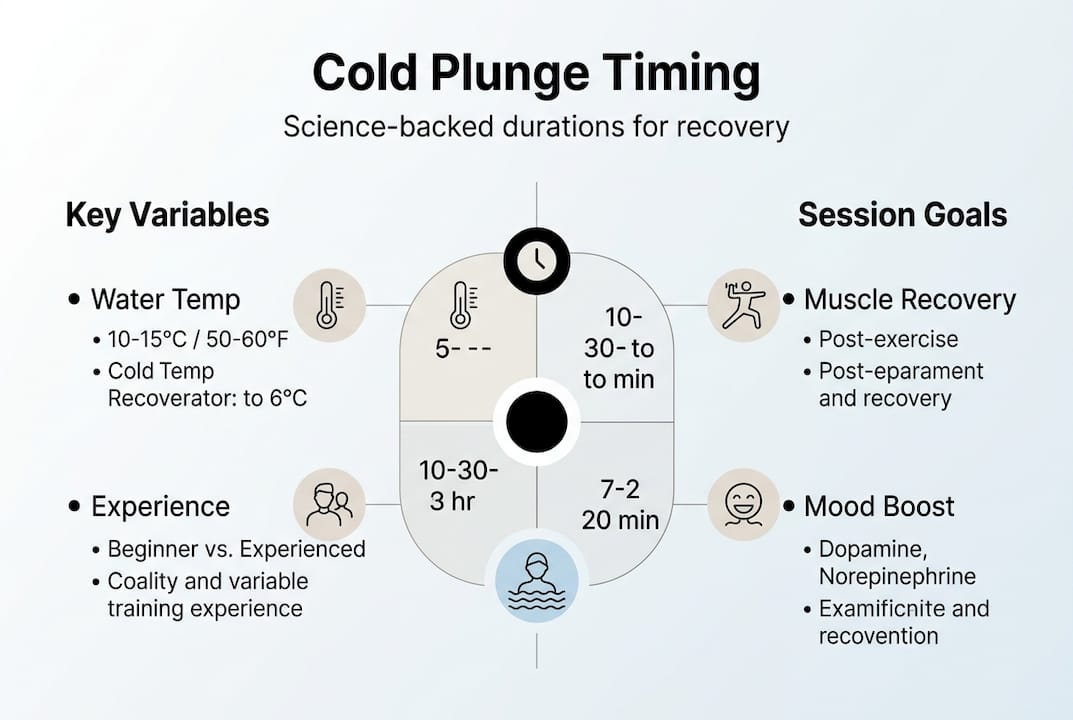
Here is how different weekly structures compare:
| Sessions per week | Duration per session | Weekly total | Meets threshold? |
|---|---|---|---|
| 2 | 5 to 6 min | 10 to 12 min | Yes |
| 3 | 4 min | 12 min | Yes |
| 4 | 3 min | 12 min | Yes |
| 1 | 10 min | 10 min | Borderline |
| Daily | 1 to 2 min | 7 to 14 min | Varies |
A few additional points worth noting:
Even experienced practitioners make errors that reduce effectiveness or increase risk. Knowing what to watch for keeps your practice both safe and productive.
Consistency matters more than any single session length. Sporadic long sessions are less effective and riskier than regular shorter ones. Most people benefit from capping sessions at 5 to 10 minutes regardless of experience level.
Common mistakes to avoid:
Safety note: Know the early signs of hypothermia: intense shivering, slurred speech, confusion, and loss of coordination. If any of these appear, exit immediately, rewarm gradually, and seek medical attention if symptoms persist.
Setting up a safe cold plunge setup at home with a reliable chiller and thermometer removes much of the guesswork and keeps your practice within safe parameters.
Once your cold plunge timing is dialed in, the next step is building a complete recovery ecosystem around it. At Longevity Based, we offer a curated range of recovery tools designed to complement cold exposure and amplify your results. Pairing cold immersion with compression boots may help support circulation and reduce post-session soreness. Red light therapy panels support cellular repair and inflammation reduction, creating a powerful contrast protocol when used after cold exposure. Explore the full range of biohacking devices available on our platform to build a recovery stack that matches your performance and longevity goals.
Beginners should start with 1 to 3 minutes in water between 55 and 59°F (13 to 15°C) and increase duration gradually as tolerance builds over several weeks.
Aim for 2 to 4 sessions per week, accumulating at least 11 minutes total in water below 60°F, a commonly cited weekly target for metabolic benefits.
Yes. Exceeding 15 minutes significantly raises hypothermia risk, and most people should cap sessions at 5 to 10 minutes regardless of experience level.
Avoid cold plunges if you have cardiac or blood pressure conditions, Raynaud’s syndrome, or are pregnant. Always consult your physician before starting if you have any underlying health concerns.
If the water feels uncomfortably cold but safe and you reach at least 1 to 2 minutes of full immersion, you are triggering the key catecholamine and recovery responses that drive the primary benefits.


