

Mon-Fri 9am-6pm PST
+1 (800) 686-5898
support@longevitybased.com
Mon-Fri: 9am-6pm PST

TL;DR:
- Makeup on the face during red light therapy reduces light penetration and treatment efficacy.
- Thoroughly removing makeup, sunscreen, and occlusive skincare before each session maximizes results.
- Consistent, proper skin preparation is essential for achieving noticeable skin improvements with red light therapy.
Most people assume that what’s on their face during a red light therapy session doesn’t matter much. That assumption is costing them real results. Red light therapy (RLT) works by delivering specific wavelengths of light directly into skin tissue, where cellular activity responds and regenerates. When makeup sits between the device and your skin, it creates a physical barrier that can scatter or absorb those wavelengths before they reach their target. Understanding this relationship is essential for anyone serious about using RLT to improve skin health, collagen production, or overall complexion quality.
| Point | Details |
|---|---|
| Makeup blocks results | Even lightweight makeup acts as a barrier, reducing the effectiveness of red light therapy for skin health. |
| No safety risk | Using red light therapy with makeup is safe but doesn’t deliver maximum benefits. |
| Clean skin is best | Removing all makeup and products before therapy ensures the best possible outcomes for your skin. |
| Consistency matters | Routine, not perfection, drives improved results over time with red light therapy. |
Red light therapy is a non-invasive treatment that uses wavelengths typically in the 630 to 850 nanometer range to stimulate cellular function in the skin. It’s not a trend. It’s a well-researched modality with a growing body of clinical evidence supporting its use for a wide range of skin concerns.
The core appeal is straightforward: RLT works at the cellular level by energizing mitochondria, the powerhouses of your cells. This stimulation leads to measurable improvements in skin structure and function. Harvard Health confirms that RLT boosts collagen, reduces inflammation, and supports wound healing, making it one of the most versatile tools in a skin health protocol.
Here’s why people are adding RLT to their routines:
The light therapy benefits extend well beyond aesthetics, but for skin-focused users, the anti-aging and healing applications are the primary draw.
Here’s a quick overview of the most common skin concerns RLT addresses:
| Skin concern | How RLT helps | Typical session frequency |
|---|---|---|
| Fine lines and wrinkles | Stimulates collagen production | 3 to 5 times per week |
| Acne and inflammation | Reduces bacterial activity and swelling | Daily to every other day |
| Hyperpigmentation | Supports cellular turnover | 3 to 4 times per week |
| Wound and scar healing | Accelerates tissue repair | Daily during active healing |
For those following red light therapy tips for healing and skin optimization, consistency and proper skin preparation are the two variables that matter most.
With the basics covered, it’s important to address the core question: can you use red light therapy with makeup on?
The short answer is yes, but you shouldn’t. Makeup, including foundation, powder, concealer, and even tinted moisturizers, creates a physical layer on the skin’s surface. Red and near-infrared light wavelengths need to pass through that layer to reach the dermis where collagen-producing cells live. When they encounter pigments, particles, and occlusive ingredients in cosmetics, some of that light is scattered, reflected, or absorbed before it does any useful work.
Different makeup products affect light penetration differently:
Harvard Health notes that there is no direct safety risk from using RLT with makeup on, but a bare face is best for achieving the full range of benefits. This is a critical distinction. Makeup during RLT won’t harm you, but it will reduce how much you gain from each session.
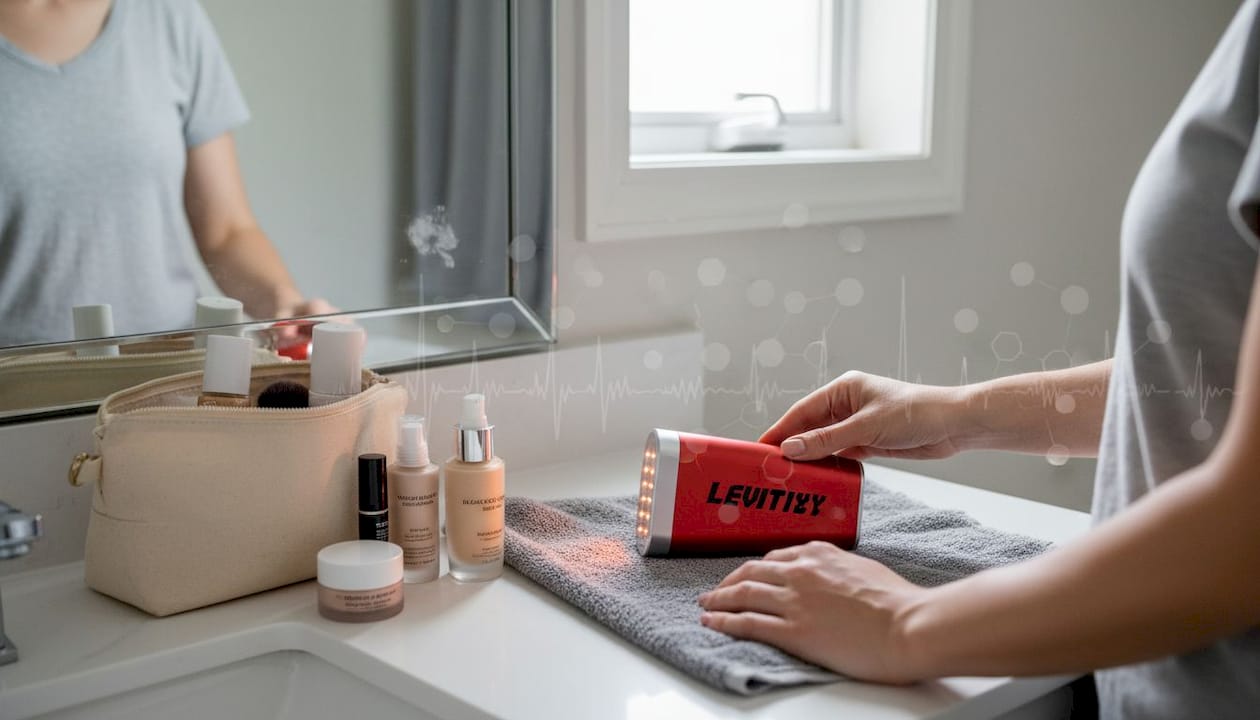
For anyone investing time and money into a regular RLT protocol, that reduced efficacy adds up. Think about it this way: if makeup blocks even 20 to 30 percent of the therapeutic light, you’re getting a fraction of the collagen-stimulating and anti-inflammatory effect you paid for.
For more on red light therapy safety and how to use your device responsibly, understanding light penetration is a good starting point.
Pro Tip: If you must do a session with some product on your skin, opt for a light, clear serum rather than pigmented makeup. It creates far less interference with light penetration.
Understanding the drawbacks of using RLT with makeup leads directly into actionable preparation steps. Getting your skin ready correctly is just as important as the session itself.
“Bare skin allows for optimal penetration of healing wavelengths, making thorough cleansing before each session a non-negotiable best practice.”
Here’s a step-by-step preparation routine to maximize your results:
Knowing how often to use red light therapy is one piece of the puzzle. Knowing how to prepare your skin before each session is the other. Both variables directly influence your long-term outcomes.
After your session, this is the ideal time to apply your active serums, peptides, or hyaluronic acid. Post-session skin is primed for absorption, and many users report that their skincare products feel more effective when applied immediately after RLT.
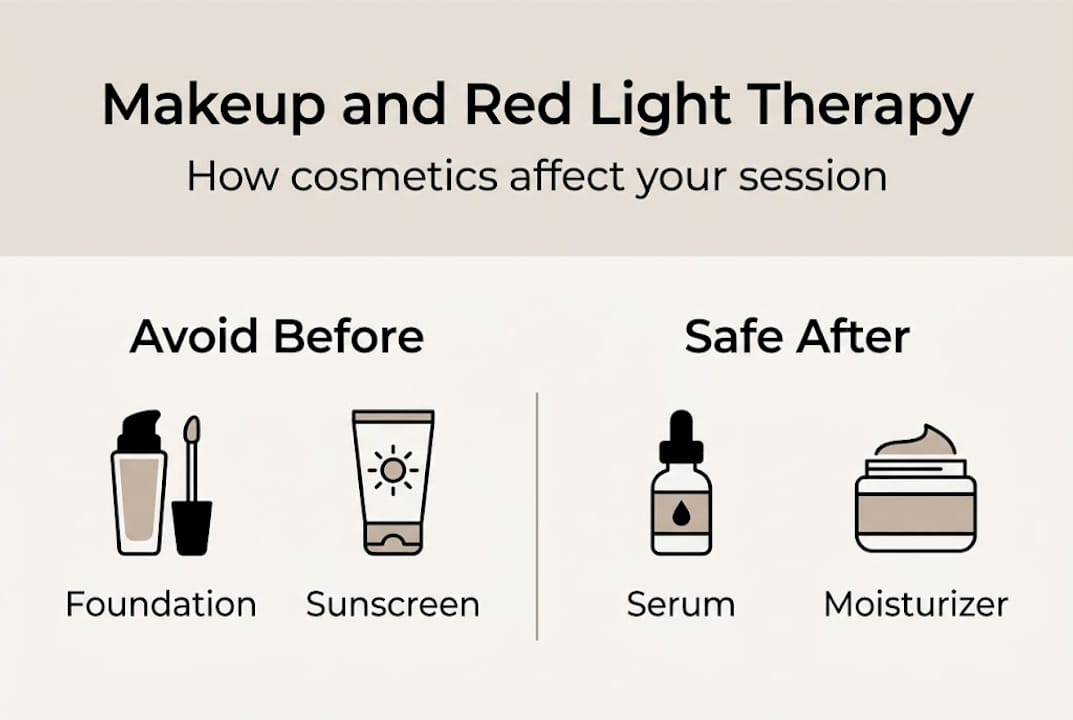
For those using RLT specifically for wound care or post-procedure recovery, the same principles apply. Clean, product-free skin is essential. Learn more about using RLT for healing to tailor your protocol appropriately.
Pro Tip: Remove anything that could create a barrier between your skin and the device, including SPF, heavy oils, and silicone-based primers, before every session without exception.
Before wrapping up, let’s clear up some common misunderstandings that might be holding you back.
Myths around RLT and makeup are surprisingly persistent, and some of them lead people to either avoid the therapy entirely or use it incorrectly. Here’s what the evidence actually says:
Understanding the difference between infrared vs red light therapy also helps clarify why wavelength-specific penetration matters so much. Near-infrared light penetrates deeper than red light, but both are affected by surface barriers. It’s also worth noting that blue light therapy uses different wavelengths entirely, with different penetration depths and applications, so the makeup barrier concern is consistent across light-based therapies.
Here’s a perspective that most guides skip over. The device you use matters less than how consistently you use it correctly. Plenty of people invest in high-quality RLT panels and then undermine their results by rushing through sessions with a full face of makeup still on, or skipping sessions because prep feels like too much effort.
The real compounding effect in RLT comes from repeated, unobstructed exposure over weeks and months. Even a modest increase in bare-skin session frequency, say going from three sessions per week to five, with clean skin each time, produces noticeably better outcomes than daily sessions done with product barriers in place.
Don’t let perfect be the enemy of consistent. If you occasionally forget to fully remove a light moisturizer before a session, that’s not a crisis. What matters is building the habit of clean-skin preparation as your default. Over time, this single behavioral shift compounds into significantly better collagen response and skin clarity. Explore how using RLT masks for skin fits into a consistent routine for targeted facial results.
For those ready to put these tips into practice, the quality of your device matters as much as your preparation routine. At Longevity Based, we offer clinically informed RLT devices designed for at-home use that make clean-skin protocols easy to maintain. The BioLight Glow device is a portable, targeted option ideal for facial sessions, giving you precise wavelength delivery without the complexity of larger panels. For a broader selection of devices suited to different goals and skin types, browse the full BioLight collection. Pairing the right device with a consistent, makeup-free routine is where real, measurable skin transformation begins.
You can, but makeup reduces efficacy by blocking beneficial wavelengths, so removing it before your session gives you the full collagen-stimulating and healing benefit.
Red light therapy is gentle and poses no direct safety risk when used with makeup, but consistently leaving cosmetics on during sessions without proper post-cleansing can contribute to clogged pores and increased skin sensitivity over time.
No. Dense foundations and mineral powders with zinc or titanium dioxide scatter or block light more significantly than lighter, clear formulas, though all cosmetic layers create some degree of interference.
Yes. A clean, product-free face ensures optimal light penetration, and mineral sunscreens in particular are highly reflective and should always be removed before a session.


