

Mon-Fri 9am-6pm PST
+1 (800) 686-5898
support@longevitybased.com
Mon-Fri: 9am-6pm PST

You’ve probably heard that a good night’s sleep can help you recover from almost anything. But what if years of poor sleep have already taken their toll on your body and brain? Recent research reveals that chronic sleep deprivation accelerates biological aging through mechanisms that aren’t easily reversed, yet specific sleep strategies can reduce aging risk by up to 23%. This guide examines the science behind sleep-driven aging and provides evidence-based methods to mitigate damage and support longevity. You’ll discover how sleep patterns influence cellular aging, whether reversal is possible, and practical steps to optimize your sleep for healthier aging.
| Point | Details |
|---|---|
| Sleep debt accelerates aging | Chronic sleep deprivation triggers inflammatory cascades, telomere shortening, and cellular damage that speed up biological aging. |
| Optimal sleep seven hours | Around seven hours per night minimizes epigenetic aging acceleration and telomere shortening compared with shorter or longer sleep. |
| Weekend catch up helps | Brief extra sleep on weekends can partially reduce aging risk but cannot fully reverse years of sleep debt. |
| Reversal unlikely | Although years of sleep debt cannot be fully reversed, improving sleep quality reduces aging risk and supports longevity. |
| Sleep quality matters | Prioritizing sleep quality as well as duration supports healthier aging by reducing inflammatory processes and cellular damage. |
When you skimp on sleep night after night, your body initiates damage at the molecular level. Chronic sleep restriction activates complement and coagulation cascades that drive neuroinflammation and synaptic disruption in your brain. These processes mirror natural aging but happen faster when you’re sleep deprived.
Your brain relies on sleep to clear metabolic waste and repair cellular damage. Without adequate rest, inflammatory proteins accumulate and disrupt the communication between neurons. This neuroinflammation doesn’t just make you foggy, it fundamentally alters brain structure in ways that resemble accelerated aging. The complement system, normally involved in immune defense, becomes overactive and starts attacking healthy brain tissue.
At the cellular level, sleep loss damages your DNA’s protective caps called telomeres. Short sleep and insomnia link to shorter telomeres and higher risk for age-related diseases. Telomeres naturally shorten as you age, but chronic sleep deprivation speeds this process dramatically. When telomeres become critically short, cells can no longer divide properly and enter a state called senescence, where they release inflammatory signals that harm surrounding tissues.
The cascade of biological consequences includes:
These mechanisms don’t operate in isolation. They interact and amplify each other, creating a downward spiral of biological decline. Poor sleep also increases your risk for conditions like cardiovascular disease, diabetes, and cognitive impairment, all of which are associated with accelerated aging. Understanding sleep apnea brain aging what the science shows helps you recognize how sleep disorders compound these effects.
Pro Tip: Track your sleep consistently for two weeks to identify patterns. Many people overestimate how much sleep they actually get, and objective data reveals opportunities for improvement.
Not all sleep patterns affect aging equally. Research shows that both duration and timing play critical roles in determining how fast your biological clock ticks. Getting less than 7 hours regularly accelerates aging markers, while sleeping more than 9 hours often indicates underlying health issues rather than causing harm directly.
The sweet spot appears to be right around 7 hours per night. Studies examining optimal sleep duration of 7 hours found it minimizes epigenetic aging acceleration and telomere shortening compared to both shorter and longer sleep durations. This isn’t arbitrary, it reflects the amount of time your body needs to complete essential repair processes across multiple sleep cycles.
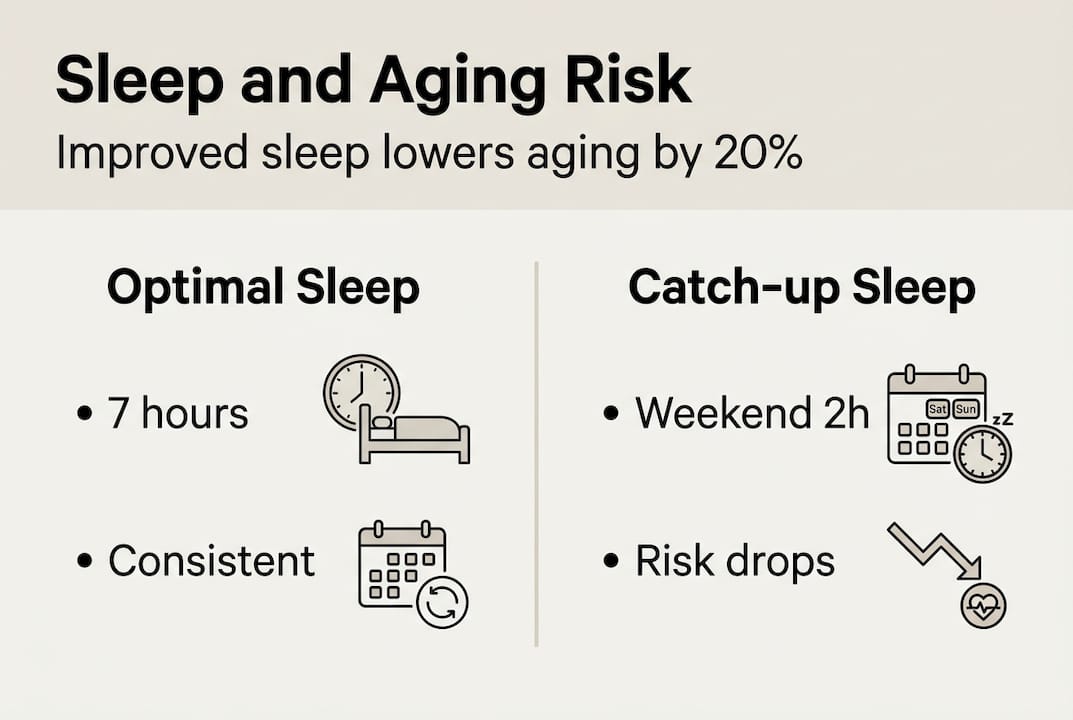
Weekend catch-up sleep offers surprising benefits. Research demonstrates that weekend catch-up sleep of 0-2 hours lowers biological aging risk by 20-23%, particularly when combined with appropriate bedtime habits. This suggests your body can partially compensate for weekday sleep debt if you act quickly. However, this strategy works best for occasional shortfalls, not chronic deprivation.
| Sleep Pattern | Aging Impact | Key Considerations |
|---|---|---|
| Consistent 7 hours nightly | Minimal aging acceleration | Gold standard for longevity |
| Short sleep (under 6 hours) | Accelerated biological aging | Increases disease risk significantly |
| Long sleep (over 9 hours) | May indicate illness | Often a symptom rather than cause |
| Weekend catch-up (0-2 hours) | 20-23% reduced aging risk | Partial mitigation, not full reversal |
| Irregular sleep schedule | Disrupted circadian rhythm | Compounds aging effects |
Sleep quality matters just as much as quantity. You can spend 8 hours in bed but only get 5 hours of actual restorative sleep if you experience frequent awakenings or poor sleep architecture. Deep sleep and REM sleep stages are when most cellular repair occurs, and disruptions to these stages accelerate aging even if total time in bed seems adequate.
Circadian alignment amplifies these effects. Sleeping during your body’s natural nighttime window produces better cellular outcomes than sleeping the same number of hours at irregular times. Your circadian clock regulates thousands of genes involved in metabolism, immune function, and cellular repair. When you consistently optimize your sleep for better health by aligning with natural light-dark cycles, you support these fundamental processes.
Pro Tip: Use blackout curtains and get bright morning light exposure within 30 minutes of waking. This contrast strengthens your circadian rhythm and improves both sleep quality and metabolic health.
The relationship between sleep variability and aging reveals important nuances. People with highly irregular sleep schedules show faster biological aging than those who maintain consistency, even if average sleep duration is similar. Your body thrives on predictability, and erratic sleep patterns create metabolic stress that accelerates cellular damage.
This question drives much of the current research, and the answer is both encouraging and sobering. Years of chronic sleep deprivation create cumulative biological damage that cannot be completely undone quickly. However, improving your sleep habits does reduce further aging acceleration and can partially restore some markers of biological health.
The evidence suggests that full reversal of aging effects from years of sleep deprivation is unlikely, but improvements reduce further acceleration. Think of it like compound interest in reverse. The damage accumulated over years creates a deficit that takes considerable time to address, and some changes may be permanent. Shortened telomeres don’t simply regrow to their original length, and neuroinflammation-damaged brain regions may not fully regenerate.
That said, your body possesses remarkable adaptive capacity. When you establish healthy sleep patterns, several positive changes occur:
The mechanism involves reducing ongoing damage rather than reversing past harm. Poor sleep quality links to telomere attrition and accelerated cellular aging via oxidative stress and inflammation. When you improve sleep, you interrupt these destructive processes and give your body’s natural repair systems a chance to work effectively.
Sleep improvement works best as part of a comprehensive longevity strategy. Exercise enhances cellular cleanup processes and may help rejuvenate skin and other tissues affected by sleep deprivation. Proper nutrition provides the building blocks for cellular repair. Stress management reduces cortisol levels that interfere with sleep quality. These interventions work synergistically with better sleep to slow biological aging.
Skin aging from poor sleep demonstrates both the damage and potential for improvement. Chronic sleep deprivation accelerates collagen breakdown, reduces skin barrier function, and increases visible signs of aging. While you cannot completely reverse skin aging from years of poor sleep overnight, consistent quality sleep combined with targeted skincare can produce meaningful improvements in skin health and appearance over several months.

Pro Tip: Focus on preventing further damage first, then optimize recovery. Consistent 7-hour sleep nights for three months will show measurable improvements in inflammatory markers and cognitive function, even if complete reversal isn’t possible.
The timeframe for seeing benefits varies by measure. Subjective improvements in energy and mood often appear within days of better sleep. Inflammatory markers may normalize within weeks. Changes in epigenetic aging markers take months to detect. Telomere length changes occur over years. Setting realistic expectations helps you stay committed to sleep optimization as a long-term investment in healthspan.
Knowing the science matters little without actionable steps. These evidence-based strategies help you optimize sleep quality and duration to slow aging and support cellular health. Start with the foundations and add complexity as needed.
Establish a consistent sleep schedule targeting 7 hours nightly. Go to bed and wake at the same times every day, including weekends. This regularity strengthens your circadian rhythm and improves sleep efficiency.
Get bright light exposure within 30 minutes of waking. Morning light anchors your circadian clock and promotes better sleep quality that night. Aim for at least 10 minutes of outdoor light or use a light therapy device if needed.
Create an optimal sleep environment. Keep your bedroom cool (65-68°F), completely dark, and quiet. Use blackout curtains, white noise machines, or earplugs as needed to eliminate disruptions.
Implement a wind-down routine 60-90 minutes before bed. Dim lights, avoid screens, and engage in relaxing activities like reading or gentle stretching. This signals your body that sleep is approaching.
Limit caffeine after 2 PM and avoid alcohol close to bedtime. Both substances disrupt sleep architecture even if they don’t prevent you from falling asleep initially.
Use weekend catch-up sleep strategically but don’t rely on it exclusively. If you must sleep in on weekends, limit the difference to 1-2 hours from your weekday schedule to maintain circadian consistency.
Advanced optimization strategies include:
The compound effect of small consistent improvements produces significant long-term benefits. You don’t need to perfect every aspect simultaneously. Focus on the highest-impact changes first, typically sleep schedule consistency and light exposure timing. As these become habitual, layer in additional optimizations.
Pro Tip: Measure your progress objectively. Track how you feel each morning on a simple 1-10 scale and note your sleep duration. After 30 days, you’ll see clear patterns that reveal which interventions work best for your unique biology.
Technology can support your sleep optimization efforts when used appropriately. Sleep tracking devices provide data on sleep duration, efficiency, and architecture. However, avoid becoming overly focused on perfect scores, which can create anxiety that interferes with sleep. Use data to identify trends and test interventions, not to judge each night’s performance.
Many people benefit from exploring comprehensive health optimization tips for longevity that integrate sleep with other lifestyle factors. Sleep doesn’t exist in isolation, and addressing nutrition, exercise, and stress management simultaneously produces better outcomes than focusing on sleep alone. The synergy between these factors amplifies the anti-aging benefits of each individual intervention.
Optimizing sleep and slowing biological aging often benefits from the right tools and technology. Longevity Based specializes in biohacking devices and longevity products designed to support evidence-based health optimization strategies. Their curated selection focuses on scientifically backed solutions that help you measure, track, and improve key health markers.
Consider exploring their measurement devices to quantify your sleep quality and track improvements over time. Objective data reveals patterns you might miss subjectively and helps you identify which interventions produce the best results for your unique biology.
For comprehensive recovery support, their recovery tools for longevity and performance complement sleep optimization efforts. These devices support the cellular repair processes that occur during quality sleep and may help mitigate some aging effects from past sleep deprivation when used consistently as part of a holistic longevity strategy.
No, you cannot completely reverse biological aging from years of chronic sleep deprivation. The cellular damage, including telomere shortening and accumulated neuroinflammation, creates lasting changes that improve slowly with better sleep habits. However, optimizing your sleep does halt further acceleration and allows natural repair processes to work more effectively. Focus on preventing additional damage and supporting gradual recovery rather than expecting complete reversal.
Research consistently shows that 7 hours of sleep per night minimizes biological aging markers. This duration optimizes epigenetic aging indicators and maintains telomere length better than either shorter or longer sleep durations. Individual needs vary slightly, but most adults see the best longevity outcomes with consistent 7-hour nights. Quality matters as much as quantity, so prioritize both duration and optimal sleep habits for maximum benefit.
Weekend catch-up sleep of 0-2 hours reduces biological aging risk by approximately 20-23% compared to consistently short sleep. This provides meaningful but incomplete protection against the effects of weekday sleep deprivation. The strategy works best for occasional shortfalls rather than chronic sleep debt, and you should combine it with good bedtime habits. Don’t rely on weekend catch-up sleep as a long-term solution, but use it strategically when life disrupts your ideal schedule.
Consistently improving sleep quality and duration forms the foundation, but comprehensive strategies work best. Combine 7-hour nightly sleep with regular exercise, which enhances cellular cleanup and may help reverse some tissue damage. Support skin health with targeted interventions as outlined in guides on reversing skin aging. Manage stress, optimize nutrition, and consider measurement tools to track your progress objectively over months rather than expecting immediate transformation.


