

Mon-Fri 9am-6pm PST
+1 (800) 686-5898
support@longevitybased.com
Mon-Fri: 9am-6pm PST

Athletes are continually pushing their bodies to new limits in an attempt to find the slightest edge in improving performance and accelerating recovery. Traditional training strategies will not be enough in the increasingly competitive 2026 environment. Biohacking is technology driven, science supported ways to optimize the way your body naturally functions. This tutorial is a step-by-step guide to help you implement effective biohacking techniques including establishing your baseline data (metrics) and using advanced recovery technologies. You'll learn how to monitor your key biomarkers, use cold and heat therapies to create strategic recovery, use neurostimulation to enhance cognitive ability and avoid common biohacking pitfalls that waste time and money. By following a structured approach to biohacking you can measurably increase both your performance and recovery.
| Point | Details |
|---|---|
| Tracking Baseline Metrics First | You should have at least two weeks of baseline sleep and HRV data prior to starting any biohacking interventions so you can compare data reliably. |
| Recovery Therapies Cut Down On Downtime | Cold and heat therapy may modestly speed recovery, though no fixed percentage has been established. Hyperbaric Oxygen Therapy has not been shown to speed recovery from muscle soreness. |
| Neurostimulation Improves Performance | Elite athletes have demonstrated improved swimming performance and cognitive function using transcranial direct current stimulation. |
| Multiple Changes At One Time Will Waste More Time Than You Think | Implement only one biohacking technique at a time to ensure you're measuring the isolated impact of the technique on your performance metrics. |
| Continuous Glucose Monitoring Has Limited Value To Non-Diabetic Athletes | Continuous Glucose Monitoring (CGM) can be less accurate for non-diabetic athletes during exercise and does not provide any proven performance benefits. |
Prior to initiating any biohacking intervention, you need to have established a solid base line of data. Track your sleep and HRV for two weeks prior to making any changes, and make only one change at a time to determine the effect on your metrics. This disciplined approach allows you to differentiate between actual improvement and placebos and normal fluctuation of performance.
There are three primary metrics to track: sleep quality, heart rate variability, and recovery scores. All of these metrics give insight into how well your nervous system is able to handle the stresses of training and recover between sessions. There are many wearable devices that allow you to track these metrics continuously without interfering with your daily routine. Look for devices that track these metrics in a consistent manner across all types of activities and environments.
Consistency is more important than perfection. Track your metrics at the same time each day, preferably the first thing in the morning prior to engaging in any physical activity. Also track any external factors that may influence your readings such as training intensity, timing of your nutritional intake, stress levels, and sleep environment. This additional information will help you see trends and patterns in your data and assist in identifying what variables most affect your recovery.
Pro Tip: Keep a log of your data tracking metrics and any related comments about your daily routine to get the complete picture of how various factors affect your recovery and performance.
Beyond wearables, consider functional health tests for athletes to gain deeper insights into hormonal balance. Blood panels, microbiome testing, and genetic testing provide insights into your hormone balance, nutritional deficiencies, and metabolic efficiency, respectively. While wearing a watch or other device to track your biomarkers will provide some insight into your physiological state, these additional forms of testing provide much more information and help you better understand how to develop a personalized plan for optimizing your performance.
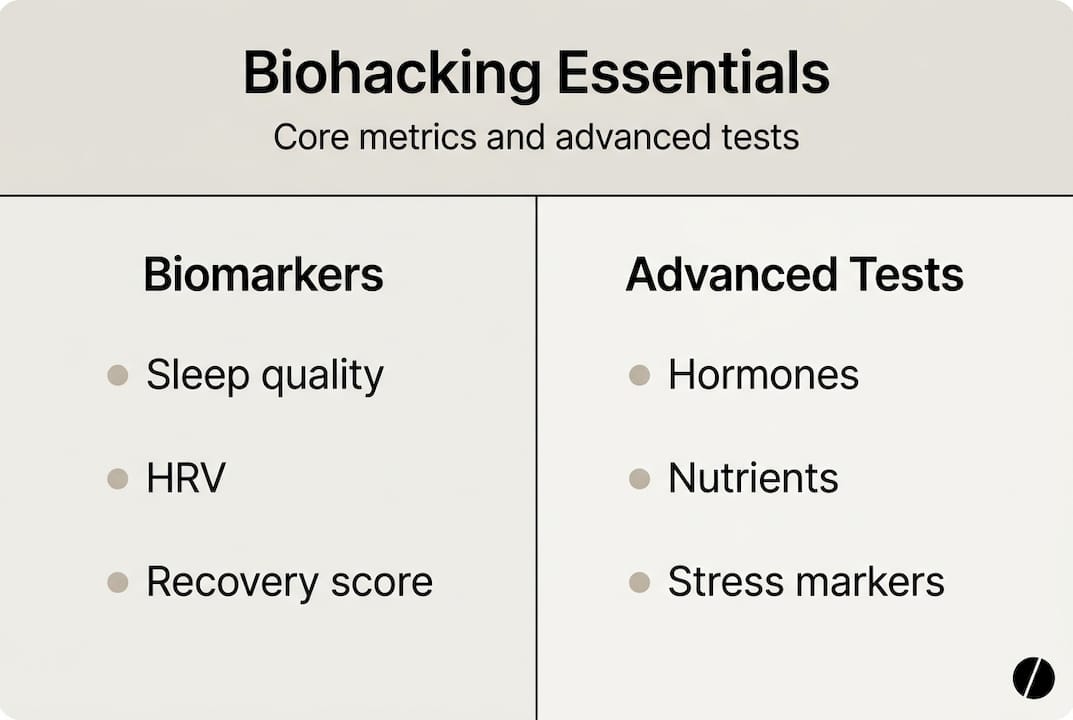
Start simple with the basics. Master tracking consistently before investing in advanced testing. Consistently tracking your biomarkers over time creates an awareness of your body's signals and responses. With reliable baselines established, you can then begin to incorporate recovery-boosting biohacks and track the impact they have on your recovery.
How hard you can train tomorrow is directly influenced by how well you recover today. Applying temperature therapies and electromagnetic stimulation strategically after a workout can accelerate the healing of your muscles and reduce inflammation. Cold water immersion can modestly reduce post-exercise muscle soreness, but a Cochrane review found no evidence that hyperbaric oxygen therapy speeds recovery from muscle soreness.
Cold therapy works by reducing blood flow to the area and limiting the metabolic activity of the tissues. Reduced blood flow limits inflammation and tissue breakdown caused by intense training. There are many tools that provide similar benefits but utilize different mechanisms. Cryotherapy chambers, ice baths, and cold plunge systems provide relief from inflammation and tissue breakdown. Cold therapy is best used within 48 hours of intense training. When using cold therapy, the ideal time is 10-15 minutes with the temperature ranging from 50-59°F to achieve the greatest benefit without causing damage to the tissues.
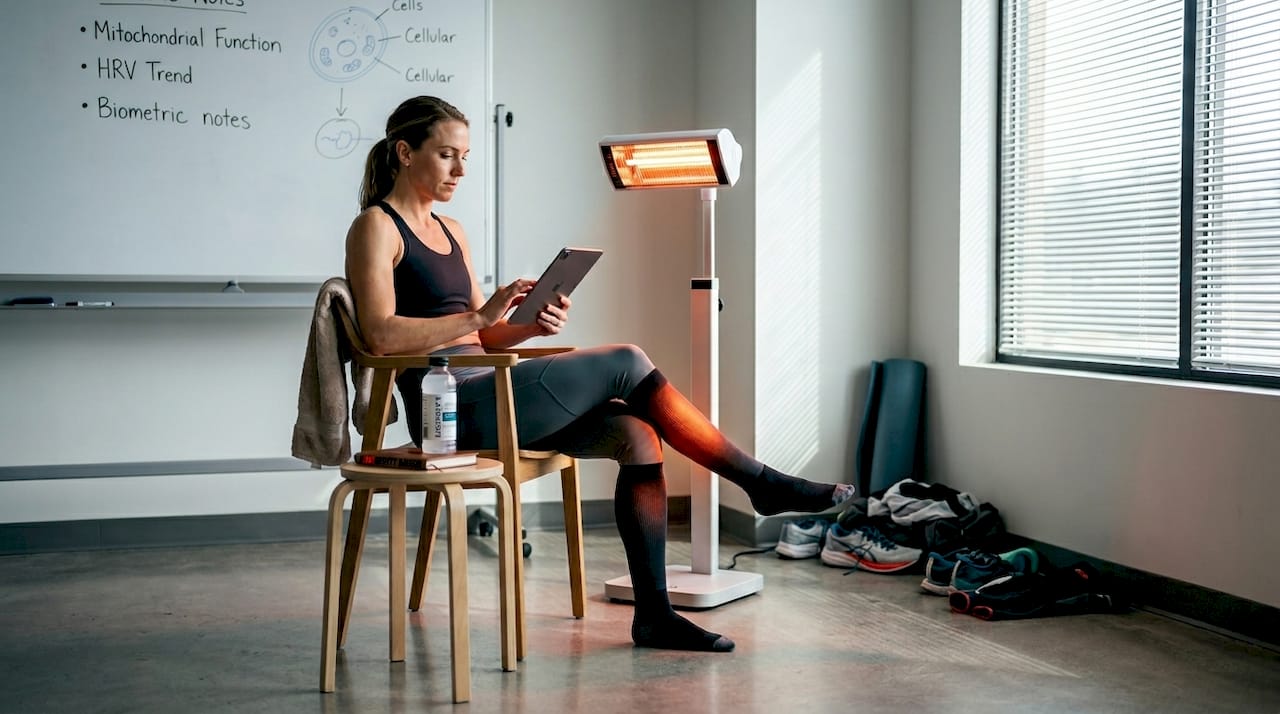
Heat therapy, on the other hand, utilizes the opposite method of cold therapy. It expands blood vessels and promotes increased blood flow to damaged tissues. Heat therapy is best applied 24-48 hours after intense training to promote faster muscle repair and to treat chronic inflammation. Longer duration infrared sauna sessions (20-30 minutes at 120-140°F) may provide greater benefits than shorter sessions without placing undue strain on the cardiovascular system.
| Therapy Type | Recovery Time Reduction | Optimal Timing | Session Duration |
|---|---|---|---|
| Cold therapy | Modest | 0-48 hours post-training | 10-15 minutes |
| Heat therapy | Not established | 24-48 hours post-training | 20-30 minutes |
| Hyperbaric Oxygen | Not shown | 0-72 hours post-training | 60-90 minutes |
| Electromagnetic Stimulation | Variable | 0-72 hours post-training | 20-30 minutes |
A 2025 trial found that electromagnetic stimulation can improve HRV in athletes recovering from muscle-damaging exercise. EMS devices use controlled electrical impulses that induce muscle contraction without any conscious effort, thus increasing blood flow and reducing soreness. Use EMS devices on specific muscle groups immediately after training or during active recovery days.
Pro Tip: Do not take NSAIDS immediately after intense training session, as early anti-inflammatory medication will interfere with the normal inflammatory response that is required for optimal adaptation and recovery.
Use these therapy types strategically depending upon your training schedule. Use cold therapy after high intensity sessions to manage acute inflammation. Use heat therapy during recovery sessions to maintain tissue quality. Use electromagnetic stimulation throughout to aid in the recovery of the nervous system. Monitor the effect of each therapy type on your HRV and recovery scores to fine-tune your recovery strategy.
Both neural efficiency and cognitive function play a major role in determining physical performance. Transcranial Direct Current Stimulation (tDCS) uses small amounts of electricity to stimulate different parts of the brain and thereby modulate neural activity and enhance cognitive processing. A small 2025 trial in elite swimmers found that 10 sessions of tDCS improved swimming performance and reaction time, although a single session did not significantly improve swim time trial results.
Mechanisms for improving performance are thought to occur by modifying the resting membrane potential of neurons, making them either more or less likely to fire. Anodal stimulation increases cortical excitability in targeted regions, whereas cathodal stimulation decreases cortical excitability. Motor cortex stimulation is beneficial for athletes competing in skill-based sports and those who require rapid reaction times. Prefrontal cortex stimulation is beneficial for endurance athletes that require sustained concentration and decision-making skills during competition. In one small trial, ten sessions of tDCS resulted in measurable improvements in performance, although how long the effects last after the intervention ends has not been well studied.
Considerations regarding safety include the fact that individuals with metal implants, seizures, or skin conditions at the site of the electrodes should not apply tDCS. Individuals should start with low intensities and short durations to determine their own tolerance to tDCS. Some users experience mild tingling sensations or headache symptoms, which are usually temporary. Users should always follow the manufacturer's instructions for the use of tDCS. Users may want to consult with a sports medicine professional when beginning to use tDCS.
Additional cognitive biohacks, although not necessarily used in conjunction with tDCS, provide a complementary means to enhance performance:
Investment in neural optimization will yield positive results across all performance domains. A combination of tDCS with traditional cognitive training will result in maximal effect.
Many popular biohacking trends fail to deliver. For example, CGM (Continuous Glucose Monitoring) has very little use in non-diabetic athletes. As such, the inaccuracies associated with CGM, and the lack of causal evidence linking CGM to an athlete's performance during exercise limit the resource utilization of ineffective biohacking interventions.
Technical difficulties arise during athletic competition with Continuous Glucose Monitors. Movement artifacts, temperature fluctuation and interstitial fluid dynamics create inaccuracies in CGM sensors. Moreover, there exists a delay between the blood glucose concentration and the concentration in the interstitial fluid measured by CGM; therefore, CGM readings will be delayed relative to blood glucose concentrations. This delay could potentially render CGM reading unreliable for making exercise-related decisions in real-time. Additionally, there is no defined optimal glucose level for athletic performance in non-diabetic individuals.
Glucose availability and performance are complex and vary greatly among athletes. While some may perform best when glucose levels remain constant, others may perform best with varying glucose levels. Therefore, the CGM data collected by non-diabetic athletes will generate "noise" and not yield meaningful and actionable information related to glucose availability and athletic performance. In this regard, the use of validatable metrics such as HRV and sleep quality will likely be more productive and cost-effective.
Biohacking Mistakes Extend Beyond Glucose Monitoring:
Important Warning: In many cases, rushing into biohacking interventions without collecting baselines and adequate protocols to assess them will result in poor outcomes. In addition to introducing variables that disrupt normal recovery processes, the lack of data to identify problems will also result in poor outcomes.
Apply a systematic approach to biohacking. Research the mechanisms of action of each intervention. Verify that the scientific literature supports the specific application of each intervention. Implement conservative, low-risk techniques first. Gradually implement advanced techniques. Document everything to evaluate success and failure.
Cynicism is a valuable asset in the biohacking community. Hype from marketing often far surpasses science-based validation. Focus on interventions supported by strong scientific evidence and clearly understood mechanisms of action. If in doubt, rely on the basics: sleep optimization, stress management, and high-quality nutrition will yield greater consistency and reliability of benefit than using novel technology for the majority of athletes.
Quality devices and recovery tools are required to apply the biohacking strategies discussed above. Biohacking devices and longevity products represent tools developed for athletes and fitness enthusiasts interested in optimizing performance. From precise tracking of sleep and HRV through wearable technology to advanced recovery systems, having the correct equipment enables consistent implementation of these strategies.
We offer a wide range of recovery tools for longevity and performance. Our selection includes cold plunge systems engineered to provide optimal temperature control, infrared therapy devices designed to penetrate deep into the muscle, and electromagnetic stimulation units designed for athletic purposes. We evaluate each product thoroughly to meet the demands of serious athletes.
Continuous tracking represents the basis for successful biohacking. To supplement your new knowledge of biohacking strategies, explore our collection of measurement devices to consistently monitor your primary biomarkers. These devices integrate seamlessly into your daily routines, and provide the data you need to make informed decisions regarding training intensity, recovery protocols, and the timing of interventions.
Oura Ring, Whoop and Apple Watch are among the leading options available to track the sleep quality and HRV (Heart Rate Variability) metrics critical to recovery for athletes. These measurement devices allow continuous tracking without interference with your training and/or daily activities. Oura provides superior sleep tracking capability due to its ring design, while Whoop focuses on measuring the amount of strain you incur, and subsequently how quickly you recover, and Apple Watch tracks additional recovery metrics as part of a broader functional platform. Ultimately, select based on your primary needs and ecosystem preferences, as all three provide reliable data for managing your training loads.
Cold therapy provides the greatest benefit immediately post-exercise by reducing inflammation and controlling Delayed Onset Muscle Soreness (DOMS) through the constriction of blood vessels and reduction of metabolic activity. Heat therapy provides muscle repair benefits, and addresses chronic inflammation by improving blood flow to the damaged tissues. Therefore, heat therapy is most effectively used 24-48 hours post-training. Both therapies may help reduce recovery time, although the size of the benefit varies between studies. Therefore, cold plunge systems and infrared mats are complementary and can be used together to optimize timing based on your training cycle and specific recovery requirements.
Continuous Glucose Monitoring (CGM) is not recommended for non-diabetic athletes, primarily due to the accuracy issues and limited evidence supporting the applicability of CGM during exercise. Movement artifacts and the lag of glucose between the blood and interstitial fluids will compromise CGM readings. Furthermore, there are no defined optimal glucose ranges for athletic performance in healthy individuals. Therefore, athletes would be better served focusing on validatable biohacking metrics such as HRV, sleep quality, and recovery scores that demonstrate a direct relationship to performance outcomes. Thus, save your resources for interventions with greater scientific support and demonstrated efficacy.
Most biohacking interventions will require 2-4 weeks of consistent application prior to demonstrating quantifiable improvements in your monitored metrics. Acute benefits such as reduced muscle soreness following cold therapy will occur in 24-48 hours post-intervention. Chronic adaptations such as improved HRV resulting from electromagnetic stimulation will take longer to develop. Generally speaking, neurostimulation protocols will begin to exhibit performance enhancements after 10-15 sessions distributed over several weeks. Consistent tracking is necessary as early evaluations of interventions will often result in discontinuing effective interventions prior to their full potential being realized. Continue to collect baseline measurements to capture incremental improvements.
You will want to implement each of the different Biohacking Techniques individually, in order to identify what (if) they are causing an improvement or decline in your Performance and Recovery metrics. Trying all of them at once would make it impossible for you to know which ones were producing improvements in your metrics; you would be throwing your time and money into trying out unproductive methods. After you find a single Biohacking Technique that produces measurable improvements in your metrics, you can leave that technique active while you test the next Biohacking Technique. By using this methodical approach, you will develop a customized, personally responsive, Biohacking Protocol. Stack additional Proven Biohacking Interventions in a strategic manner once you have validated each one individually.


