

Mon-Fri 9am-6pm PST
+1 (800) 686-5898
support@longevitybased.com
Mon-Fri: 9am-6pm PST

You are interested in optimizing your health naturally. But how do you sift through all the different wellness trends? Sauna therapy is one trend that has been shown to be backed by science as a means of improving cardiovascular performance and accelerating recovery and possibly even extending lifespan. There is growing scientific evidence that regular sauna use significantly decreases the risk of cardiovascular mortality and supports cellular health through heat stress adaptation. This article will give you information on how to prepare safely, provide you with evidence-based protocols, show you common mistakes to avoid when using a sauna, and provide you with expected outcomes and suggestions for tracking progress to enable you to confidently incorporate sauna therapy into your wellness program.
| Key Point | Details |
|---|---|
| Cardiovascular Protection | Regular sauna bathing lowers sudden cardiac death risk and overall cardiovascular mortality through improved vascular function. |
| Cellular Health Boost | Heat exposure activates protective heat shock proteins that maintain protein structure and support longevity pathways. |
| Enhanced Recovery | Alternating sauna heat with cold immersion stimulates circulation and may improve post-exercise adaptation. |
| Performance Gains | Heat acclimation from consistent sauna use can enhance endurance capacity, particularly in warm conditions. |
| Safety Considerations | Certain heart conditions like unstable angina or recent heart attack require medical clearance before sauna use. |
Using sauna therapy to enhance health and wellness requires preparation. Preparation includes getting familiar with the environment you will experience in the sauna and any pre-existing health conditions that you may need to address. Traditional Finnish sauna environments are very hot (80 to 100°c) and very dry (humidity levels typically below 20%), causing intense heat stress that your body will adapt to over time. The dry heat environment is significantly different than that of steam rooms and therefore, requires specific preparation.
Before your first sauna therapy session, identify any health conditions that may require special consideration. Some cardiovascular conditions require medical clearance before beginning sauna therapy. Some cardiovascular conditions such as unstable angina, recent myocardial infarction, severe aortic stenosis, and decompensated heart failure require medical clearance before beginning sauna therapy. Therefore, it is recommended to consult your doctor if you have a history of cardiovascular disease.
Once cleared medically, you will also want to gather some basic equipment. These include a clean towel for sitting and wiping sweat; a water bottle for hydrating; a timer to help you keep track of the length of your sauna sessions; and clothes that are comfortable to wear before and after your sauna therapy sessions. If you plan on tracking your heart rate during your sauna therapy sessions, consider investing in a heart rate monitor. If you prefer lower temperature and greater tissue penetration, infrared saunas can be a good option for home wellness.
Hydration is your most important preparation for sauna therapy. It is suggested to drink 16 to 24 ounces of water one to two hours prior to entering the sauna to allow you to develop a sufficient amount of fluids. The reason for this is because sauna sessions can result in significant amounts of fluid loss. Fluid loss can occur at rates of one to two pounds per session. When you are dehydrated, you increase your cardiovascular strain and decrease your ability to efficiently regulate your body's temperature.
Pro Tip: During your initial three sessions, set your temperature at a moderate level (70 to 75°c) and limit your sessions to 10 minutes. This allows you to assess your individual heat tolerance without overwhelming your body.
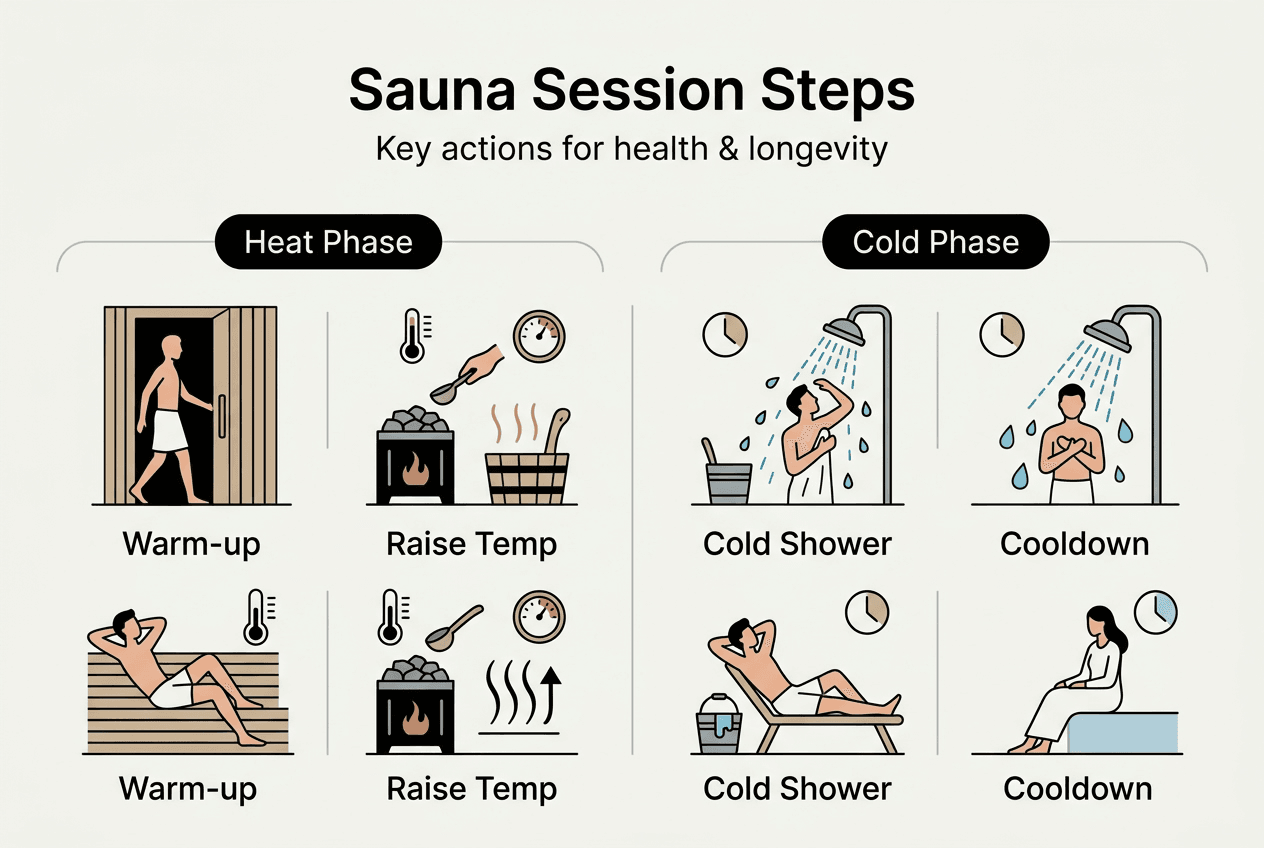
When developing an effective sauna therapy protocol, there are many variables that need to be taken into account including timing and temperature. Timing and temperature play a key role in maximizing your cardiovascular adaptations and minimizing the risk of adverse reactions. Begin each of your sauna therapy sessions with a gentle warm-up phase that lasts 5 to 10 minutes at a moderate temperature. The purpose of the warm-up phase is to allow your body to start producing sweat and your heart rate to gradually increase. Once your heart rate and body have adapted to the heat, you can proceed to the next phase of the sauna therapy protocol which is the main heating phase.
During the main heating phase, increase the temperature to the typical Finnish sauna range of 80 to 100°c. Low humidity (typically between 10 to 20%) should be maintained throughout the entire session. Stay in this environment for 15 to 20 minutes. Throughout your session, breathe deeply and relax your muscles. Your heart rate should increase to 100 to 150 beats per minute during the main heating phase. The increased heart rate is similar to moderate-intensity aerobic exercise.
After completing the main heating phase, transition to the cooling phase. Cold water immersion or a cold shower that lasts 1 to 3 minutes is used to create a strong cardiovascular stimulus. Alternating between heat and cold causes opposing effects on blood vessels. Heat increases the diameter of your blood vessels, while cold constricts them. Alternating between heat and cold may produce a stronger cardiovascular benefit than either heat or cold alone. After being exposed to cold, your blood vessels dilate and your blood pressure spikes.
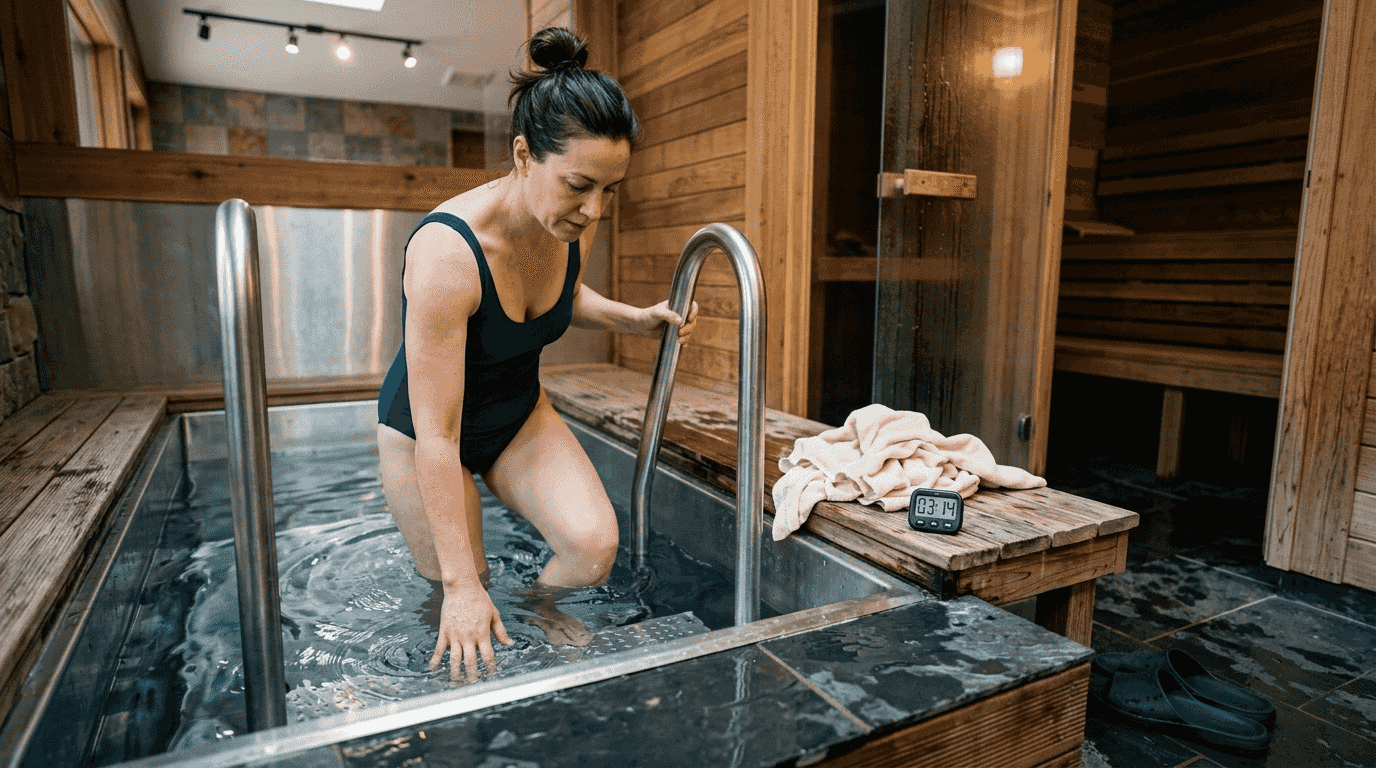
Repeating the heat and cold phases 2 to 3 times depending on your comfort level and daily energy will deepen your cardiovascular conditioning and the heat shock protein response. More experienced individuals who are comfortable with the protocol can extend to three cycles. Beginners should limit their first sessions to one full cycle. To learn more about the potential benefits of the cold phase, see cold exposure benefits.
| Protocol Level | Temperature | Duration Per Heat Phase | Cooling Phase | Number Of Full Heat/Cool Cycles | Number Of Sessions Per Week |
|---|---|---|---|---|---|
| Beginner | 70-80°c | 10-12 min. | 1-2 min. | 1-2 | 2-3 times/week |
| Intermediate | 80-90°c | 15-18 min. | 2-3 min. | 2-3 | 3-5 times/week |
| Advanced | 85-100°c | 18-20 min. | 2-3 min. | 3 | 4-7 times/week |
Always end each of your sauna therapy sessions with a 10 to 15-minute cool-down at room temperature. Allow your heart rate and blood pressure to return to normal. Rehydrate by drinking 16 to 32 ounces of water during the cool-down. Do not stand up too quickly or engage in vigorous physical activity after leaving the sauna. Orthostatic hypotension can lead to dizziness or fainting.
Pro Tip: Monitor your resting heart rate each day to evaluate the impact of sauna use on your cardiovascular system. Consistent use of sauna therapy tends to decrease resting heart rate by 5 to 10 beats per minute over a period of several weeks.
If you want to maximize your sauna therapy and minimize the risk of injury or negative consequences, be aware of the common mistakes that many people make. One of the most common mistakes made by new sauna users is trying to do too much, too soon. People who try to get into a sauna too quickly, stay in for too long or go back and forth between hot and cold water too frequently tend to exhaust themselves. When this happens, the body's ability to cool itself becomes impaired leading to heat exhaustion, which manifests as dizziness, headaches, nausea, and extreme tiredness. Limit yourself to 10 to 12 minutes for your first few sauna sessions and then gradually add time to your sessions as your body adapts to the heat.
Another mistake that can lead to serious problems is dehydration. Do not enter a sauna when you are already dehydrated from drinking too much alcohol, being sick, exercising heavily, or not drinking enough fluids. If you do so, the combination of the heat and the lack of fluids will greatly increase your risk of developing heat related illnesses such as heatstroke.
Be able to recognize the warning signs that you need to get out of the sauna immediately. If you begin to experience extreme weakness, confusion, or dizziness; if your chest begins to ache or your heart starts beating irregularly, get out of the sauna right away. Additionally, people who suffer from transient myocardial ischemia during sauna exposure should closely watch their symptoms and leave the sauna immediately if they begin to feel any type of unusual physical sensation. As always, if you continue to experience any concerning symptoms, contact your doctor.
Safety Note: Individuals who suffer from unstable angina, had a recent myocardial infarction (heart attack) in the past three months, or have severe aortic stenosis or decompensated heart failure, should not use saunas unless explicitly cleared to do so by your physician. The increased hemodynamics experienced during heat exposure pose a significant risk for individuals with these conditions.
When deciding whether or not to enter a sauna immediately after a workout, you must consider the amount of cardiovascular stress you are currently under, and the fluid reserves you have left. It would be wise to wait at least one hour after your last workout before going to the sauna. However, it is okay to go to the sauna on your rest days or prior to a low-intensity workout. In fact, research has shown that incorporating moderate sauna sessions into your rest days can help promote general adaptation. To learn more about the relationship between sauna use and exercise science, click here.
Pro Tip: Install a simple timer with an audible alarm in your sauna space to ensure you do not accidentally exceed the recommended time for your session.
Regular sauna use leads to measurable cardiovascular benefits in just a matter of weeks to months. Expect to see decreases in your resting systolic and diastolic blood pressures. The literature suggests that frequent sauna use lowers your risk of developing hypertension by 47%, whereas less frequent sauna use does not. These blood pressure benefits will continue to build up over time, and are a major reason why regular sauna users have a significantly lower risk of sudden cardiac death than non-users.
Your recovery and performance improvements will vary depending on the individual, but you can generally expect to start noticing differences in 4 to 8 weeks. Many sauna users report a decrease in post-workout muscle soreness, faster recovery times between workouts, and a general improvement in their exercise tolerance. These improvements are largely due to the cardiovascular training stimulus provided by heat exposure. Heat acclimation improves plasma volume and stroke efficiency, allowing for better endurance performance. The heat shock proteins activated by heat exposure protect cellular structures and promote protein synthesis, contributing to these performance improvements.
| Health Marker | Baseline (Pre-Sauna) | After 8 Weeks Regular Use | After 6 Months Regular Use |
|---|---|---|---|
| Resting Heart Rate | 72 bpm | 67 bpm | 64 bpm |
| Systolic Blood Pressure | 128 mmHg | 122 mmHg | 118 mmHg |
| Diastolic Blood Pressure | 82 mmHg | 78 mmHg | 76 mmHg |
| Subjective Recovery Score | 5/10 | 7/10 | 8/10 |
| 5K Run Time | 26:30 | 25:45 | 25:00 |
Documenting your progress and tracking your improvements will keep you motivated and allow you to assess whether or not the changes you are seeing are real. Track your resting blood pressure weekly using a home monitor and record the readings at the same time each day. Record your resting heart rate each morning, looking for the steady decline in your heart rate that is indicative of improving cardiovascular function. Also, create a simple training log where you note your subjective recovery ratings on a scale of 1-10 for each workout and rest day.
Objective measures of performance can give you a clear indication of your improvement. Document the times for your standard cardio tests (e.g., 5K run, 20 min cycling test, 1-mile swim) every four weeks. Improvements of 2 to 5 percent over several months are indicative of positive cardiovascular response to the stress of training and heat. Check out our article on sauna and exercise science to find ways to optimize your timing strategy.
Pro Tip: Treat sauna sessions as part of your existing training program rather than as a separate intervention, as the combined effects on cardiovascular adaptation and recovery are greater than the sum of the parts.
You don't have to stop at just sauna therapy to optimize your health journey. At Longevity Based we have created a variety of scientifically-backed wellness devices that can be used to enhance your sauna practice. We offer biohacking devices and longevity products including light therapy systems, cold plunge equipment, and performance-enhancing tools that can be used in conjunction with heat exposure to amplify recovery benefits.
In addition to providing you with the cardiovascular and cellular benefits described above, our infrared saunas for home wellness are engineered to be easy to use consistently and fit your schedule and available space. They allow you to take advantage of the benefits of sauna therapy while providing you with precise temperature control and energy efficiency. Use our multi-spectrum light system in conjunction with your sauna sessions to enhance the energy output of your cells and facilitate tissue repair through targeted photobiomodulation.
Using a sauna 4-7 times a week will give you the greatest benefit for your cardiovascular health and reduce your chances of death. It will allow you to activate more heat shock proteins and be better adapted to your vasculature than using it less often. Use it 2-3 times a week at first and slowly add more visits based on your growing heat tolerance over a couple of weeks.
Sauna therapy can help improve endurance performance through heat acclimatization. It will especially help those who participate in their sports in warm weather. There are conflicting results in research on post-exercise sauna use improving running performance in warm weather, but some research has shown improvements in post-exercise thermoregulatory ability and plasma volume. Using the sauna regularly will make you better able to handle high temperatures. When planning your training, think about adding sauna to the day after a hard workout (not the same day), and definitely on rest days. Check out our resources page to find more information on how to integrate sauna into your training program for optimal results.
There is no risk to healthy people who follow all safety guidelines. If you have had a recent heart attack or unstable angina, or if you have severe aortic stenosis, it is not safe to use a sauna. If you have decompensated heart failure, uncontrolled high blood pressure, or an irregular heartbeat you need to get clearance from your doctor before starting a sauna regimen. If you have any other type of heart condition or are taking medication that affects your blood pressure or heart rate, it is always best to consult your doctor.
When you're new to the sauna, start off with a temperature of 70-80 C and stay in for 10-15 minutes. Begin with one heat cycle and do not use the cool-down feature until you've completed at least 3-4 cycles. At this point you'll know whether your body reacts normally to heat stress or whether you have any adverse reactions. Once you feel like you can handle the heat comfortably you can start increasing the temperature by 5 C or the length of time you spend in the sauna by 3-5 minutes.


