

Mon-Fri 9am-6pm PST
+1 (800) 686-5898
support@longevitybased.com
Mon-Fri: 9am-6pm PST

Sauna use has moved well beyond a Nordic wellness tradition. Biohackers, athletes, and longevity-focused individuals are now building structured sauna routines around specific health goals, yet the advice on frequency varies widely. Some protocols call for daily sessions; others suggest two to three times per week is the sweet spot. Regular sauna sessions are associated with lower heart disease rates in population studies, but translating that data into a personal routine is where most people get stuck. This guide cuts through the noise and gives you a clear, goal-based framework for optimizing sauna frequency.
| Point | Details |
|---|---|
| Frequency matters | Sauna benefits are linked to regular, moderate use—generally 2–3 times per week. |
| Safety first | Ensure proper hydration, consult your doctor for medical concerns, and start gradually with session times. |
| Personalization | Monitoring your body’s reaction is crucial to finding your ideal sauna routine. |
| Evidence limitations | Most studies are observational and may not apply universally; experiment and assess your own response. |
| Optimize recovery | Pair saunas with other wellness methods like red light therapy for best results. |
The debate around sauna frequency stems from a real gap between population data and controlled clinical trials. Most of the compelling evidence comes from observational studies, particularly from Finland, where sauna use is deeply embedded in daily life. These studies track large groups over time and identify associations, but they cannot prove cause and effect on their own.
Finnish population data shows that 2 to 3 sessions per week are common, with notable associations to heart health and reduced cardiovascular mortality. That is a meaningful signal. However, growing evidence for heart, cognitive, immune, and lung benefits still comes largely from small studies with design limitations, which means the science is promising but not yet definitive.
The three primary wellness goals that drive sauna routines are:
Your optimal frequency also depends on which type of sauna you use. Traditional Finnish saunas operate at 80 to 100 degrees Celsius with low to moderate humidity. Infrared saunas run cooler, typically 50 to 65 degrees Celsius, using radiant heat that penetrates tissue more directly. The evidence base for traditional saunas is substantially stronger, though infrared options are gaining traction for recovery applications. You can explore the full sauna health guide and the sauna exercise science behind these protocols for deeper context.
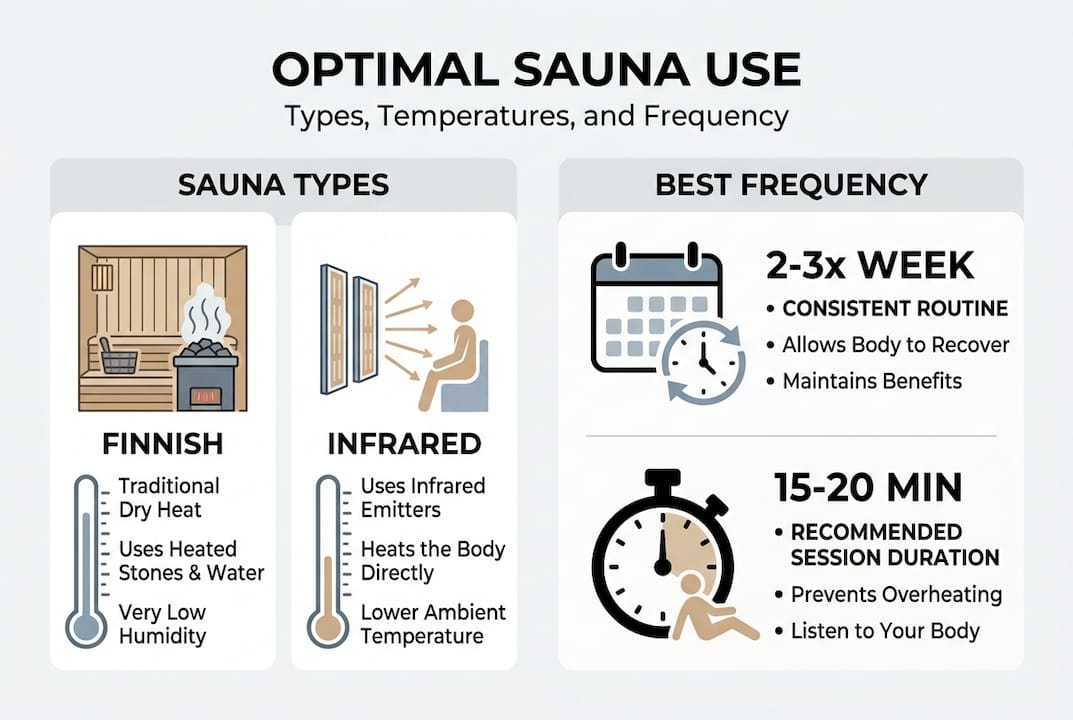
| Sauna type | Temperature range | Primary evidence | Best for |
|---|---|---|---|
| Traditional Finnish | 80 to 100°C | Cardiovascular, longevity | Longevity, heart health |
| Infrared | 50 to 65°C | Recovery, comfort | Post-workout, skin |
Before you commit to a sauna schedule, a few prerequisites will determine whether your routine is safe and effective. Getting these right from the start prevents the most common setbacks.
Physical readiness and contraindications are the first checkpoint. If you have a diagnosed heart condition, uncontrolled hypertension, or are pregnant, consult a physician before starting. It is worth noting that short-term RCTs show little or no consistent improvement in blood pressure or cholesterol from sauna use alone, which reinforces that sauna is a complement to a healthy lifestyle, not a standalone treatment.
Hydration and electrolytes matter more than most people realize. A single 20-minute session can cause you to lose 0.5 to 1 liter of sweat. Drink 500 ml of water before your session and replenish with electrolytes afterward. Skipping this step is the fastest route to dizziness and fatigue.
Here is a safety checklist for new users:
“The goal in the early weeks is adaptation, not intensity. Your cardiovascular system needs time to adjust to the thermal load before you push session length or frequency.”
Pro Tip: If you are new to infrared saunas, the lower temperature makes them a practical entry point. They are easier to tolerate while your body adapts, and the infrared sauna recovery benefits are well-suited to post-training use.
| Experience level | Recommended start | Temperature | Session length |
|---|---|---|---|
| Beginner | 2x per week | Low to moderate | 10 to 12 minutes |
| Intermediate | 3x per week | Moderate | 15 to 20 minutes |
| Advanced | 4 to 5x per week | High | 20 minutes max |
With your baseline established, here is how to structure your sauna routine by goal.
| Goal | Frequency | Session length | Notes |
|---|---|---|---|
| Recovery | 3 to 4x per week | 15 to 20 min | Post-workout timing preferred |
| Skin health | 2 to 3x per week | 15 min | Follow with cold rinse |
| Longevity | 4 to 5x per week | 20 min | Traditional sauna preferred |
Pro Tip: Timing matters for recovery goals. Using the sauna 30 to 60 minutes after training, once your core temperature has normalized, tends to produce better results than immediate post-workout sessions. For a structured sauna longevity routine, pairing frequency with consistent session timing amplifies the adaptive response.

Modify or skip sessions when you are ill, running a fever, or in the first trimester of pregnancy. After extremely intense training, a shorter, cooler session is preferable to a full protocol.
Even experienced users make errors that undermine their results or create unnecessary risk. Recognizing these patterns early keeps your routine sustainable.
The most common mistakes include:
Symptoms worth paying attention to include dizziness during or after sessions, unusual heart pounding, persistent headaches, or dry, irritated skin. These are signals to reduce frequency or session length, not push through.
“Sustainable routines are built on consistency over months, not intensity over days. One missed session rarely matters; chronic overuse does.”
One important evidence gap deserves attention. Observational sauna studies often miss confounding factors, meaning that healthier, more active individuals may naturally use saunas more often. This does not invalidate the benefits, but it does mean you should not assume that more sessions will automatically produce better outcomes. The relationship between frequency and benefit is not purely linear.
Pro Tip: Keep a simple log for the first 30 days. Note session length, how you felt during and after, sleep quality that night, and any physical symptoms. Patterns become visible quickly, and you will have real data to guide adjustments rather than guessing. The sauna longevity science supports this kind of systematic self-monitoring as a way to personalize your protocol.
When to scale back or seek medical advice: if you experience chest discomfort, persistent dizziness, or significant changes in blood pressure, stop and consult a healthcare provider before resuming.
Most sauna frequency guides present population averages as if they were prescriptions. They are not. The Finnish data is valuable, but it describes group trends across thousands of people with different genetics, fitness levels, diets, and stress loads. Your biology is not an average.
Observational dose-response data suggests that more frequent sessions correlate with better outcomes, but causal proof is still lacking and personal factors carry significant weight. Two people following identical sauna schedules can have meaningfully different results based on sleep quality, training volume, nutrition, and stress.
The smarter approach is to treat frequency guidelines as a starting hypothesis, then test it against your own response. Track mood, recovery speed, sleep depth, and skin condition after each week of consistent use. If you are hitting four sessions per week and feeling chronically fatigued, that is a signal, not a failure. Scaling back to three may actually produce better results for your physiology.
Adjust frequency during periods of illness, high-stress training blocks, travel, or seasonal changes. A personalized sauna routine that evolves with your life will outperform a rigid protocol every time. The goal is long-term consistency, not short-term intensity.
Optimizing your sauna routine is one piece of a larger recovery and longevity strategy. At Longevity Based, we offer a curated range of devices designed to work alongside your sauna practice for measurable gains in recovery, skin health, and performance. Red light therapy panels are particularly effective when used before or after sauna sessions, stimulating cellular energy production and supporting skin repair at a deeper level than heat alone. For those building a full recovery stack, our recovery tools collection includes everything from cold plunge systems to EMS devices, giving you the flexibility to personalize your protocol around your specific goals.
Daily sauna can lead to dehydration or overexertion if not managed carefully, and experts caution against excessive use without proper hydration and recovery. Starting with a few weekly sessions and monitoring your body’s response is the safer approach.
Traditional Finnish saunas form the primary evidence base for cardiovascular and longevity benefits, while infrared saunas may be more comfortable and accessible but carry less clinical proof for long-term outcomes.
Sessions of 10 to 20 minutes, 2 to 3 times weekly, align with the Finnish average and are generally recommended as a starting point for most wellness goals.
Regular sessions may benefit recovery and muscle function, particularly when timed 30 to 60 minutes after training and paired with adequate hydration and electrolyte replenishment.
Consult a healthcare provider before using a sauna if you have heart concerns, as experts recommend physician clearance for individuals with cardiovascular conditions before beginning any regular sauna practice.


