

Mon-Fri 9am-6pm PST
+1 (800) 686-5898
support@longevitybased.com
Mon-Fri: 9am-6pm PST

TL;DR:
- Sauna use while hungover can worsen dehydration and cardiovascular stress, increasing health risks.
- The idea of sweating out a hangover lacks scientific evidence and may be dangerously misleading.
- Long-term sauna benefits support resilience, but timing is critical; wait until fully recovered before reusing.
Sweating out a hangover sounds logical. You drank, your body absorbed toxins, and heat will flush them out. It’s a compelling idea, one embedded in gym locker room wisdom and wellness culture alike. But the evidence tells a more complicated story. Rather than accelerating recovery, sauna use while hungover can compound the very physiological problems alcohol creates. This guide breaks down the science, examines the real risks, and offers evidence-backed alternatives so you can make smarter decisions about recovery and long-term resilience.
| Point | Details |
|---|---|
| Saunas do not cure hangovers | Using a sauna while hungover increases dehydration and risk without improving recovery. |
| Regular sauna use boosts long-term health | Frequent sauna sessions may enhance resilience and lower inflammation but aren’t a fast fix post-drinking. |
| Prioritize hydration and rest | For hangover recovery, your best immediate strategies are proper fluids, rest, and gentle recovery routines. |
| Return to sauna safely | Only consider sauna use once you are rehydrated and all hangover symptoms have resolved. |
The belief that you can sweat out a hangover runs deep in cultural tradition. Scandinavian cultures have used saunas for centuries as spaces for physical and mental restoration. Russian banya culture similarly treats steam as cleansing. These traditions carry real wisdom, but they were not designed specifically as hangover remedies. Somewhere along the way, the concept of heat as purification merged with the idea that alcohol toxins could be expelled through sweat.
The appeal is easy to understand. When you’re hungover, you feel sluggish, inflamed, and foggy. A sauna promises to make you sweat, boost circulation, and trigger endorphin release. You step out feeling cleaner, and your brain attributes that to the hangover lifting. But that sensation of relief is largely perceptual, not physiological.
“Cautious sources prioritize hydration and rest over heat exposure after drinking, noting there is no evidence for speeding recovery with sauna use.” The Guardian, 2025
The myth persists because alcohol metabolism is genuinely tied to sweating. Alcohol does cause you to sweat more. So the logic follows: if you’re already sweating from drinking, more sweat in a sauna must help. The problem is that sweating is not a detoxification pathway for alcohol. Your liver processes approximately 90% of ingested alcohol. Sweat plays a negligible role.
Here are the perceived benefits that keep this myth alive, alongside the reality:
For those interested in the broader picture, understanding sauna health benefits in a non-hungover state reveals why the appeal is so strong, even when the timing is wrong.
Let’s be precise about what alcohol actually does to your body before you ever step into a sauna. Alcohol is a diuretic, meaning it suppresses the hormone that tells your kidneys to retain water. You urinate more than you drink. By the time you wake up hungover, you’re already meaningfully dehydrated. On top of that, alcohol causes vasodilation (widening of blood vessels), which lowers blood pressure and increases cardiovascular load.
Now add heat. Sauna use during a hangover exacerbates dehydration and cardiovascular stress due to alcohol’s diuretic effects and impaired thermoregulation, increasing risks of dizziness, fainting, and heat exhaustion. Your body’s ability to regulate temperature is already compromised. The sauna pushes that system beyond a safe threshold.
| Body system | Normal sauna effect | Hungover sauna effect |
|---|---|---|
| Hydration | Mild fluid loss via sweat | Severe dehydration risk |
| Blood pressure | Temporary dip, then recovery | Unstable, risk of fainting |
| Core body temperature | Rises, body compensates | Overheating risk, poor compensation |
| Heart rate | Elevated, then normalizes | Already elevated, further strain |
| Thermoregulation | Functional | Impaired by alcohol residue |
The groups most at risk include older adults, people with cardiovascular conditions, and anyone who experienced severe dehydration overnight. For them, a sauna session while hungover isn’t just uncomfortable, it can be genuinely dangerous.
Understanding sauna effects on hydration makes clear why fluid status matters so much before any heat session. And safe sauna session length becomes even more critical when your baseline health status is compromised.
Reviewing hangover safety guidelines from the Cleveland Clinic reinforces the same point: the primary interventions for a hangover are rest, hydration, and time.
Pro Tip: Before considering any sauna session after drinking, check three things: Is your urine light yellow? Are you free of dizziness? Have you eaten a balanced meal? If you can’t answer yes to all three, the sauna can wait.
The real issue isn’t that saunas are bad. It’s that timing matters enormously. The same tool that poses serious risk during an acute hangover delivers measurable wellness benefits when used consistently and correctly.
Regular sauna use four to seven times per week builds cardiovascular resilience, reduces inflammation markers by 40 to 50%, and supports better mental well-being. These benefits accumulate over time. They are not unlocked in a single session and certainly not when your body is already fighting the aftermath of drinking.
| Factor | Short-term (hungover) | Long-term (regular use) |
|---|---|---|
| Dehydration risk | High | Low with proper hydration habits |
| Cardiovascular load | Dangerous | Strengthening and adaptive |
| Inflammation | Can worsen acutely | Significantly reduced over time |
| Mental clarity | Impaired by hangover | Enhanced with consistent use |
| Thermoregulation | Compromised | Improved resilience |
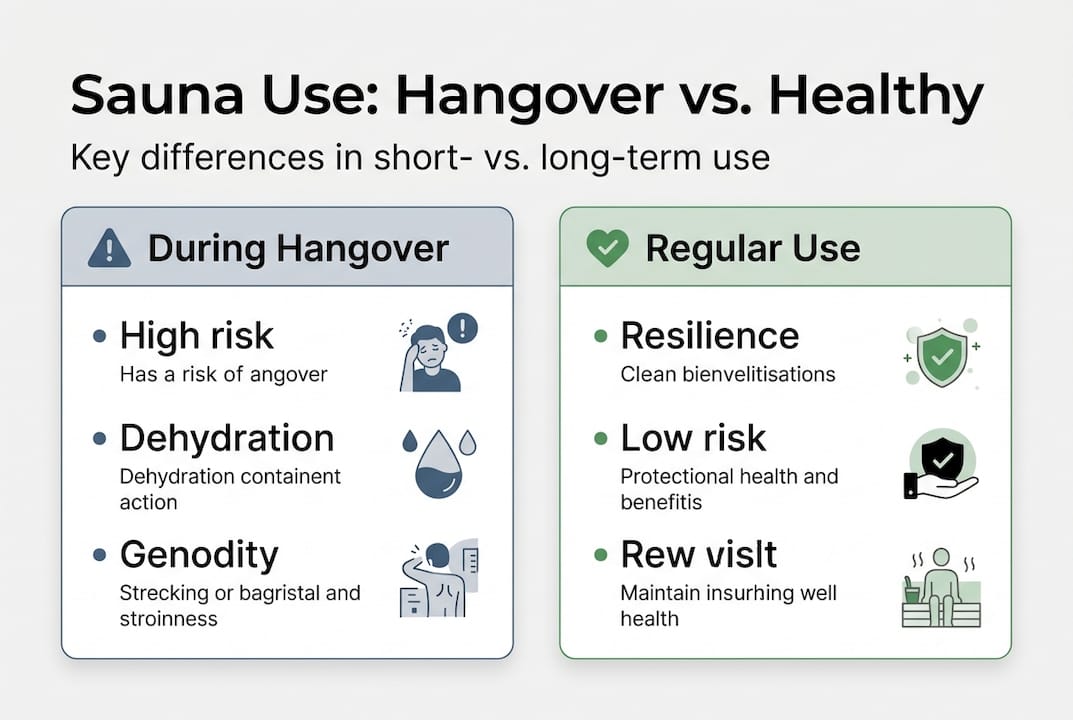
Some biohackers frame regular sauna use as a form of preventive resilience building. The idea is that a well-conditioned cardiovascular and inflammatory system responds better to all stressors, including the physiological insult of alcohol. That’s a legitimate perspective, but it requires building the habit during healthy, sober periods.
For optimal gains, understanding sauna frequency for wellness ensures you’re getting the adaptations without overreaching. And for active recovery support, infrared sauna recovery benefits offer a gentler entry point for those new to heat therapy.
Here is a three-step strategy for using sauna as a wellness tool without it becoming a hangover hazard:
If the sauna is off the table during a hangover, what actually works? The answer is less exciting but far more effective. Evidence consistently points to hydration, rest, and specific nutrients as the primary recovery levers.
Cautious medical sources and recovery specialists agree: no intervention speeds up alcohol metabolism faster than the liver’s natural rate. What you can do is support the systems that alcohol has strained.
Here is a practical recovery protocol:
Once you’re genuinely recovered, sauna can re-enter your routine. Before that point, even gentler heat exposure carries unnecessary risk. If you’re exploring how to integrate heat therapy wisely, infrared sauna safety tips provide a grounded starting point.
Pro Tip: You’re ready to return to sauna when your urine is consistently pale yellow, you’ve had at least one full balanced meal, dizziness and nausea are completely absent, and you’ve slept adequately. Don’t rush it.
Most advice on this topic falls into one of two camps: either enthusiastically promoting saunas as a hangover cure, or cautioning against them without offering any deeper framework. Both miss the more important insight.
The real value of sauna for the biohacking community isn’t acute symptom relief. It’s building a body that handles stress, including the stress of occasional alcohol consumption, with greater resilience over time. Regular heat exposure conditions your cardiovascular system, reduces baseline inflammation, and strengthens your thermoregulatory response. A well-prepared body simply recovers faster from everything.
Smart users don’t ask “will the sauna fix my hangover today?” They ask “how does consistent sauna practice reduce the severity of how I feel tomorrow?” That mindset shift is where the real optimization lives. Reviewing sauna safety strategies helps ensure that the practice you build is one that compounds benefits rather than adds risk.
Timing is the variable that separates a beneficial biohacking tool from a dangerous one. Use it right.
Ready to build a recovery stack that actually works? At Longevity Based, the focus is on evidence-backed tools that support your body’s natural restoration processes, not shortcuts that add risk. When a sauna isn’t appropriate, tools like red light therapy panels offer gentle cellular support without the cardiovascular demands of heat. For a broader view of what smart recovery looks like, explore our full range of recovery tools designed for health-conscious individuals who take the long view on wellness. Building resilience is a consistent practice. Discover the full ecosystem of biohacking solutions that make that possible.
No. There is no evidence that sauna use speeds up hangover recovery, and it can increase risks like dehydration, dizziness, and fainting. Rest and hydration remain the most effective interventions.
Sauna use during a hangover exacerbates dehydration and cardiovascular stress, raising the risk of dizziness, fainting, and heat exhaustion due to alcohol’s diuretic effects and impaired thermoregulation.
Infrared saunas operate at lower temperatures and are generally gentler, but they still pose meaningful risk when dehydrated. The safest approach is to avoid all heat-based therapies until you are fully recovered.
Wait until hangover symptoms like dizziness, nausea, and fatigue have fully resolved, your hydration status is restored with pale yellow urine, and you’ve eaten at least one complete meal before returning to any sauna session.


