

Mon-Fri 9am-6pm PST
+1 (800) 686-5898
support@longevitybased.com
Mon-Fri: 9am-6pm PST

TL;DR:
- Sauna enhances muscle recovery by increasing blood flow and activating heat shock proteins.
- Infrared saunas are preferable post-exercise for recovery without impairing next-day performance.
- Proper protocols include timing, hydration, and electrolyte management for optimal results.
Sauna has long been associated with relaxation and stress relief, but dismissing it as a passive wellness ritual misses a growing body of evidence. Post-exercise heat exposure triggers measurable biological responses that can meaningfully support muscle recovery. The science is nuanced, though, and not all saunas work the same way or deliver the same outcomes. This article covers the core mechanisms, compares sauna types, examines what the research actually shows, and gives you actionable protocols to optimize recovery using heat therapy.
| Point | Details |
|---|---|
| Sauna boosts recovery | Heat exposure accelerates muscle repair and reduces soreness through increased blood flow and cellular adaptations. |
| Infrared is best for power | Infrared saunas provide recovery benefits without the performance downsides of traditional saunas. |
| Evidence is mixed | Most studies show short-term benefits while long-term effects for muscle growth are uncertain. |
| Follow science-backed protocols | Use 10-30 minute infrared sauna sessions, three times a week post-workout, for best results. |
When you step into a sauna after training, your body does far more than sweat. Heat exposure triggers a cascade of physiological responses that directly influence how fast and how well your muscles recover.
The most immediate effect is increased peripheral blood flow. As your core temperature rises, blood vessels dilate and circulation to skeletal muscle increases. This accelerates the clearance of metabolic waste products like lactate and hydrogen ions, which accumulate during intense exercise and contribute to that familiar post-workout fatigue.
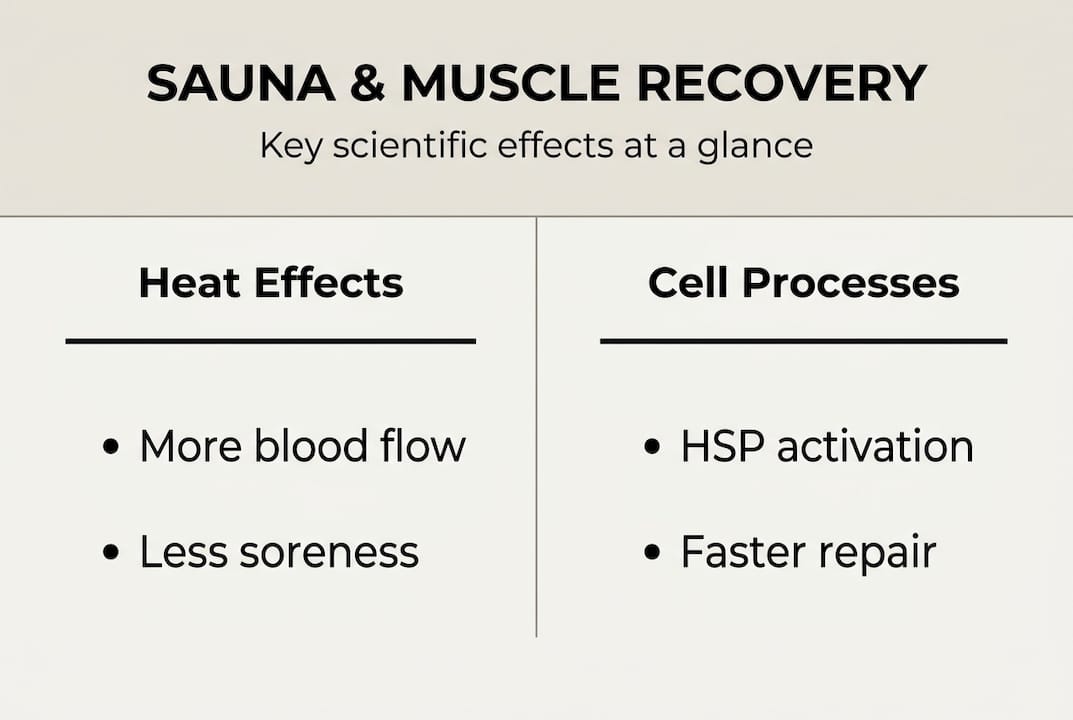
Beyond circulation, heat activates heat shock proteins (HSPs), a family of molecular chaperones that repair damaged proteins within muscle cells. HSPs also protect cells from further stress, which may explain why regular sauna users often report faster recovery between sessions. Hormonal shifts play a role too. Growth hormone levels can rise significantly with heat exposure, supporting tissue repair and adaptation.
Research distinguishes between sauna types here. Post-exercise infrared sauna may improve acute neuromuscular recovery but does not significantly enhance muscle hypertrophy gains. This is an important distinction for biohackers: sauna supports recovery, not necessarily muscle building on its own.
For a deeper look at how heat interacts with training physiology, the sauna exercise science breakdown covers these mechanisms in greater detail.
Key stat: Infrared sauna post-exercise improves acute neuromuscular recovery markers, though its effect on long-term hypertrophy remains limited based on current evidence.
Main mechanisms behind sauna-assisted muscle recovery:
Not all saunas are created equal, and the distinction matters when your goal is muscle recovery rather than general relaxation.
Traditional saunas operate at high temperatures, typically between 70°C and 100°C, with sessions lasting 10 to 20 minutes. The intense heat produces a strong cardiovascular response but can also place significant stress on the body. Infrared saunas (IRS) operate at lower temperatures, usually 45°C to 60°C, and allow for longer sessions of 20 to 40 minutes. The infrared wavelengths penetrate deeper into tissue, which may produce more targeted muscular effects with less systemic strain.
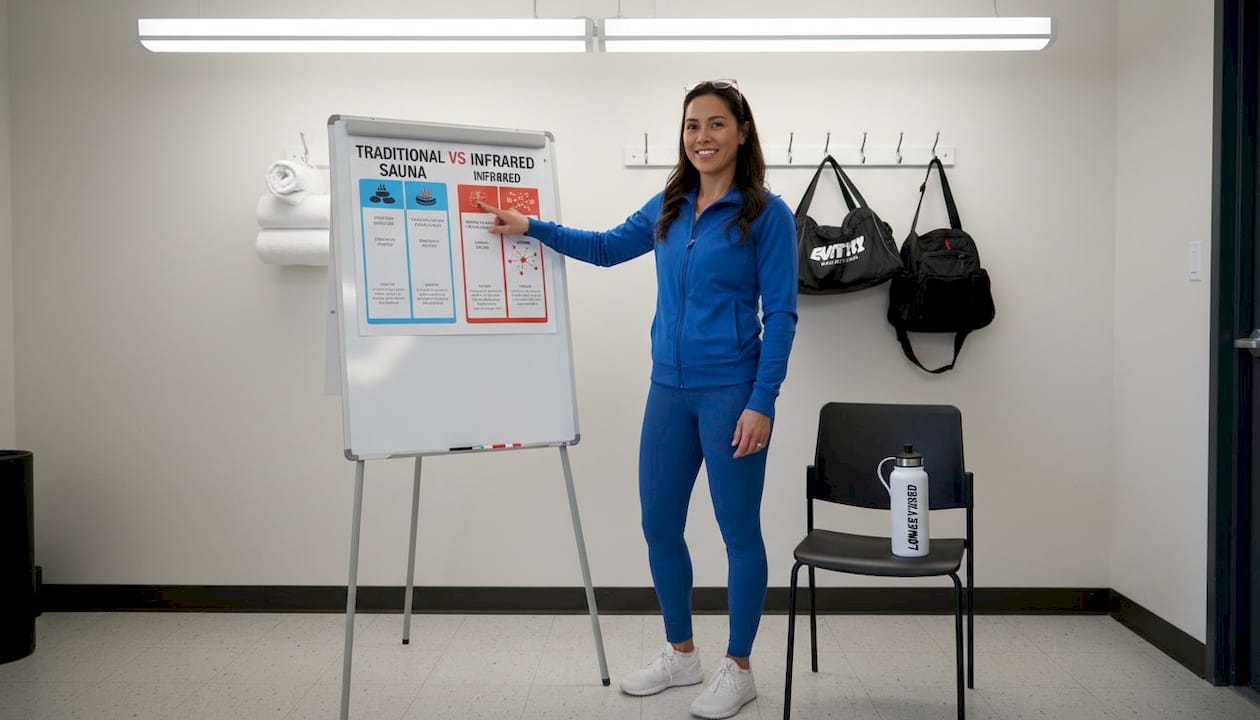
| Feature | Traditional sauna | Infrared sauna |
|---|---|---|
| Temperature range | 70°C to 100°C | 45°C to 60°C |
| Session duration | 10 to 20 minutes | 20 to 40 minutes |
| Tissue penetration | Surface level | Deeper muscle tissue |
| Next-day performance | May impair maximal output | No impairment observed |
| Best for | General heat adaptation | Acute neuromuscular recovery |
This distinction has real consequences for athletes and biohackers. If your priority is preserving power output for the next training session, traditional sauna post-exercise may work against you. Infrared sauna consistently shows recovery benefits without that performance cost.
For more context on how infrared technology compares to related modalities, infrared vs red light therapy outlines the key differences. Those looking to invest in a home unit can explore medical sauna options designed for performance-focused users.
When to use each sauna type for muscle recovery:
Moving from theory to evidence, the picture is promising but not without complexity. A systematic review of 14 studies reveals mixed short-term effects, and chronic use aids endurance in heat-based sports but does not consistently improve cycling performance or VO2max.
| Outcome measured | Findings across studies |
|---|---|
| Muscle soreness (DOMS) | Mostly beneficial, reduced soreness reported |
| Neuromuscular power | Acute benefit with IRS; impairment risk with traditional |
| Endurance performance | Positive for heat adaptation; mixed for VO2max |
| Muscle hypertrophy | No significant added benefit beyond training |
| Hormonal response | Growth hormone elevation observed |
Study quality varies considerably. Many trials use small sample sizes, inconsistent protocols, and different populations, which makes direct comparison difficult. The variability in temperature, session duration, timing relative to exercise, and individual heat tolerance all affect outcomes.
Consider a practical example: a strength athlete using infrared sauna at 50°C for 20 minutes three times per week post-training may notice reduced soreness and faster readiness between sessions. But if that same athlete switches to a 90°C traditional sauna the night before a max squat test, performance data suggests a measurable drop in output the following day.
Pro Tip: When reviewing sauna research, check whether the study used traditional or infrared sauna, and note the timing relative to exercise. A study using sauna 24 hours post-workout tells you something very different from one using it immediately after training. Apply findings to your own protocol with that context in mind.
For a focused look at how infrared heat supports faster recovery with infrared training, that resource breaks down the practical application in more detail.
With the research context established, here is how to translate the evidence into a structured recovery protocol.
Example post-workout infrared sauna protocol:
Timing matters more than most guides acknowledge. Initial IRS use raises cortisol and stress markers temporarily before the body adapts, so expect a 2 to 3 week adaptation window before you feel the full benefit. Avoid traditional sauna post-exercise if next-day power output is a priority, and always replenish electrolytes, not just water.
For guidance on sauna session length and how to find optimal sauna frequency for your goals, those resources provide structured frameworks. A broader guide on using saunas for recovery covers integration with other longevity practices.
Pro Tip: Stacking infrared sauna with red light therapy in the same session or on the same day can compound recovery benefits. Red and near-infrared wavelengths support mitochondrial function and reduce inflammation, creating a synergistic effect with the circulatory and cellular repair benefits of heat exposure.
Most sauna recovery guides hand you a protocol and call it done. What they rarely address is how much individual context shapes results. Following a textbook infrared sauna schedule without accounting for your training load, hydration status, sleep quality, or heat tolerance is a recipe for underwhelming results at best.
One overlooked reality: many people confuse heat tolerance with efficacy. Feeling comfortable in a sauna does not mean you are recovering better. The physiological adaptations that matter, such as improved HSP expression and blood flow regulation, take weeks to build. Patience is not optional.
Another blind spot is electrolyte management. Water alone does not replace what you lose in a post-workout sauna session. Sodium, potassium, and magnesium losses are significant and directly affect muscle function and sleep quality. Skipping electrolytes is one of the most common and correctable mistakes.
We also see biohackers stacking too many recovery modalities at once without tracking outcomes. The deeper sauna science supports a layered approach, but only when each variable is introduced methodically. Use the evidence as a flexible framework, not a rigid prescription, and let your own performance data guide the adjustments.
If the evidence has you ready to build a more structured recovery practice, the tools you use matter as much as the protocols. At Longevity Based, we carry a curated selection of recovery tools designed for performance-focused individuals who want results grounded in science, not guesswork. From infrared saunas built for home use to advanced light therapy systems, each product is selected for its evidence base and practical application. Pairing sauna sessions with devices from the BioLight collection can amplify the cellular recovery benefits your training demands. Explore what fits your routine and recovery goals.
Yes. Infrared sauna in particular can reduce muscle soreness after exercise and improve short-term recovery markers based on recent research and meta-analysis findings.
For most recovery goals, yes. Infrared sauna does not impair next-day performance the way traditional high-heat sauna can, making it the preferred option when muscle power and readiness are priorities.
Starting with infrared sauna three times per week post-exercise is a practical baseline. IRS at 50°C post-exercise for 10 to 30 minutes shows the most consistent promise for power recovery in current protocols.
No. Sauna is a valuable complement to training, nutrition, and sleep, but it cannot substitute for any of these foundational recovery pillars on its own.
Yes. Traditional saunas at 70°C to 100°C may reduce next-day maximal performance, and all sauna types carry dehydration risk if proper hydration and electrolyte replacement are neglected.


