

Mon-Fri 9am-6pm PST
+1 (800) 686-5898
support@longevitybased.com
Mon-Fri: 9am-6pm PST

TL;DR:
- Infrared saunas increase heart rate and induce sweating through tissue heating, not significant fat loss.
- Weight loss after sessions is temporary fluid loss, not actual fat reduction.
- Saunas support recovery and relaxation but are not effective standalone tools for long-term fat loss.
Infrared saunas are everywhere in biohacking circles, and the marketing claims are bold: burn fat, shed pounds, and reshape your body without breaking a sweat on a treadmill. The reality is more nuanced. While infrared sauna technology does produce measurable physiological responses, the gap between what the industry promises and what peer-reviewed research confirms is significant. This guide breaks down exactly how infrared saunas affect your body, what the scale is actually measuring after a session, and how to use sauna therapy as a genuine part of a science-backed wellness strategy rather than a shortcut.
| Point | Details |
|---|---|
| Temporary water loss | Infrared saunas cause quick fluid loss, but the weight returns as soon as you rehydrate. |
| No proven fat loss | Current research does not support infrared saunas as effective for long-term body fat reduction. |
| Best used for recovery | Saunas support recovery and relaxation, especially when combined with healthy habits. |
| Use safely | Always follow medical advice and do not use saunas as a replacement for diet and exercise. |
Unlike traditional saunas that heat the surrounding air, infrared saunas use infrared light wavelengths to penetrate skin tissue directly, raising your core body temperature from the inside out. This distinction matters physiologically. Because the heat is absorbed at the tissue level, your body responds with a cascade of thermoregulatory mechanisms that have real, measurable effects.
The most immediate responses include:
These are legitimate physiological effects. However, it is important to contextualize them. The caloric expenditure from a sauna session is modest compared to sustained cardiovascular exercise. Your heart working harder to manage heat is not the same as your muscles contracting repeatedly under load. The energy systems engaged are different, and the downstream effects on fat oxidation are not equivalent.
| Physiological effect | Infrared sauna | Moderate cardio exercise |
|---|---|---|
| Heart rate elevation | Yes, moderate | Yes, sustained |
| Calorie burn | Low to moderate | Moderate to high |
| Muscle engagement | Minimal | High |
| Insulin sensitivity | Possible improvement | Well-documented improvement |
| Recovery support | Some evidence | Moderate |
For biohackers already using structured training protocols, infrared sauna workout benefits are most pronounced in the recovery domain. Reduced muscle soreness, improved circulation, and parasympathetic nervous system activation after training are where the real value lies. The science behind sauna and exercise supports using these sessions as a complement to physical training, not a substitute.
According to a Mayo Clinic health review, infrared sauna use has shown some promise for conditions like high blood pressure and heart failure, but larger studies are needed, and the evidence base for fat loss specifically remains limited.
Pro Tip: Schedule your infrared sauna session within 30 to 60 minutes after your workout to maximize recovery benefits and take advantage of the elevated core temperature your training already initiated.
Now that you understand the core mechanisms, it is time to address a major misconception: does the number on the scale after a sauna session mean you have actually lost fat?
The short answer is no. A 30-minute infrared sauna session typically produces 1 to 2 pounds of weight reduction through sweat, but that weight returns as soon as you rehydrate. This is fluid loss, not fat loss. The two processes are biologically distinct and should never be conflated.
Here is what actually happens during and after a sauna session:
Fat loss, by contrast, requires a sustained caloric deficit. Adipose tissue is broken down through lipolysis when energy intake is consistently lower than energy expenditure over time. This process is driven by diet, exercise, hormonal signaling, and metabolic rate. A sauna session does not meaningfully accelerate lipolysis in a way that produces lasting body composition changes.
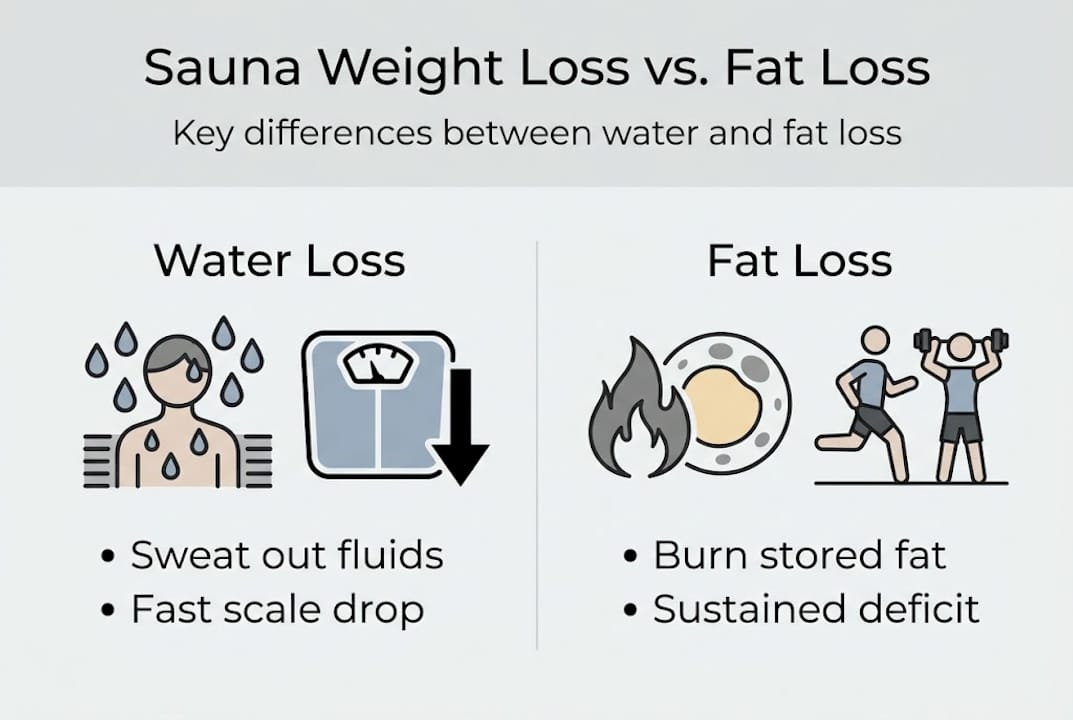
| Factor | Fluid loss (sauna) | Fat loss (caloric deficit) |
|---|---|---|
| Mechanism | Sweat and plasma volume reduction | Lipolysis of adipose tissue |
| Timeframe | Minutes to hours | Weeks to months |
| Reversibility | Fully reversed with hydration | Sustained with continued deficit |
| Scale impact | 1 to 2 lbs per session | Gradual, 0.5 to 1 lb per week |
| Body composition change | None | Yes, measurable |
The recovery benefits of infrared saunas are well-supported, but those benefits are separate from body composition outcomes. Peer-reviewed sauna research consistently distinguishes between the therapeutic effects of heat exposure and the specific mechanisms required for fat reduction.
Understanding this distinction protects you from making decisions based on misleading marketing and helps you set realistic expectations for what sauna therapy can and cannot deliver.
Recognizing the difference between water and fat loss, what do clinical trials and systematic reviews actually report about regular infrared sauna use?
“The current body of evidence does not support infrared saunas as a standalone intervention for significant long-term fat loss or meaningful changes in body composition.” This reflects the consensus across multiple review papers examining thermal therapy and metabolic outcomes.
Key findings from credible research include:
The gap between what wellness brands claim and what the science supports is wide. Infrared saunas are genuinely useful tools, but not for the reasons most marketing materials suggest. The science behind sauna and exercise points to recovery, stress reduction, and cardiovascular support as the primary evidence-based applications.
It is also worth noting that infrared vs red light therapy serve different physiological purposes. Conflating these modalities leads to further confusion about what each technology is actually capable of delivering.
A Mayo Clinic review notes that larger, more rigorous studies are still needed to confirm infrared sauna benefits, which supports viewing saunas as a complementary wellness tool rather than a primary intervention for weight management or obesity treatment.
So if saunas are not miracle weight loss machines, how can you make them a smart part of your fitness or wellness plan?
The answer lies in using infrared saunas for what they genuinely do well: recovery, stress reduction, and habit reinforcement. When layered on top of solid nutrition and training protocols, sauna sessions add real value to a weight management strategy without overpromising outcomes.
Here is a practical framework for safe, effective use:
Certain populations should approach infrared sauna use with caution or avoid it entirely. Infrared saunas can be risky for individuals with heart disease, those who are pregnant, young children, and people on medications that affect thermoregulation. Consulting a physician before starting a regular sauna protocol is strongly advised for anyone in these groups.
Exit the sauna immediately if you experience any of the following:
Review sauna health risks before starting any new protocol, and explore medical-grade sauna options designed with safety standards that matter for regular use.
Pro Tip: Combining consistent sauna use with strength training, a protein-adequate diet, and quality sleep creates a synergistic effect on recovery and metabolic health that no single tool can replicate alone.
Here is the perspective that rarely makes it into fitness marketing: the biohackers who get the most out of infrared saunas are not using them to burn fat. They are using them to reduce cortisol, improve sleep quality, and recover faster between training sessions, which indirectly supports weight management through better hormonal balance and adherence to their protocols.
Focusing on calorie burn during a sauna session misses the point entirely. Chronic stress elevates cortisol, which promotes fat storage, disrupts sleep, and undermines training recovery. Regular sauna use addresses that upstream problem in ways that a single workout cannot.
The differences between infrared and red light modalities also matter here. Stacking the right tools for the right purposes, rather than expecting one device to do everything, is what separates effective biohacking from expensive wishful thinking. Saunas belong in a toolkit, not on a pedestal.
If you are ready to use infrared sauna technology as part of a genuinely effective wellness strategy, the quality of your equipment matters. At Longevity Based, you will find rigorously tested biohacking devices designed for people who take their health optimization seriously. From an infrared sauna selection built to clinical standards to complementary tools like portable red light therapy, every product is chosen for its evidence base and build quality. Browse the full range and find the tools that fit your protocol, not just your wishlist.
Yes, you burn some calories due to the elevated heart rate an infrared sauna produces, but the majority of immediate weight lost during a session is water, not fat.
Current research does not support infrared saunas as an effective tool for reducing belly fat. No peer-reviewed studies show significant long-term fat loss from sauna use alone; sustainable results require consistent diet and exercise.
Daily use is generally safe for healthy adults who stay hydrated and monitor their response. However, people with heart conditions, pregnancy, or certain medical issues should consult a doctor before starting a regular protocol.
You may see a 1 to 2 pound reduction on the scale after a 30-minute session, but this reflects fluid loss and returns to baseline once you rehydrate.


