

Mon-Fri 9am-6pm PST
+1 (800) 686-5898
support@longevitybased.com
Mon-Fri: 9am-6pm PST

You’ve invested in red light therapy, eager to unlock its benefits for recovery, skin health, or longevity. But then the questions hit: How many sessions per week? How long should each one last? Can you overdo it? The confusion around frequency is real, and getting it wrong can mean missed results or wasted time. The good news is that red light therapy frequency isn’t one size fits all, and with the right approach tailored to your goals, you can maximize effectiveness safely. This guide breaks down practical frequency recommendations, scheduling strategies, and common mistakes so you can confidently integrate red light therapy into your routine.
| Point | Details |
|---|---|
| Frequency depends on goals | Frequency should match your goals whether recovery, skin health, or longevity to maximize results safely, with consistency and avoidance of overuse. |
| Typical session length | Most sessions run from 10 to 20 minutes depending on device power. |
| Recovery frequency | Active athletes benefit from daily 10 to 15 minute sessions, especially within two hours after workouts. |
| Skin health cadence | For skin goals you typically use 3 to 5 sessions per week at 10 to 20 minutes, spaced 24 hours apart. |
Before you start scheduling sessions, you need the right equipment and preparation to ensure safety and effectiveness. Proper red light therapy device selection is critical to treatment success, so understanding your options matters.
Choosing the right device depends on your treatment area and goals. Full body panels work best for systemic benefits like recovery and inflammation reduction, while targeted devices suit facial treatments or specific injury sites. Look for devices with wavelengths between 660-850nm, as these penetrate effectively without excessive heat. Power density also matters, aim for devices offering at least 100mW/cm² at the recommended distance for efficient sessions.
Understanding session basics prevents common setup errors. Most effective treatments occur at 6-12 inches from the device, though this varies by power output. Clean, product free skin absorbs light most efficiently, so remove lotions, oils, or makeup before sessions. You can treat bare skin or through thin, light colored clothing for modesty, though direct skin contact maximizes absorption.
Pro Tip: Start sessions at the maximum recommended distance and gradually move closer over the first week as your skin adapts to the light exposure.
Safety considerations protect you from potential issues:
Device specifications guide your session planning:
| Device type | Ideal distance | Typical power | Best for |
|---|---|---|---|
| Full body panel | 6-12 inches | 100-200 mW/cm² | Systemic recovery, muscle repair |
| Targeted device | 3-6 inches | 50-100 mW/cm² | Facial treatments, joint pain |
| Handheld unit | 0-3 inches | 30-80 mW/cm² | Spot treatments, travel use |
Your treatment frequency should align directly with what you’re trying to achieve. Session frequency varies depending on specific therapeutic goals, and understanding these differences optimizes your results.
For recovery and athletic performance, intensity drives frequency. Active athletes recovering from intense training benefit from daily 10-15 minute sessions, particularly within 2 hours post workout. This may help accelerate muscle repair and reduce delayed onset soreness. If you’re managing acute injuries or post surgical recovery, every other day sessions prevent overloading tissues while supporting healing. The key is consistency during your recovery window, then scaling back as symptoms improve.
Skin health goals require a different rhythm. Collagen stimulation and anti-aging benefits emerge with 3-5 sessions weekly, each lasting 10-20 minutes depending on device power. This frequency triggers fibroblast activity without overwhelming cellular repair mechanisms. For acne management or inflammation reduction, start with 3 sessions weekly and increase to 5 if your skin tolerates it well. Space sessions at least 24 hours apart to allow cellular responses to complete between treatments.
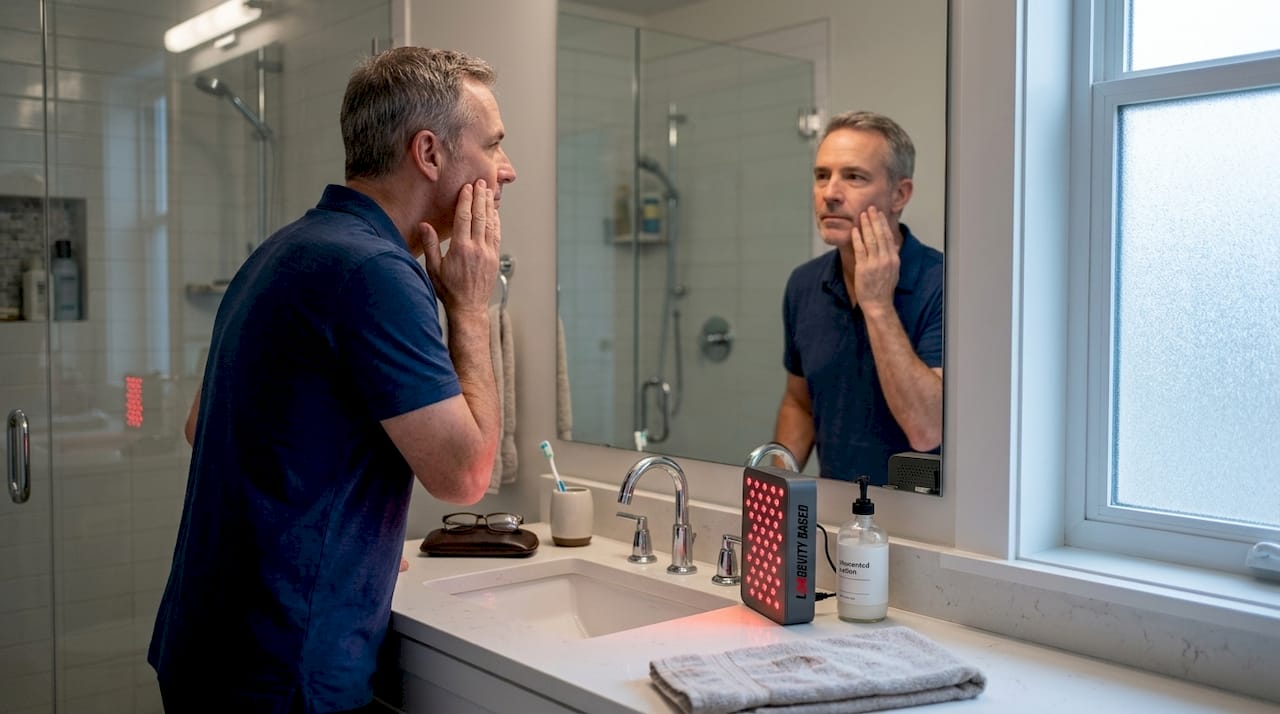
Pro Tip: Some users cycle their frequency every 4-6 weeks by taking a 5-7 day break, on the theory that it prevents cellular adaptation, though this has not been tested in studies.
Longevity and general wellness users thrive on moderate consistency. Three sessions per week, each 15-20 minutes, provide systemic benefits for mitochondrial function, circulation, and cellular energy without requiring daily commitment. This schedule fits easily into busy routines while delivering cumulative benefits. You can split sessions between morning energy boosts and evening relaxation depending on your response.
Goal based frequency guidelines:
Comparing approaches helps clarify your path:
| Goal | Frequency | Session length | Expected timeline |
|---|---|---|---|
| Muscle recovery | Daily to every other day | 10-15 minutes | 1-2 weeks for acute relief |
| Skin rejuvenation | 3-5 times weekly | 15-20 minutes | 6-8 weeks for visible results |
| Longevity support | 3 times weekly | 15-20 minutes | Ongoing cumulative benefits |
| Pain management | 5-7 times weekly initially | 10-15 minutes | 2-4 weeks for significant improvement |
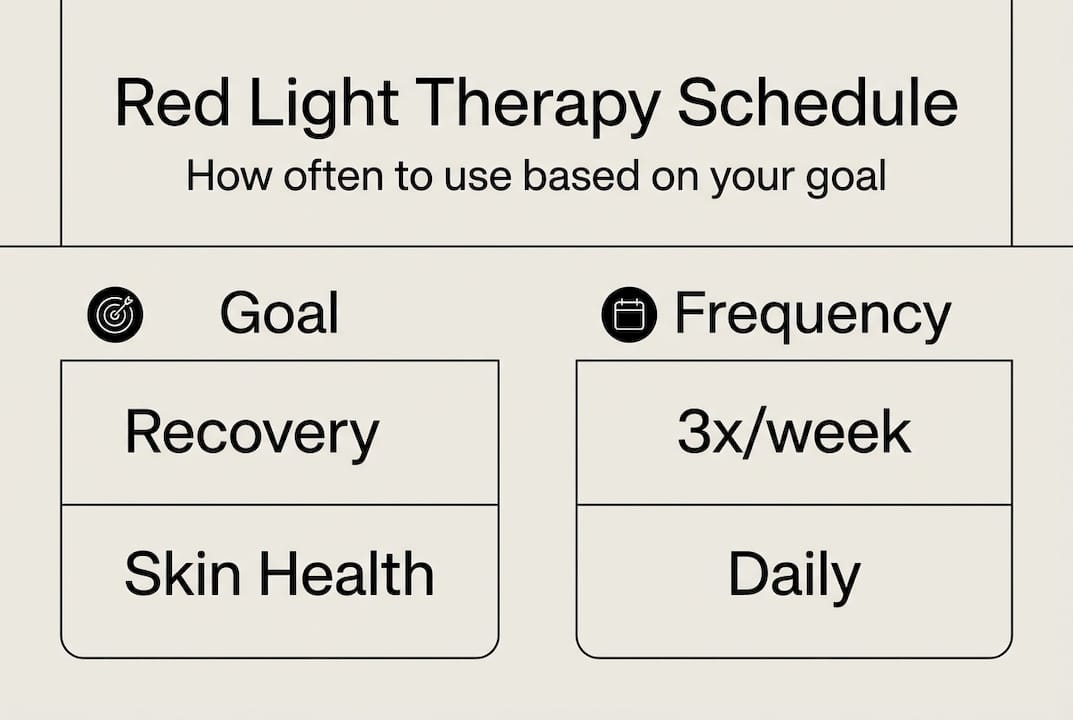
Listening to your body remains essential regardless of your goal. If you notice skin sensitivity, unusual fatigue, or diminishing returns, reduce frequency or take a short break. Understanding the difference between infrared and red light therapy also helps you choose the right wavelength for your specific needs, as infrared penetrates deeper for joint and muscle issues while red light excels for surface skin treatments.
Creating a practical schedule transforms good intentions into consistent results. Effective scheduling enhances adherence and benefits of red light therapy, making it a sustainable part of your routine rather than another abandoned wellness experiment.
Follow these steps to build your personalized schedule:
Sample weekly schedules by goal:
| Day | Recovery focus | Skin health focus | Longevity focus |
|---|---|---|---|
| Monday | 15 min post workout | 20 min evening facial | 20 min morning |
| Tuesday | 15 min post workout | Rest day | Rest day |
| Wednesday | 15 min post workout | 20 min evening facial | 20 min morning |
| Thursday | Rest day | Rest day | Rest day |
| Friday | 15 min post workout | 20 min evening facial | 20 min evening |
| Weekend | 15 min as needed | 20 min facial (one day) | Rest days |
Timing sessions around other activities maximizes synergy:
Before each session, complete these quick steps. Remove makeup, lotions, and jewelry from treatment areas. Position yourself at the recommended distance with a timer set. Relax and breathe normally, avoiding unnecessary movement. During the session, close your eyes if treating facial areas and stay present rather than multitasking. After finishing, apply any skincare products while your skin is primed, stay hydrated to support cellular processes, and note any immediate effects in your log.
Pro Tip: Stack red light therapy with an existing habit like your morning coffee or post shower routine to build automatic consistency without relying on willpower.
The red light therapy wound healing guide offers additional scheduling insights for specific therapeutic applications, helping you refine timing for injury recovery scenarios.
Even with good intentions, several pitfalls can undermine your red light therapy results. Recognizing these errors early protects your investment and keeps you on track.
Overexposure ranks as the most frequent mistake. More is not better with red light therapy. Exceeding recommended durations or frequencies can cause skin sensitivity, fatigue, or paradoxically reduce benefits as cells become overwhelmed. Stick to 10-20 minute sessions and resist the urge to double up thinking it will accelerate results. Your cells need time to process the photonic energy and complete repair cycles between treatments.
Neglecting device positioning compromises effectiveness. Sitting too far reduces power density below therapeutic thresholds, while getting too close can cause excessive heat without added benefit. Measure and mark your optimal distance, then maintain it consistently. Uneven coverage from poor angles means some areas receive inadequate treatment while others get too much.
Pro Tip: Set a kitchen timer or use your phone’s timer with an audible alert to prevent accidental overexposure, especially when relaxing during evening sessions.
Ignoring contraindications creates unnecessary risks:
Inconsistent scheduling sabotages cumulative benefits. Red light therapy works through repeated cellular signaling, not single dramatic interventions. Sporadic use, even at high intensity, produces inferior results compared to moderate consistent application. Missing multiple sessions breaks the biological momentum you’ve built.
Poor device maintenance reduces output over time. Dust and residue on LED panels block light transmission, effectively reducing power density. Clean your device’s surface weekly with appropriate materials per manufacturer instructions. Check for burned out LEDs monthly, as even a few dead bulbs create uneven treatment fields.
Important: Understanding the science of light therapy benefits helps you recognize when something feels off and adjust your approach before minor issues become major setbacks.
Unrealistic expectations lead to premature abandonment. While some users notice energy improvements within days, visible skin changes typically require 6-8 weeks of consistent use. Pain reduction timelines vary widely based on condition severity. Set milestone check ins at 2, 4, and 8 weeks rather than expecting overnight transformation.
Skipping the adaptation period causes initial discomfort. Starting with maximum duration and frequency can trigger temporary fatigue or skin sensitivity as your cells adjust to increased energy production. Begin conservatively, even below recommended frequencies, then gradually increase over 1-2 weeks as your body adapts.
Ready to implement what you’ve learned? Longevity Based offers carefully curated red light therapy panels and red light therapy devices designed for serious biohackers and wellness enthusiasts. Whether you need full body panels for comprehensive recovery or targeted devices for facial rejuvenation, the selection covers every application discussed in this guide. Each product meets rigorous standards for wavelength accuracy, power density, and build quality, eliminating guesswork from your device selection. Explore the complete range of biohacking devices and longevity products to build your personalized wellness technology stack with confidence.
Beginners should start with 3 sessions per week, each lasting 10-15 minutes, allowing your body to adapt to the photonic stimulation without overwhelming cellular processes. After 2 weeks of consistent use at this frequency, you can gradually increase to daily sessions if your goals require it and your body responds well. Starting conservatively prevents the temporary fatigue some users experience when jumping immediately into intensive protocols.
Daily use is safe for short term intensive goals like acute injury recovery or athletic training blocks, typically for 2-4 weeks at a time. However, some practitioners believe long term daily use without periodic breaks may lead to cellular adaptation where benefits plateau, although this has not been demonstrated in studies. Most users achieve better sustained results with 3-5 sessions weekly for ongoing wellness, incorporating brief breaks every 4-6 weeks to maintain cellular responsiveness.
Red light therapy effectively addresses skin aging by stimulating collagen production and reducing inflammation when used 3-5 times weekly for 15-20 minutes per session. The 660nm wavelength penetrates to the dermal layer where fibroblasts respond by increasing collagen and elastin synthesis. Visible improvements in fine lines, skin texture, and tone typically emerge after 6-8 weeks of consistent use. For comprehensive anti-aging results, learn more about skin benefits of light therapy and how different wavelengths complement your skincare routine.
Timeline expectations vary significantly by goal and individual response. Energy and mood improvements often appear within 2-4 weeks of consistent use as mitochondrial function enhances. Visible skin changes require 6-8 weeks since collagen remodeling follows a slower biological timeline. Pain and inflammation reduction timelines span 2-6 weeks depending on condition severity and chronicity. Long term benefits like improved recovery capacity and cellular resilience accumulate progressively over months of sustained practice, making patience and consistency your most valuable assets.


