

Mon-Fri 9am-6pm PST
+1 (800) 686-5898
support@longevitybased.com
Mon-Fri: 9am-6pm PST

Non-invasive fat reduction works, within limits. It uses cold, heat, ultrasound, electromagnetic energy, or an injected bile acid to destroy or shrink fat cells in a targeted pocket, with no incisions and almost no downtime. Published results cluster around a 20% to 25% reduction of the treated fat layer per area, visible at 8 to 12 weeks. The American Society of Plastic Surgeons puts the average price at $1,157 per procedure. It is a contouring tool for stubborn bulges, not a treatment for obesity.
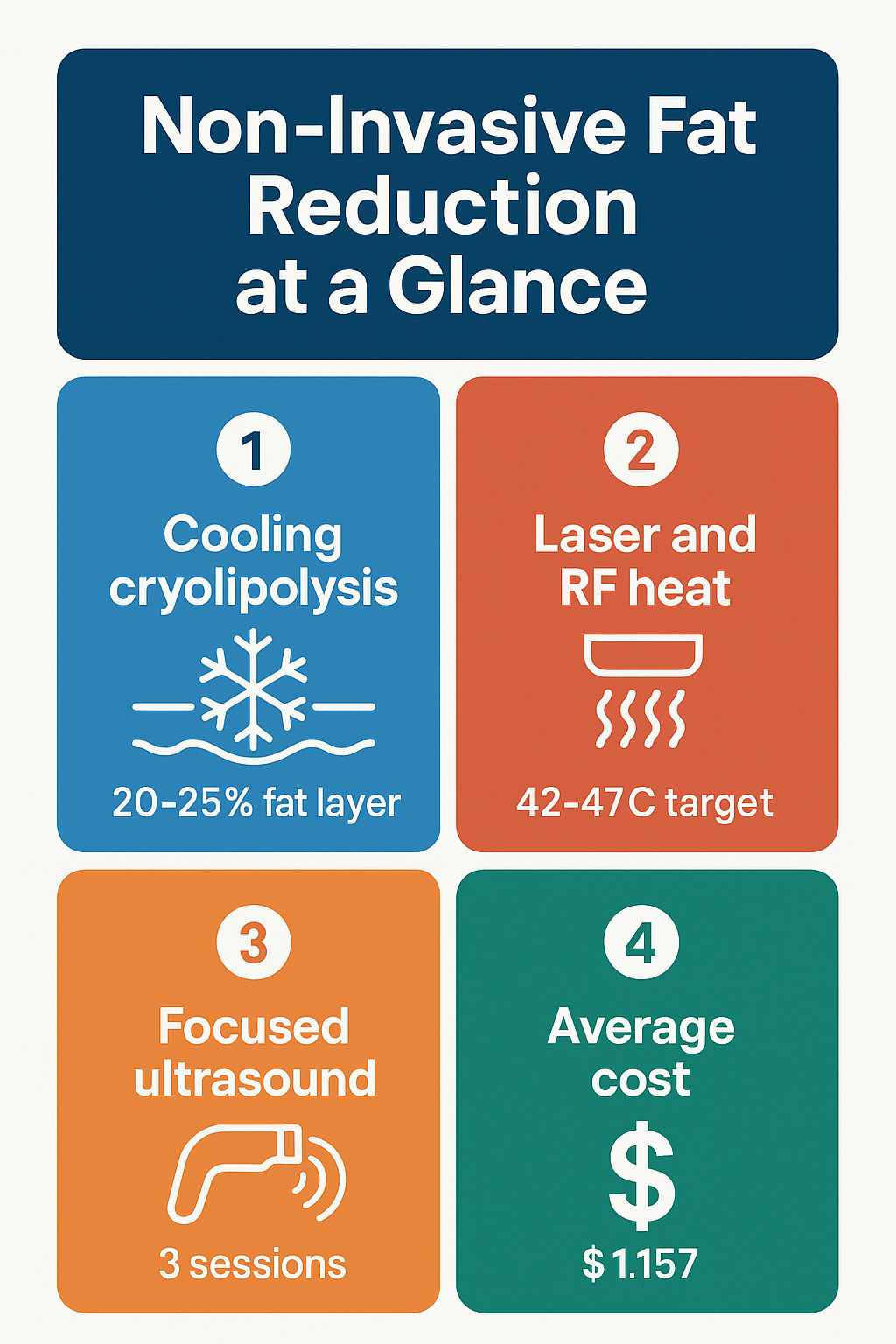
Non-invasive fat reduction is a group of medical aesthetic procedures that reduce a localized fat pocket without surgery, anesthesia, or incisions. An applicator sits on the skin and delivers energy to the fat layer underneath, or a tiny needle delivers a fat-dissolving drug. You walk in, get treated in 25 to 60 minutes, and walk out.
The category exists because of one stubborn fact of physiology: diet and exercise shrink fat cells everywhere at once, and they shrink them unevenly. Spot reduction through exercise does not work. These devices do the spot work by damaging fat cells in one defined area so the body clears them.
The most common treated zones are the abdomen, flanks, inner and outer thighs, upper arms, bra line, back, under the buttocks, and under the chin. A single session treats a hand-sized area, which is why providers quote by cycle or by area rather than by appointment.
Every technology in this category relies on the same principle: fat cells are more vulnerable to temperature extremes and to certain chemicals than the skin, nerves, and muscle around them. That selectivity is the whole trick.
In every case the lymphatic system and liver clear the debris over the following weeks. A 2019 review in the Australasian Journal of Dermatology (Mazzoni et al., PubMed ID 31168833) identified five FDA-approved non-invasive body contouring modalities: cryolipolysis, laser, high-intensity focused electromagnetic field, radiofrequency, and high-intensity focused ultrasound. Everything marketed to consumers sits inside one of those five buckets, or is an injectable.
Here is how the main options line up on mechanism, time, and price. Costs are United States averages gathered from the American Society of Plastic Surgeons, The Aesthetic Society, and GoodRx price reporting, and they vary widely by city and by how many areas you treat.
| Treatment | Technology | Best for | Sessions | Typical reduction | Downtime | Typical cost |
|---|---|---|---|---|---|---|
| CoolSculpting (cryolipolysis) | Controlled cooling | Abdomen, flanks, thighs, chin | 1 to 3 per area | About 20% to 25% of the fat layer | None | $700 to $1,500 per cycle; about $3,200 for a full course |
| SculpSure (laser lipolysis) | 1060 nm diode laser heat | Abdomen and flanks | 1 to 3, spaced 6 weeks | Around 20% in treated zone | None | $1,400 to $1,600 per course |
| UltraShape and similar HIFU | Focused ultrasound | Abdomen, love handles | 3, two weeks apart | About 2 to 3 cm waist over a course | None | $700 to $1,400 per session |
| Kybella (deoxycholic acid) | Injectable fat dissolver | Submental fat only (FDA approved 2015) | 2 to 6, a month apart | Visible chin profile change | Swelling for 3 to 14 days | $1,200 to $1,800 per course |
| Radiofrequency contouring | Bulk tissue heating | Mild fat plus skin laxity | 4 to 6 weekly | Modest fat change, better tightening | None | $400 to $1,000 per session |
| HIFEM muscle sculpting | Electromagnetic contraction | Abdomen, buttocks, arms | 4 to 6 over 2 to 3 weeks | Fat reduction plus muscle gain | Soreness only | $750 to $1,000 per session |
Those price bands matter more than brand names. A clinic that owns its equipment prices very differently from one that rents time, which is exactly why practices and serious home users increasingly buy their own body sculpting machines instead of paying per cycle forever.
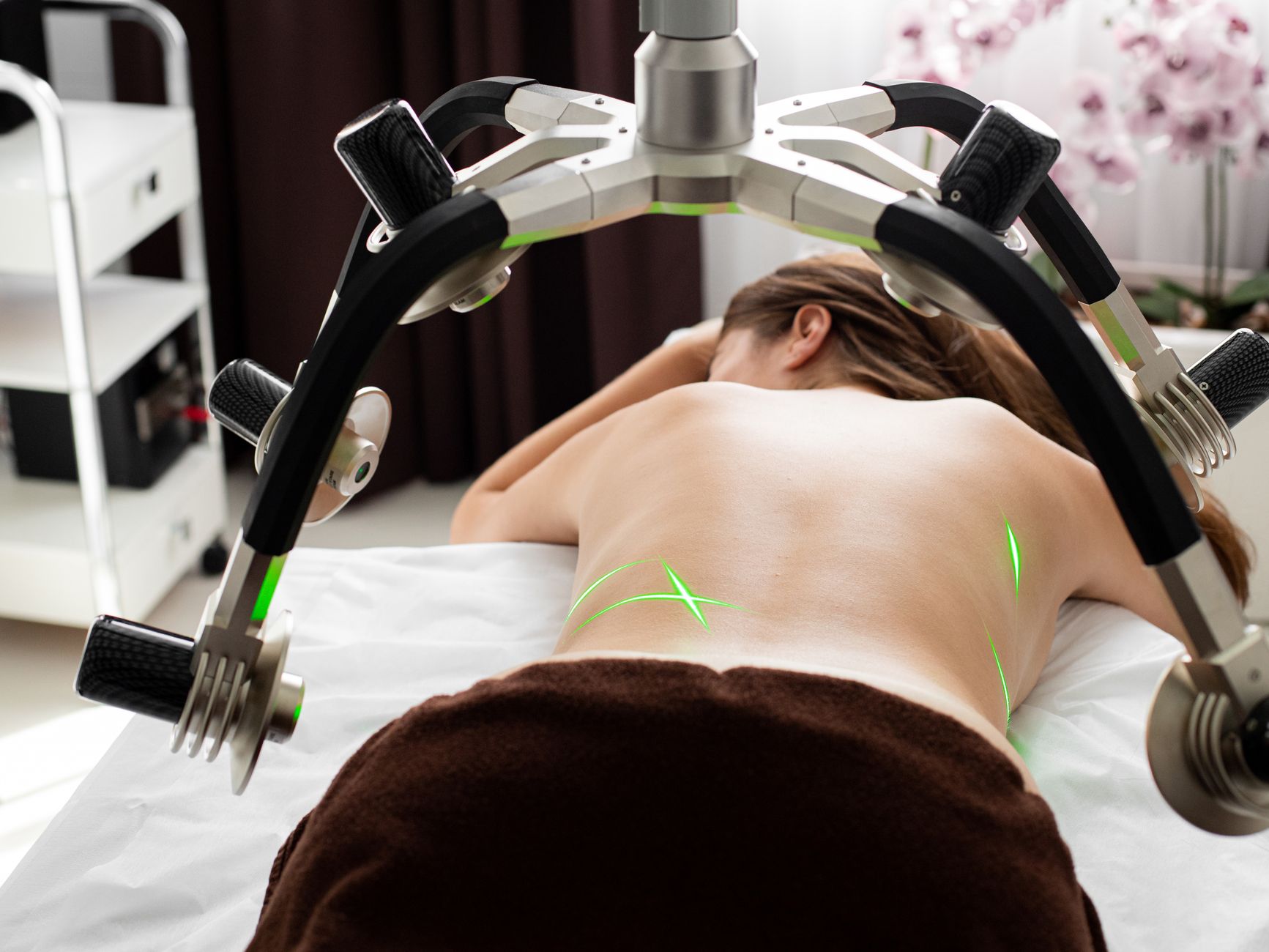
Cryolipolysis has the most published evidence behind it, and for a discrete bulge it usually delivers the largest single-session change. A 2015 systematic review of 19 studies reported average fat-layer reductions of 10.3% to 28.5%, measured by ultrasound or calipers. A 2025 systematic review and meta-analysis published in the World Journal of Plastic Surgery found cryolipolysis reduced fat thickness by a mean of 3.56 mm and local circumference by 3.45 cm, while body weight did not change significantly.
Read that last clause twice. The scale does not move. The tape measure does. That is the honest definition of success here.
Effectiveness depends on what you are fixing:
Many clinics now stack technologies, pairing a fat-destroying pass with an EMS and HIFEM muscle sculpting system to improve tone in the same area. Stacking is where the most visible transformations come from.
Nothing happens on treatment day. Your body has to clear the damaged cells, and that process runs on its own schedule.
Destroyed fat cells do not grow back. That is true and it is the most misused fact in the industry. The fat cells left behind in that area, and everywhere else, can still enlarge if you gain weight, which is why results look like they faded when the number on the scale climbs. Maintenance is a diet and training question, not a device question.
The American Society of Plastic Surgeons reports an average nonsurgical fat reduction cost of $1,157, and The Aesthetic Society's national databank puts it at $1,065. Both figures reflect a single procedure fee, not a full course.
Real-world spend is higher because almost nobody treats one small area once. Four drivers set your final number:
Insurance never covers it. It is elective and cosmetic, full stop. For buyers running the math over several years, device ownership changes the equation: a clinic-grade platform pays for itself across a few dozen sessions, which is the logic behind investing in radiofrequency equipment rather than booking a package of six.
Non-invasive fat reduction has a strong safety record, and the common side effects are temporary: redness, swelling, bruising, tingling, numbness, and tenderness that resolve within one to three weeks. Numbness after cryolipolysis can last several weeks and is not a sign that something went wrong.
The complication worth understanding is paradoxical adipose hyperplasia, or PAH, where the treated area grows firmer and larger instead of shrinking, usually two to four months later. A 2025 systematic review and meta-analysis in Aesthetic Surgery Journal Open Forum put the pooled incidence at 0.22%, roughly 1 in 455 patients, higher than manufacturer figures. PAH does not resolve on its own and typically requires liposuction to correct.
Other points to clear with your provider:
The ideal candidate for non-invasive fat reduction is already near a stable goal weight and has a pinchable pocket of fat that has not responded to training or dieting. Most clinics set an informal ceiling around a BMI of 30, and the best outcomes come from people within about 10 to 15 kg of their target weight.
You are likely a good candidate if you can pinch at least 2.5 cm of fat in the target area, your skin still has reasonable elasticity, your weight has been stable for several months, and you want contour change rather than weight loss.
You are probably not a candidate if your goal is to lose weight, your belly is firm rather than pinchable (that points to visceral fat), you have significant loose skin after major weight loss or pregnancy, or you expect a surgical result. Significant laxity needs tightening work, which is where RF microneedling platforms and resurfacing tools belong in the plan instead.
There is effectively no recovery period, which is the entire reason this category exists. Patients routinely return to work the same afternoon.
Avoid anti-inflammatory painkillers right after cooling treatments unless your provider says otherwise, since the inflammatory response is part of the mechanism. Many clinics add red light or infrared sessions afterward for comfort and circulation, and a wearable option like the Therasage TheraBelt red light therapy belt makes that easy to continue at home.
Two different buyers read this page. One wants a treatment booked next week. The other wants to own the hardware, either to run a practice or to build a serious home setup. The equipment tiers are clear.
Be skeptical of consumer gadgets promising clinic results at a tenth of the power. The mechanism depends on reaching a specific tissue temperature for a specific duration. Devices that cannot do that cannot do the job.
Ready to own the equipment instead of renting chair time? Compare the professional contouring systems we stock and match the technology to the result you want.
For pinchable subcutaneous belly fat, cryolipolysis has the strongest published results, often paired with HIFEM sessions to firm the abdominal wall. For a hard, protruding belly caused by visceral fat, no device helps, because that fat sits beneath the muscle and responds only to weight loss.
Yes, measurably, but modestly. Meta-analysis data show real reductions in fat thickness of a few millimeters and a few centimeters of circumference per treated area. Surgical liposuction removes far more fat in one session. Non-invasive treatment trades magnitude for zero downtime.
The viral "Japanese trick" usually refers to the long-exhale diaphragmatic breathing routine known as the Long Breath Diet, or to hara hachi bu, the Okinawan habit of eating until about 80% full. Some observational evidence suggests that eating to 80% fullness is linked to lower calorie intake over time. There is no evidence that a breathing pattern targets fat on its own.
Most areas need one to three cryolipolysis cycles, three focused ultrasound sessions, four to six radiofrequency or HIFEM sessions, and two to six Kybella treatments spaced a month apart. Providers typically reassess 12 weeks after the first round.
The treated fat cells are permanently gone. The contour lasts as long as your weight does, since surviving fat cells elsewhere expand if you gain. A stable weight is the only maintenance protocol that works.
Only radiofrequency and some laser platforms meaningfully tighten skin, through collagen remodeling. Cooling and ultrasound treatments reduce fat without a reliable tightening effect, so people with laxity usually need a combined plan.
Prefer to listen? Non-Invasive Fat Reduction: What It Really Costs and Does
A 6-minute conversation from Longevity Based.
Follow the show on Spotify · Apple Podcasts · Amazon Music · iHeartRadio

About the author
Jacob Gendron
Jacob Gendron is a digital growth consultant at Longevity Based. He writes about professional aesthetic and fitness equipment, helping clinics, studios, and home buyers compare options and make informed purchasing decisions.


