

Mon-Fri 9am-6pm PST
+1 (800) 686-5898
support@longevitybased.com
Mon-Fri: 9am-6pm PST

TL;DR: Body contouring treatments reshape the body by removing or shrinking fat cells, tightening skin, and in some cases building muscle. Surgical options like liposuction remove the most fat in one visit and cost an average surgeon's fee of $4,711 in the US. Non-surgical body contouring treatments such as cryolipolysis, radiofrequency, and HIFEM reduce a treated fat layer by roughly 10% to 28% per course, cost $1,000 to $3,000, and require no downtime. None of them are weight loss. Results last as long as your weight stays stable.
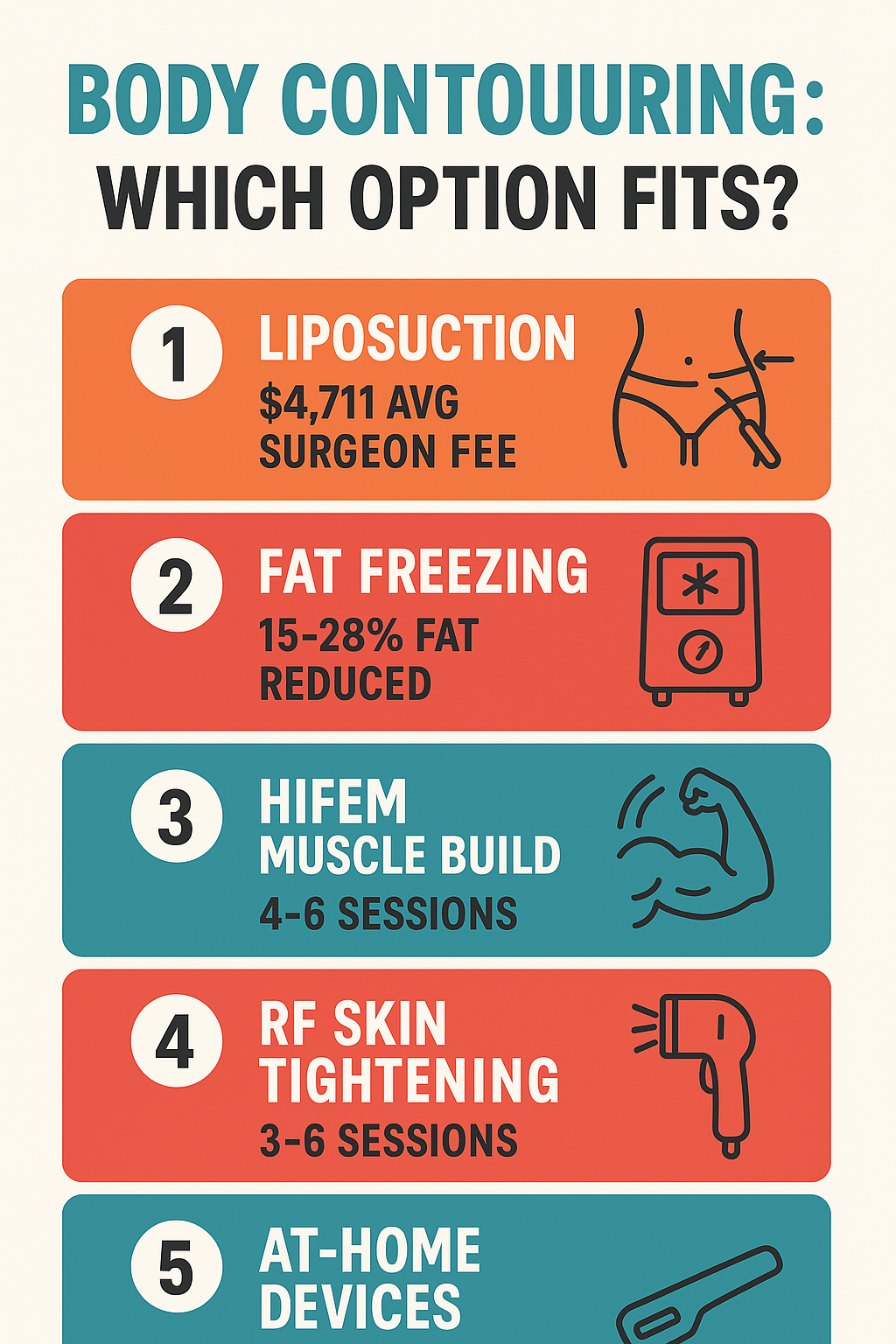
Body contouring is a group of medical and aesthetic procedures that reshape a specific area of the body by reducing localized fat, tightening lax skin, or strengthening the muscle underneath. It targets shape, not scale weight.
The distinction matters. A dieter loses fat everywhere at once. Body contouring treatments act on one zone at a time: lower abdomen, flanks, inner thighs, upper arms, submental fat under the chin.
Two families exist. Surgical contouring physically removes tissue through incisions. Non-surgical contouring uses cold, heat, sound, light, or electromagnetic energy delivered through intact skin. Both are cosmetic, so insurance almost never covers them.
There are two surgical categories and five FDA-cleared non-invasive modalities. A 2019 review in the Australasian Journal of Dermatology lists those five as cryolipolysis, laser, high-intensity focused electromagnetic field (HIFEM), radiofrequency, and high-intensity focused ultrasound.
| Treatment | Category | What it targets | Typical course | Downtime |
|---|---|---|---|---|
| Liposuction | Surgical | Subcutaneous fat, removed by cannula | 1 procedure | 1 to 2 weeks |
| Abdominoplasty (tummy tuck) and excision lifts | Surgical | Excess skin plus fat, muscle repair | 1 procedure | 2 to 6 weeks |
| Cryolipolysis (CoolSculpting) | Non-surgical | Fat cells, frozen and cleared | 1 to 3 per area | None |
| HIFEM (Emsculpt, Emsculpt Neo) | Non-surgical | Muscle contraction plus fat | 4 to 6 sessions | None |
| Radiofrequency and RF microneedling | Non-surgical | Skin laxity, collagen, some fat | 3 to 6 sessions | 0 to 3 days |
| Laser lipolysis (SculpSure) and HIFU | Non-surgical | Fat cells, heated or disrupted | 2 to 4 sessions | None |
| At-home devices (red light, EMS, RF) | Consumer | Skin tone, muscle, mild circumference | Ongoing, 3 to 5x weekly | None |
Clinics increasingly stack modalities: fat reduction first, then skin tightening. That is why combination platforms and EMS sculpting machines now sit next to cryolipolysis handpieces in the same treatment room.
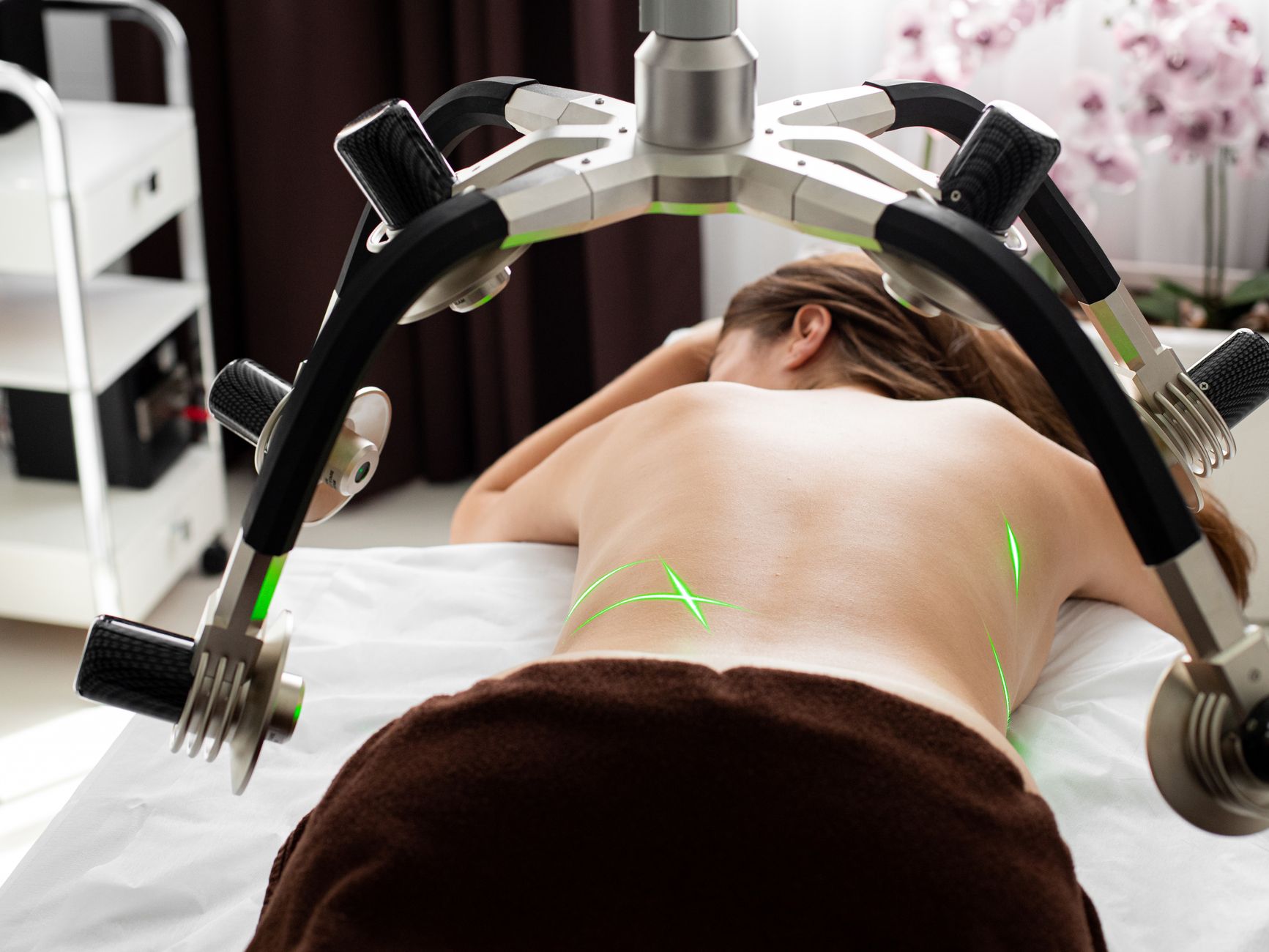
Each modality destroys, shrinks, or stimulates tissue using a different energy, and the body clears the debris through the lymphatic system over weeks.
For laxity that sits between "needs tightening" and "needs surgery", clinics reach for fractional energy. Practices commonly pair RF microneedling systems for crepey abdominal or arm skin with CO2 laser resurfacing platforms for surface texture.
Yes, within a narrow and well-documented range. Cleveland Clinic reports that studies of cryolipolysis show an average fat reduction of 15% to 28% about four months after the first treatment. A systematic review of 19 studies published in Plastic and Reconstructive Surgery found average caliper reductions of 14.67% to 28.5% and ultrasound-measured reductions of 10.3% to 25.5%.
Translate that honestly: a 20% reduction of a 2 cm pinchable fat layer is about 4 mm. Visible in a mirror and in photos, invisible on a scale.
HIFEM data is stronger on muscle than on fat. Manufacturer-sponsored clinical work behind Emsculpt is widely cited for roughly 16% to 25% muscle thickness gains and around 19% fat reduction in the abdomen after four sessions, and a 2022 sham-controlled randomized trial in Plastic and Reconstructive Surgery confirmed that combining radiofrequency heating with HIFEM changed both fat and rectus abdominis thickness against a sham group.
The most effective option overall is liposuction, because it removes fat volume in one session rather than reducing a percentage of it. The most effective non-surgical choice depends on the problem: cryolipolysis for a discrete fat bulge, HIFEM for definition in an already lean abdomen, radiofrequency for loose skin.
One market signal is worth reading. American Society of Plastic Surgeons data reported by the American Med Spa Association shows noninvasive fat reduction procedures fell 40% in a single year, from 745,967 in 2023 to 447,581 in 2024, a drop industry observers attribute partly to GLP-1 weight loss drugs absorbing that demand. Devices did not get worse. The problem they solve got smaller for many patients.
The benefit case for non-surgical body contouring treatments is no anesthesia, no incisions, no scars, and an immediate return to normal activity. The benefit case for surgery is magnitude and predictability in one visit.
Common non-surgical side effects: redness, swelling, numbness, tenderness, temporary bruising, and a deep muscle soreness after HIFEM. Most resolve within days.
Rare non-surgical risk: paradoxical adipose hyperplasia, where the treated fat pad enlarges instead of shrinking after cryolipolysis. It is uncommon, does not self-correct, and usually needs liposuction to fix.
Surgical risks: infection, bleeding, seroma, contour irregularity, anesthesia complications, and permanent scars at incision sites.
Two rules cut most of the risk. Choose an operator with medical training and device-specific certification, and treat a skin-laxity problem as a skin problem rather than expecting a fat device to fix it.
Body contouring costs between roughly $1,000 for a single non-surgical session and $12,000 or more for a full surgical procedure with facility and anesthesia fees included.
| Procedure | Typical US price | What that covers | Source of figure |
|---|---|---|---|
| Liposuction | $4,711 average surgeon's fee | Surgeon only; anesthesia and facility extra | ASPS |
| Tummy tuck | $6,000 to $12,000+ all in | Surgeon, anesthesia, facility, garments | Typical clinic pricing |
| CoolSculpting (cryolipolysis) | $1,602 national average, range $1,213 to $2,599 | One treatment, one to two areas | CareCredit |
| Emsculpt / Emsculpt Neo | $3,017 average course; about $1,000 per session | Series of 4 to 6 sessions | RealSelf patient reviews |
| RF skin tightening | $500 to $2,000 per session | Single area, series usually advised | Typical clinic pricing |
| At-home light or EMS devices | $200 to $6,000 one time | Unlimited sessions, no per-visit fee | Retail pricing |
Stomach-only sculpting usually lands at the lower end: one to two cryolipolysis applicators, or a four-session HIFEM series. Ask for the total course price up front, because per-session quotes rarely reflect what the protocol actually requires.
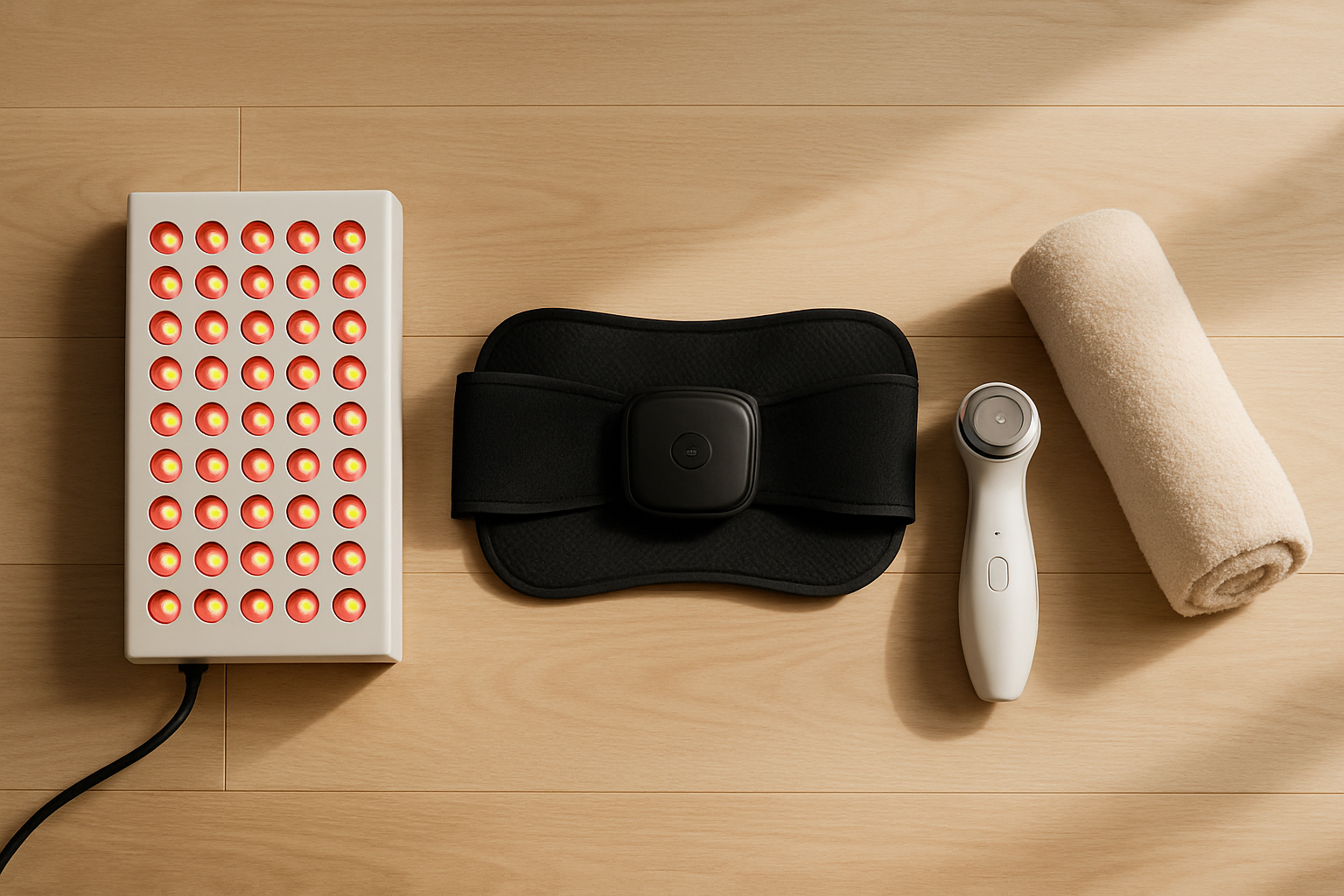
The arithmetic is what pushes many buyers toward owning equipment. Four HIFEM sessions at clinic rates approach the price of a consumer-grade device that runs for years, which is why home setups built around a full-body multi spectrum light system or this 360 degree red light pod have become a normal part of a longevity routine.
Non-surgical recovery is measured in hours and surgical recovery in weeks. Results from both last indefinitely if your weight stays stable, because destroyed fat cells do not grow back.
The catch that no brochure emphasizes: remaining fat cells can still enlarge. Gain 10 to 15 pounds after treatment and the contour changes, often in untreated areas that now hold proportionally more fat.
The ideal candidate is within about 30 pounds of a stable goal weight, has good skin elasticity, and wants to change a specific bulge rather than lose weight overall.
Facial and jawline sculpting follows its own rules, with submental fat and skin laxity handled by dedicated facial machines rather than body applicators.
Considering equipment instead of a package of appointments? Compare specifications, clearances, and treatment protocols before you buy, then browse our professional body sculpting machines to see what clinic-grade and home-grade options actually cost.
Yes, with realistic expectations. Home devices using red light, EMS, and radiofrequency can improve skin tone, support muscle stimulation, and produce modest circumference changes with consistent use. They do not destroy fat volume the way clinic-grade cryolipolysis or liposuction does. Their advantage is cost per session, since one purchase replaces an ongoing appointment schedule.
Pros: no anesthesia, no scars, no downtime for non-surgical options, permanent fat cell reduction, and targeted shaping that dieting cannot deliver. Cons: results are gradual and partial, multiple sessions are usually required, nothing is covered by insurance, skin laxity is only partly addressed, and rare complications such as paradoxical adipose hyperplasia may need surgical correction.
Check three things: the credentials of the person operating the device, whether the exact device is FDA cleared for the area you want treated, and unretouched before-and-after photos of patients with a body type like yours. Ask how many treatments of that specific protocol the clinic performs each month. Volume correlates with consistent technique.
Cryolipolysis usually needs one to three cycles per area, spaced 8 to 12 weeks apart. HIFEM protocols call for four to six sessions over two to three weeks, with maintenance every few months. Radiofrequency skin tightening typically runs three to six sessions. Surgery is one procedure.
Only partly. Cellulite is caused by fibrous septae tethering the skin, not by the fat layer alone, so fat reduction alone often leaves the dimpling visible. Targeted treatments that release or remodel those bands, plus collagen-stimulating radiofrequency, address it more directly.
There is no fixed upper age limit. Skin elasticity matters more than birth year, because energy-based tightening relies on the skin's ability to retract and on active collagen production. Older patients with significant laxity often get a better outcome from excisional surgery than from non-surgical body contouring treatments.
Prefer to listen? Body Contouring, Honestly: What Four Millimeters Really Looks Like
A 10-minute conversation from Longevity Based.


